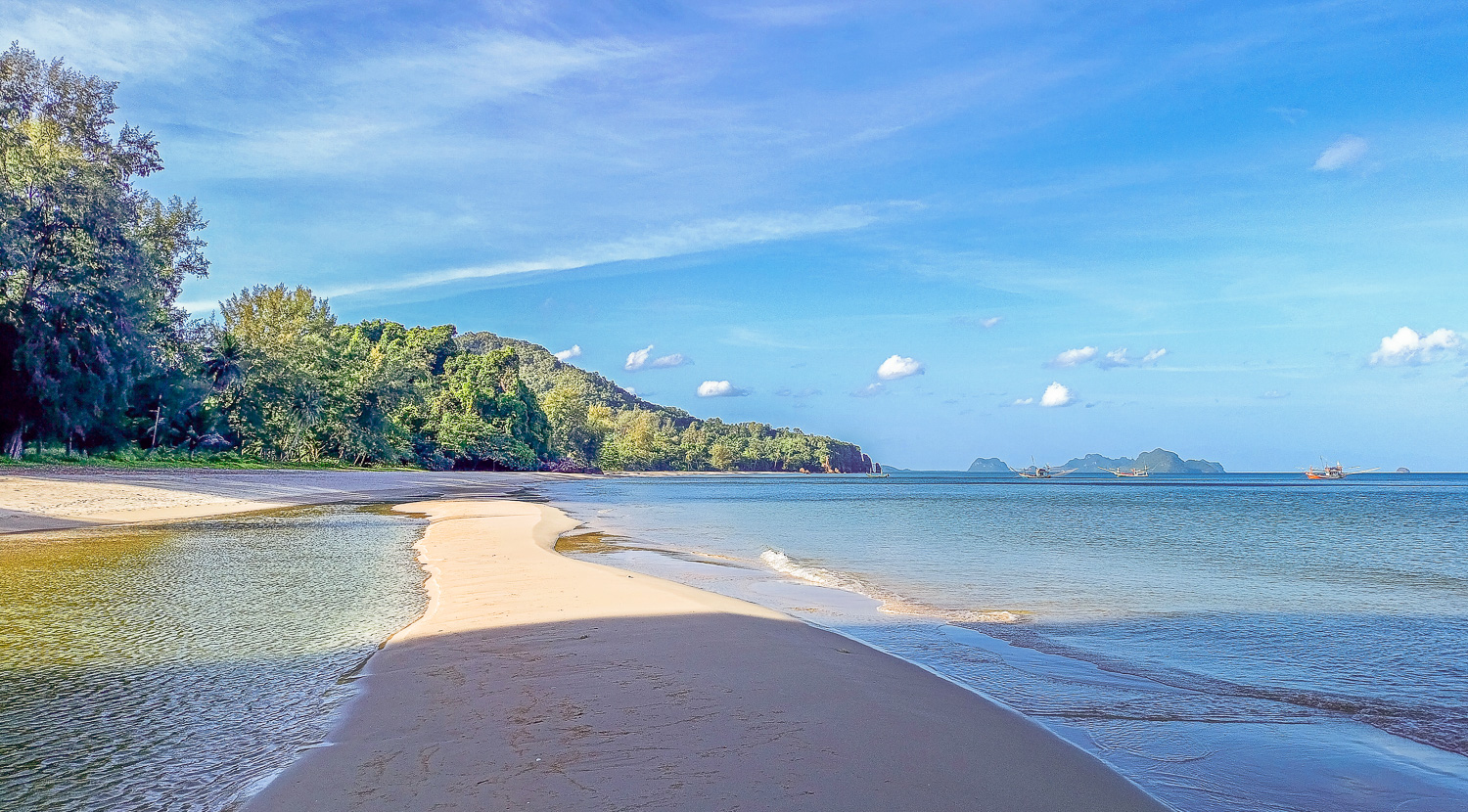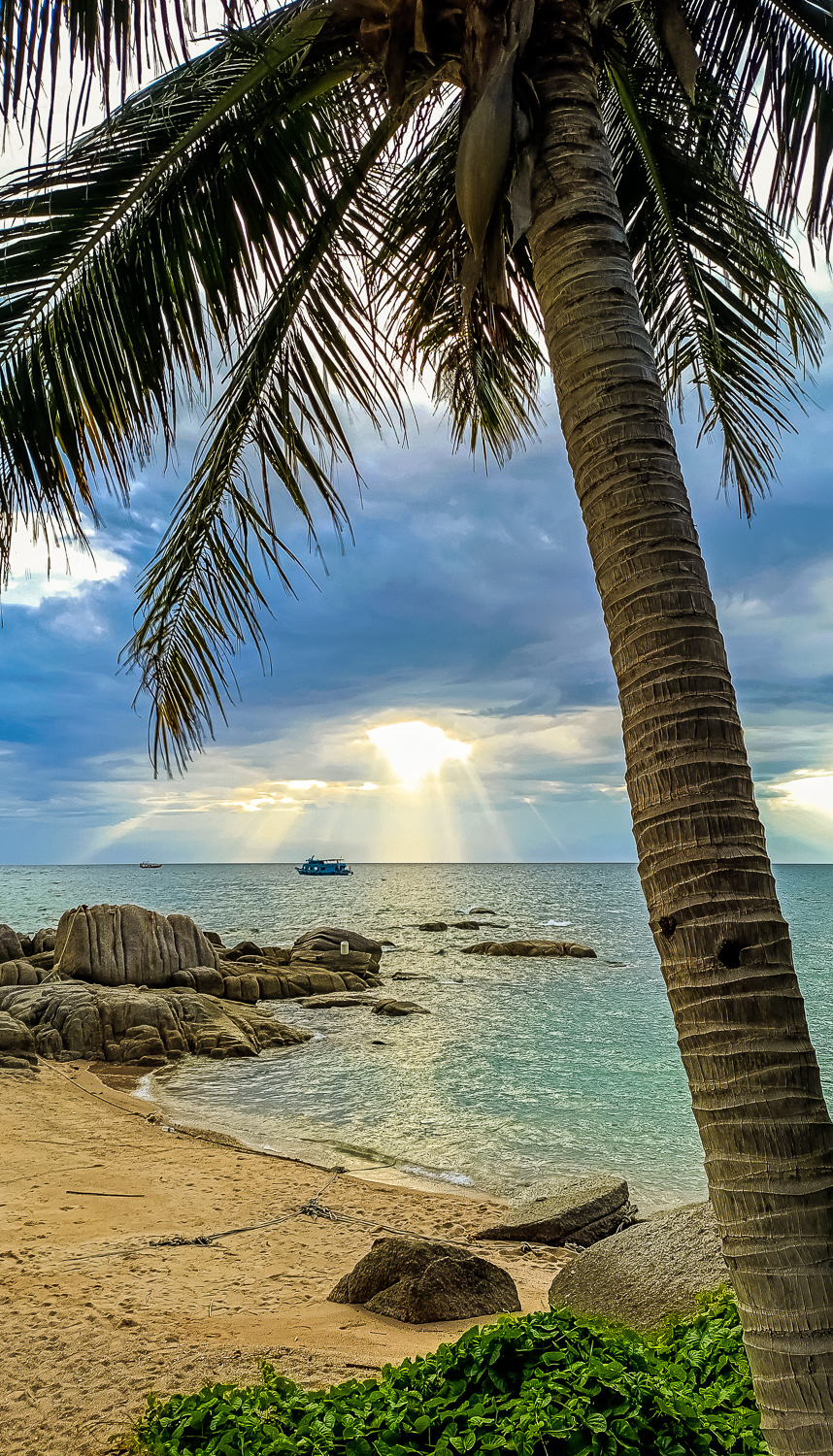
I’ve spent the last week or so in two completely different places in Thailand that are just about a hundred kilometers away from each other. One was a desolate camping spot on an empty beach in Chumphon, and the other was one of the most touristy islands in the country. It’s pretty amazing how two completely different places can exist so close together, with the latter feeling like a completely different country.
Thung San Beach
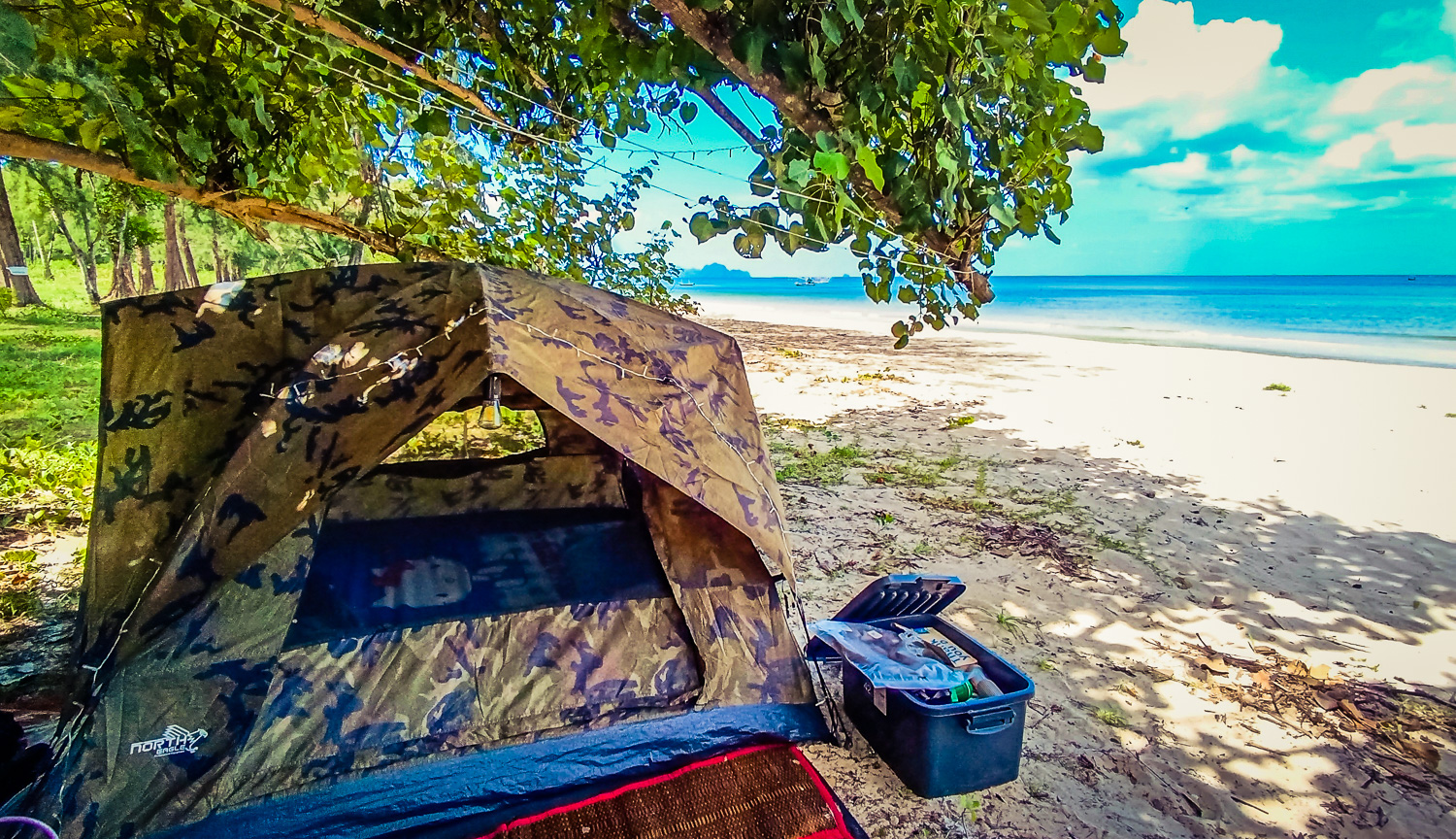
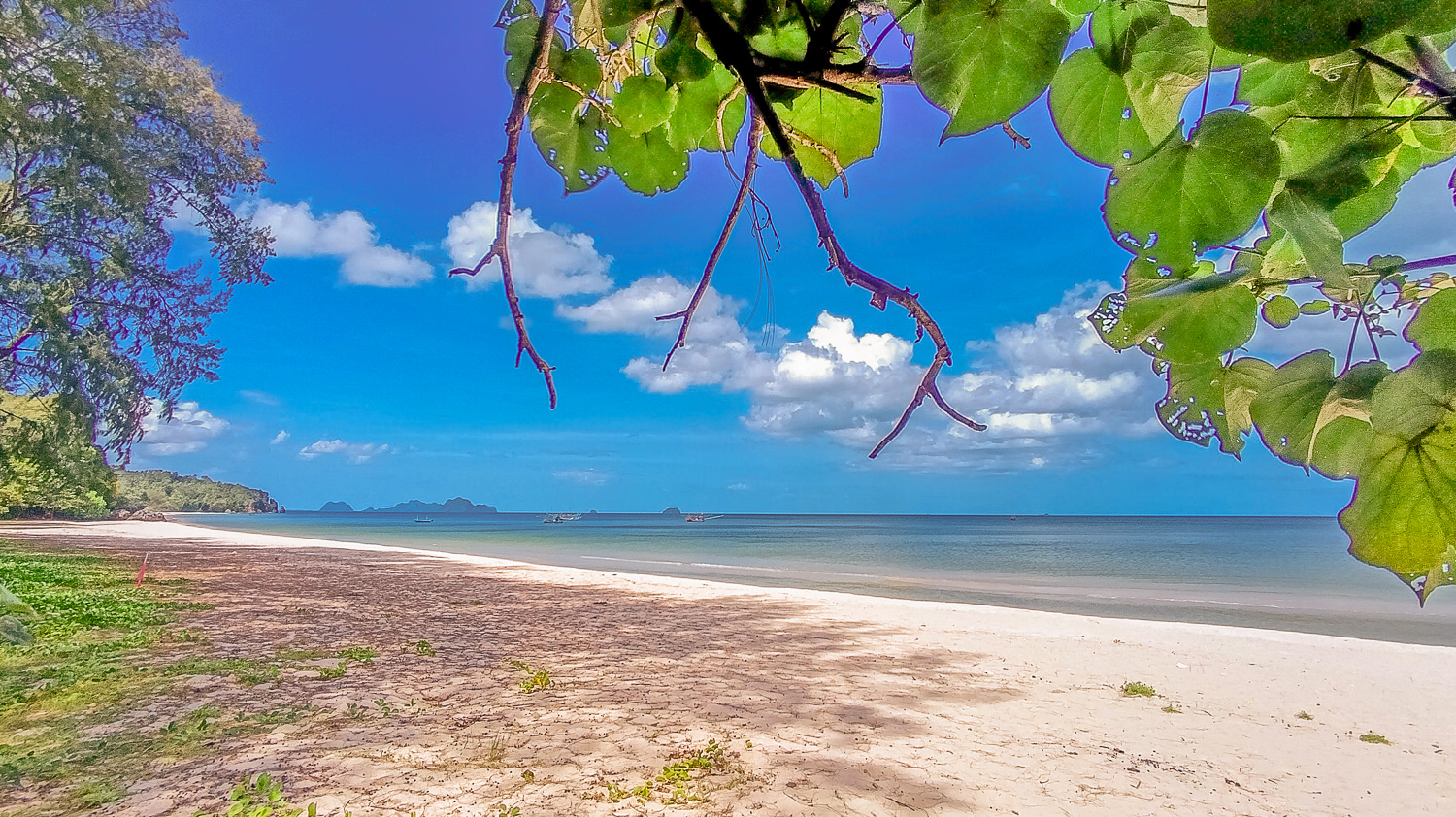
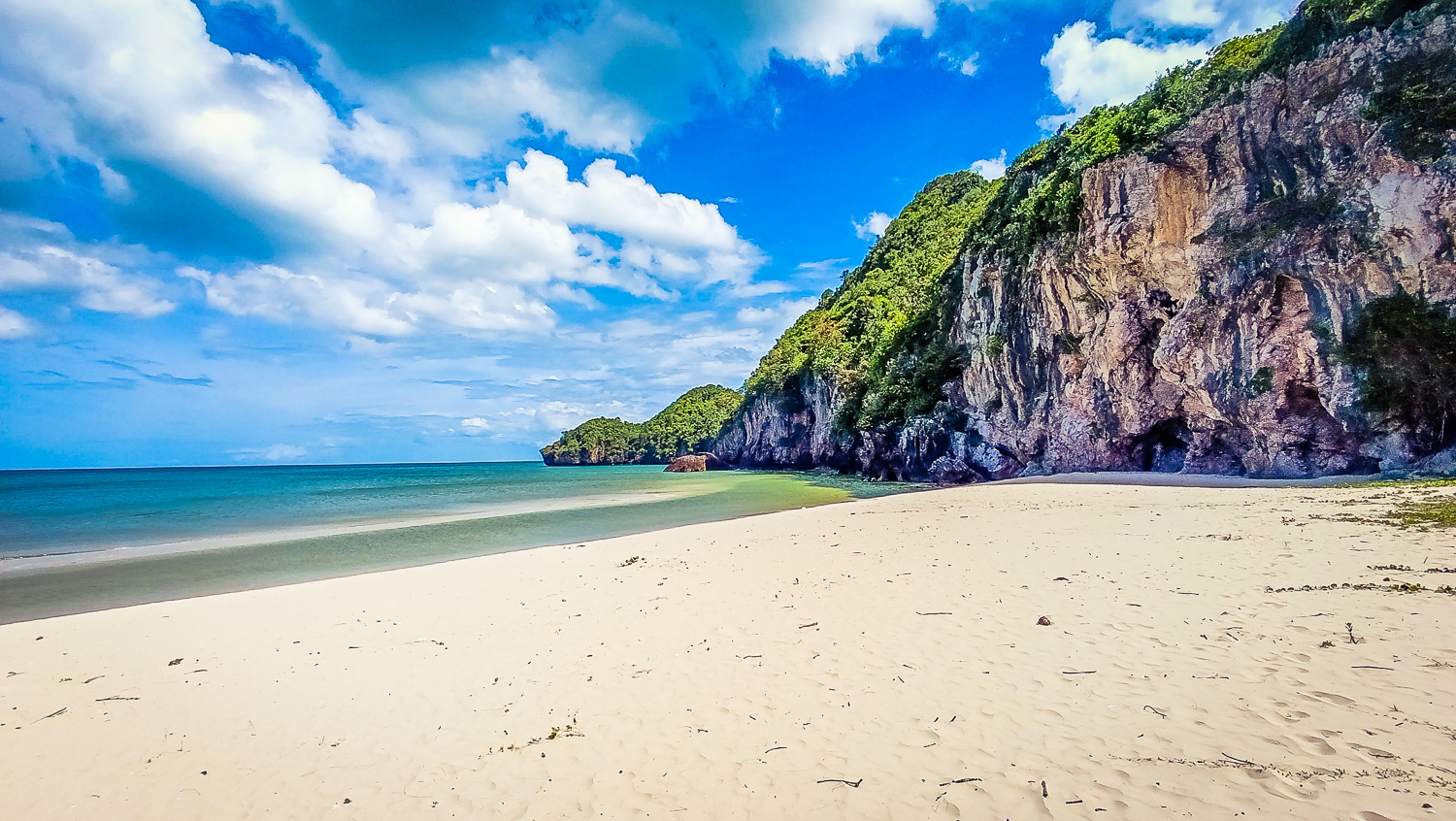
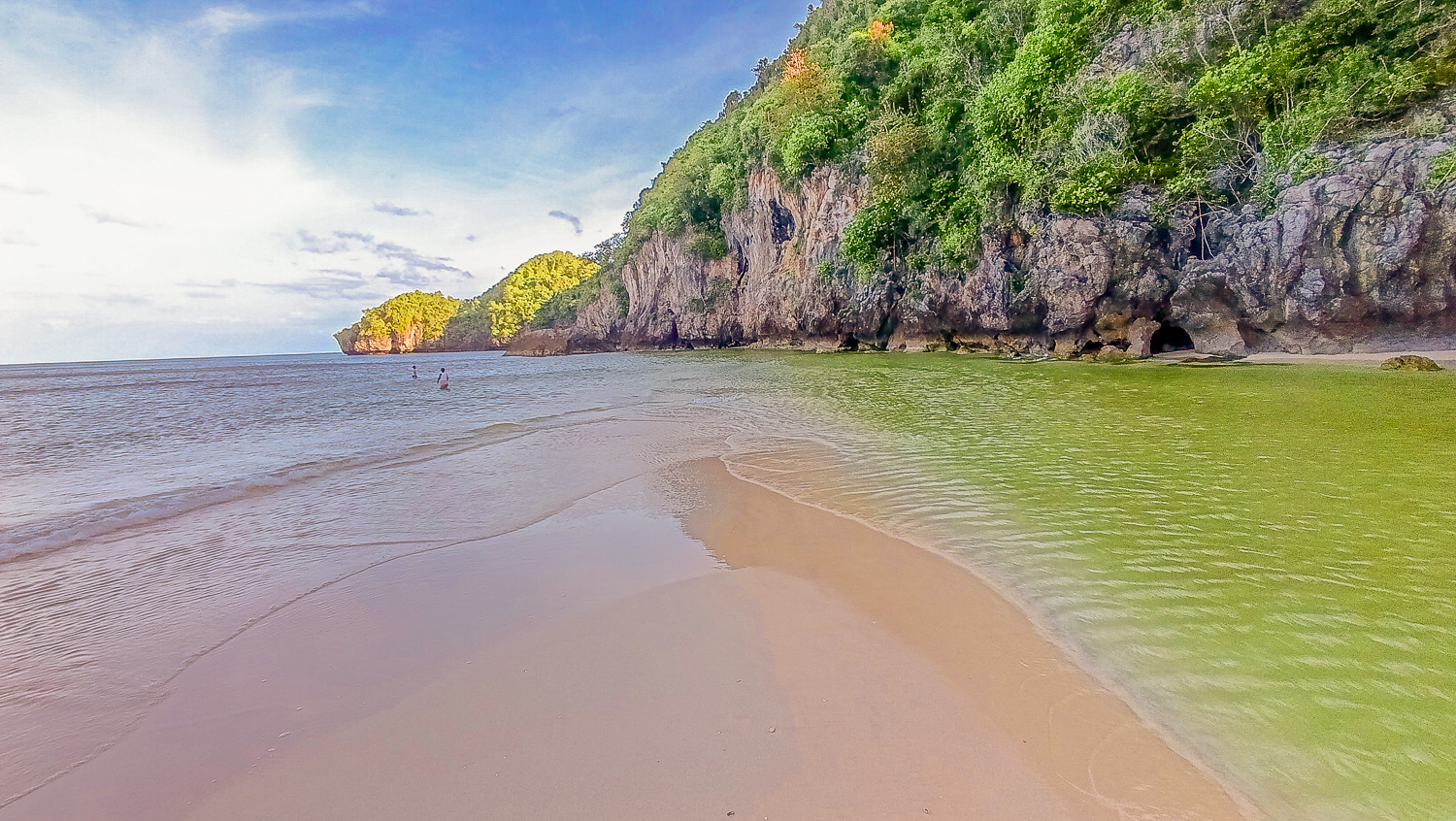
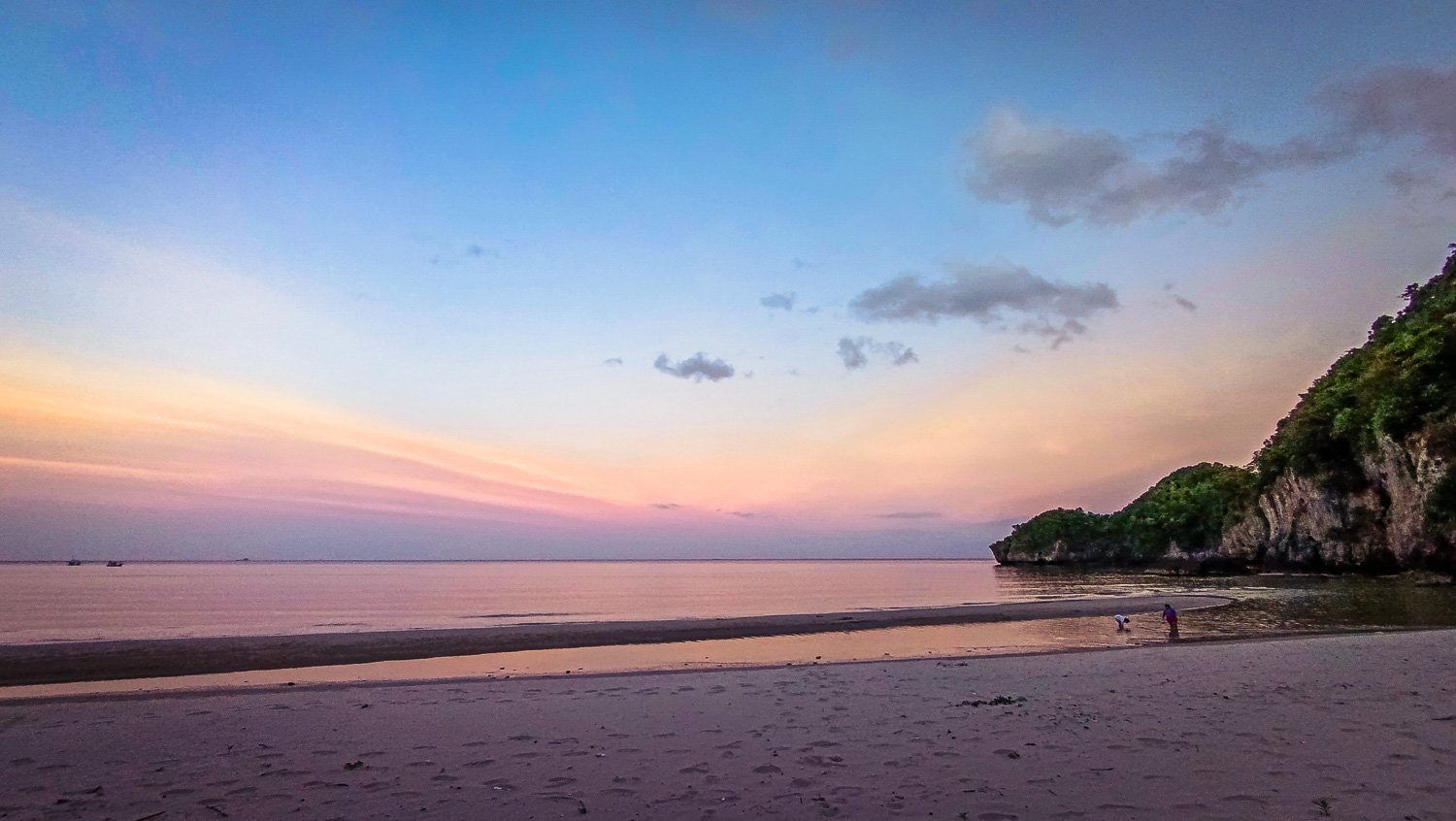
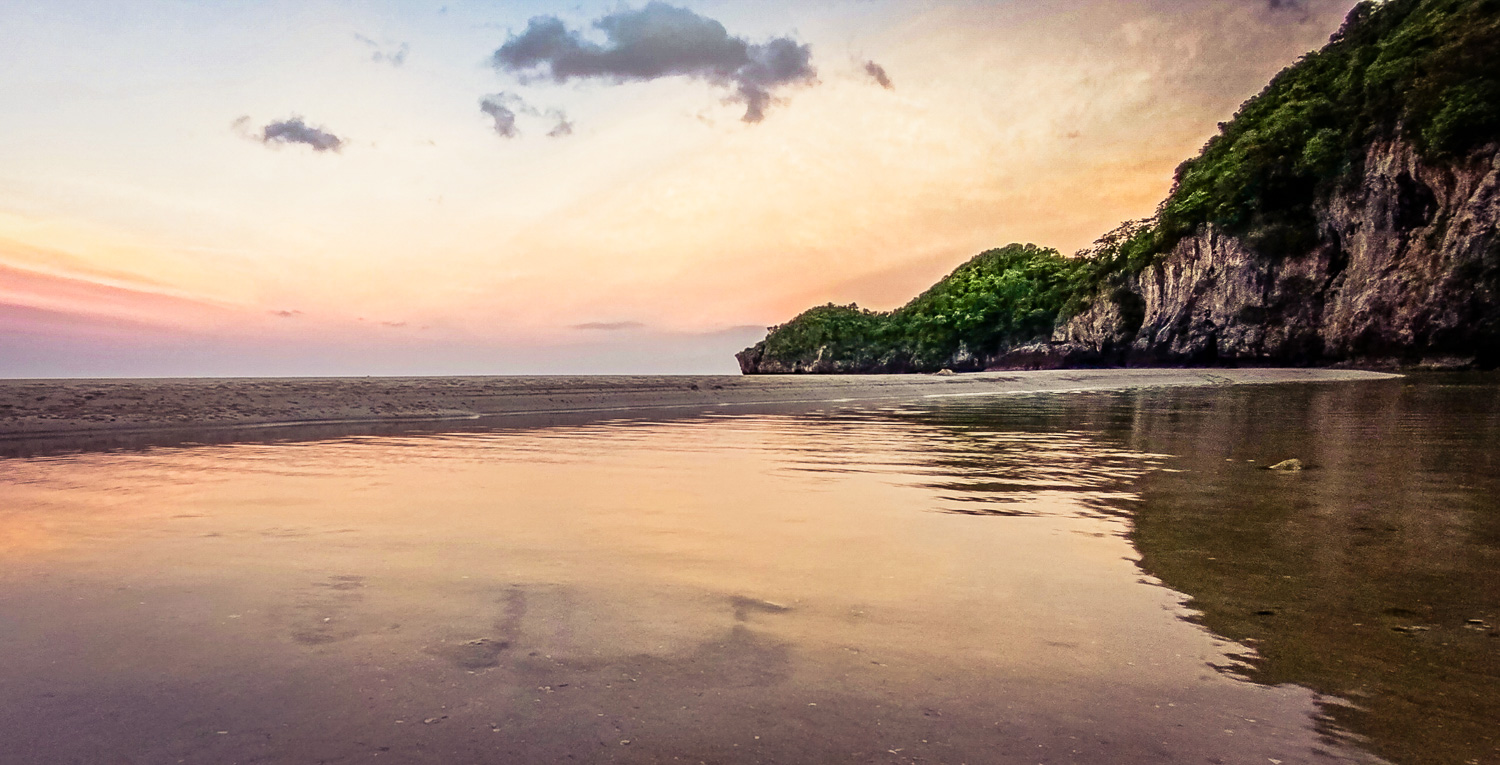
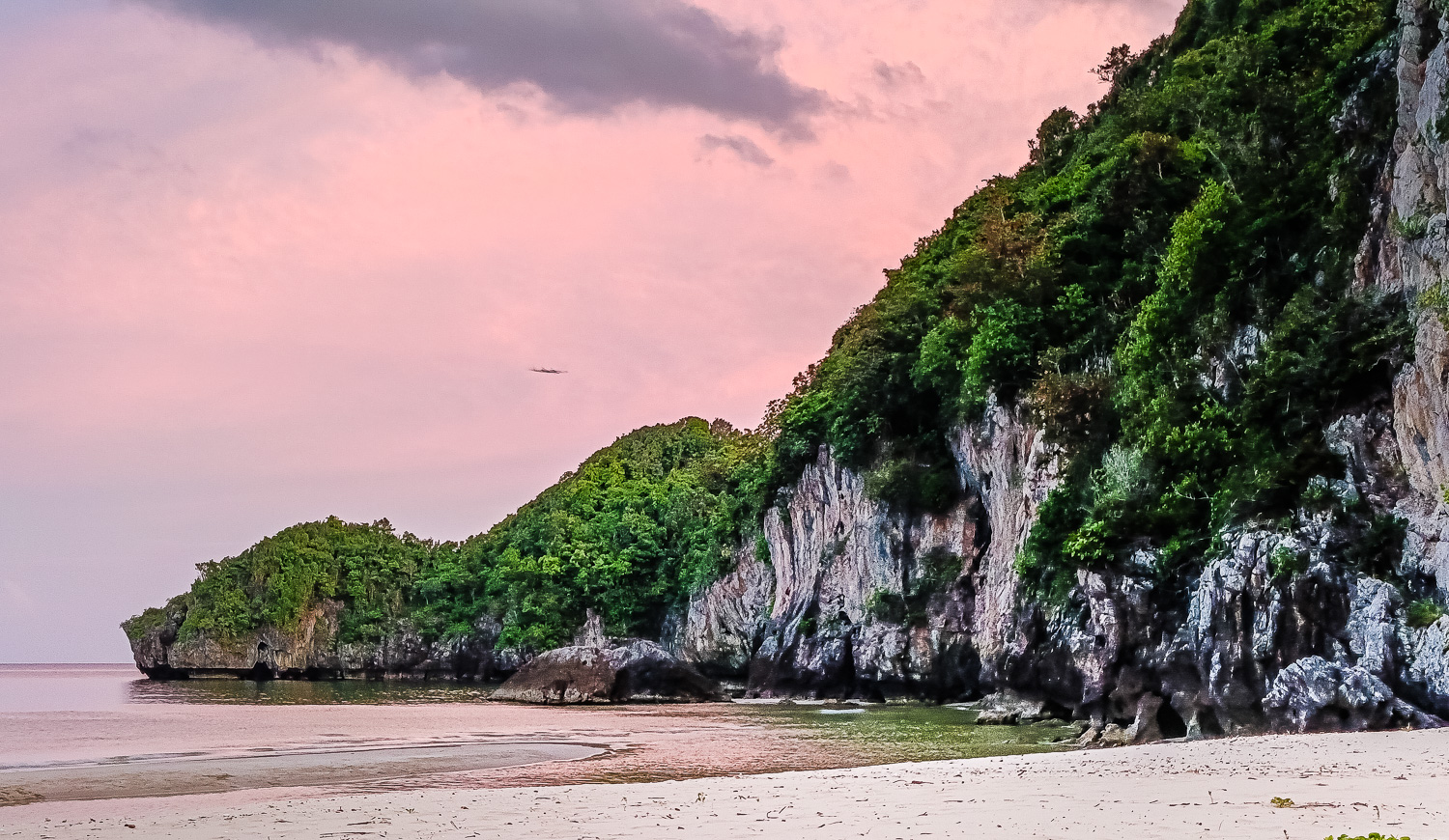
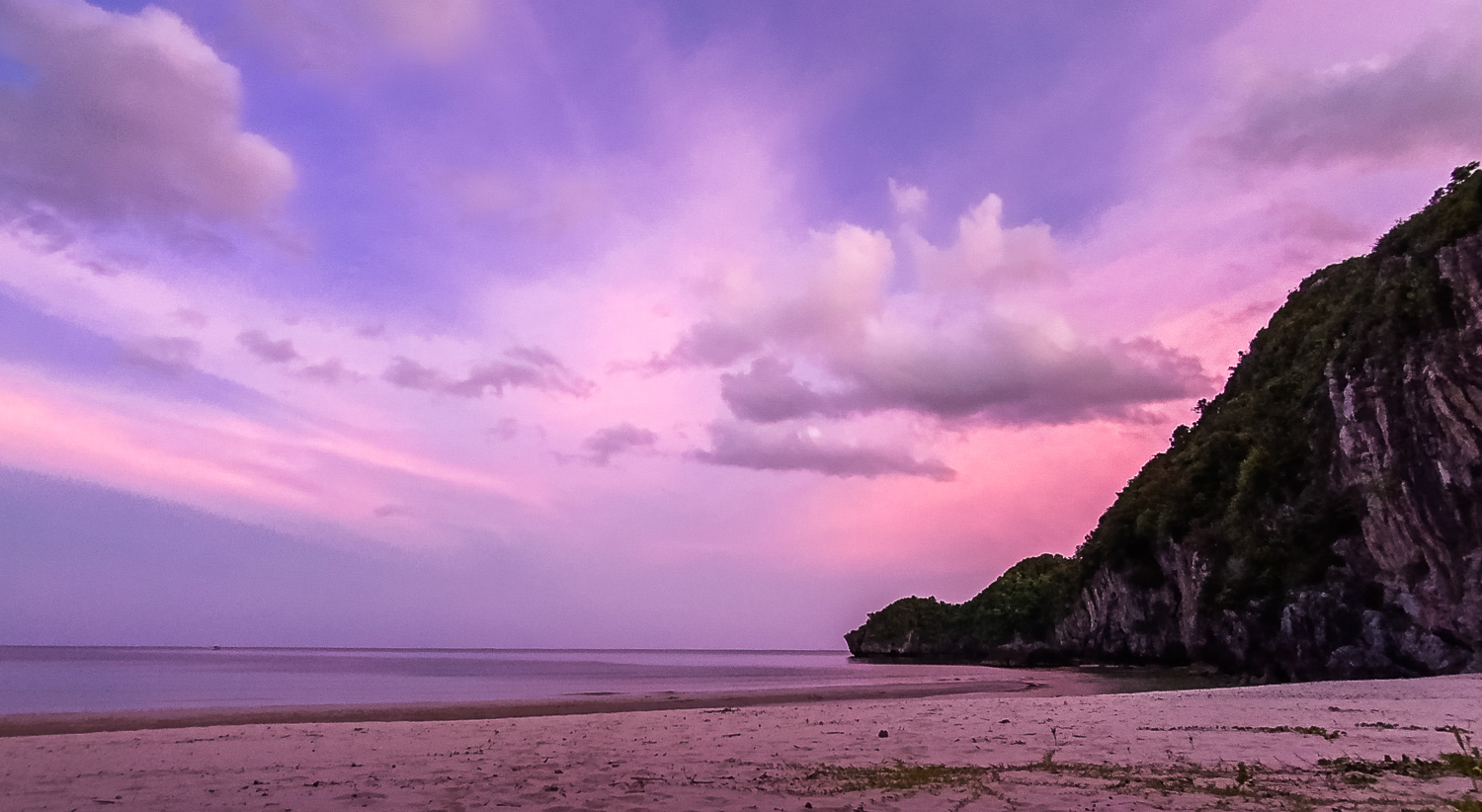
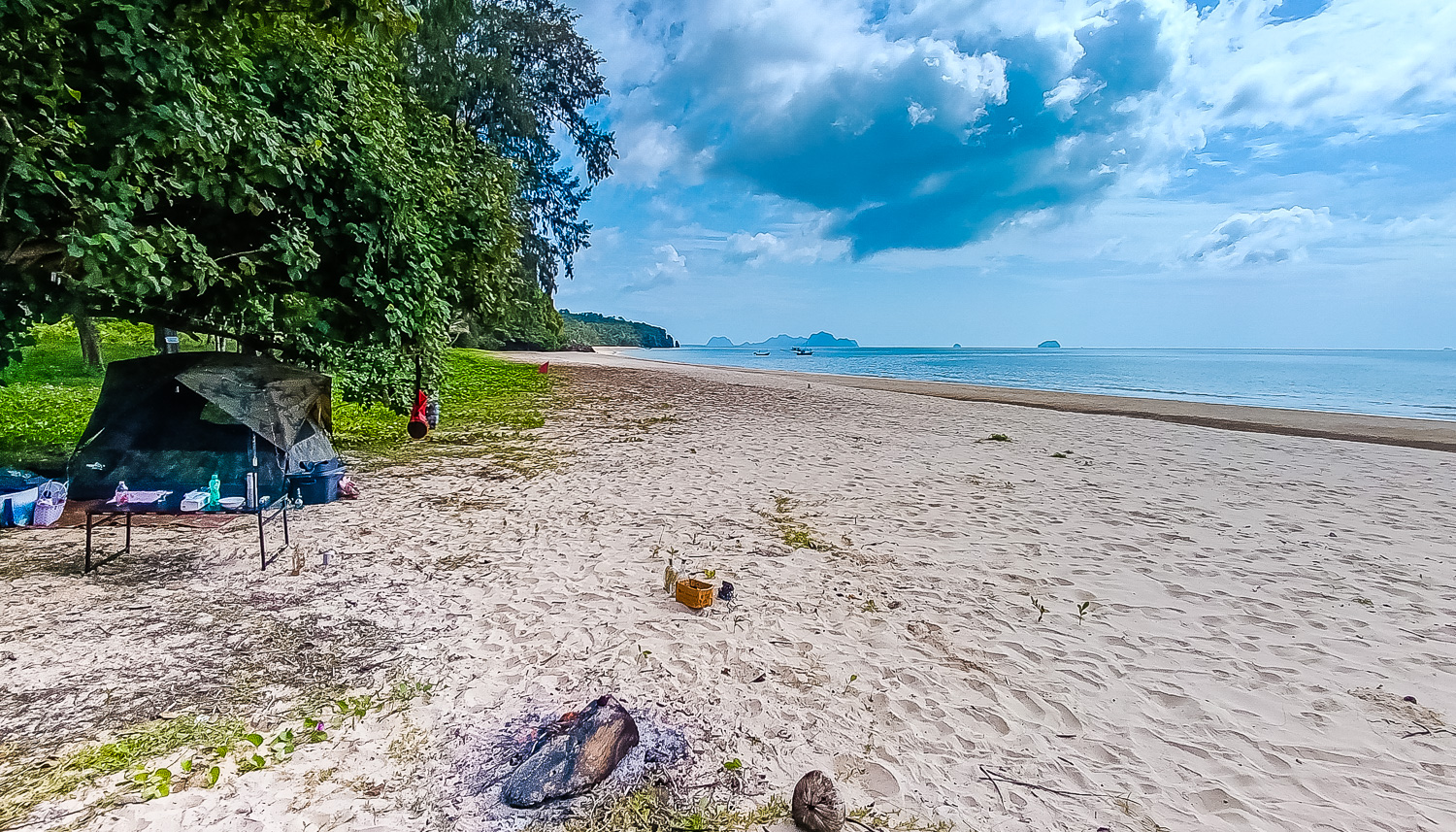
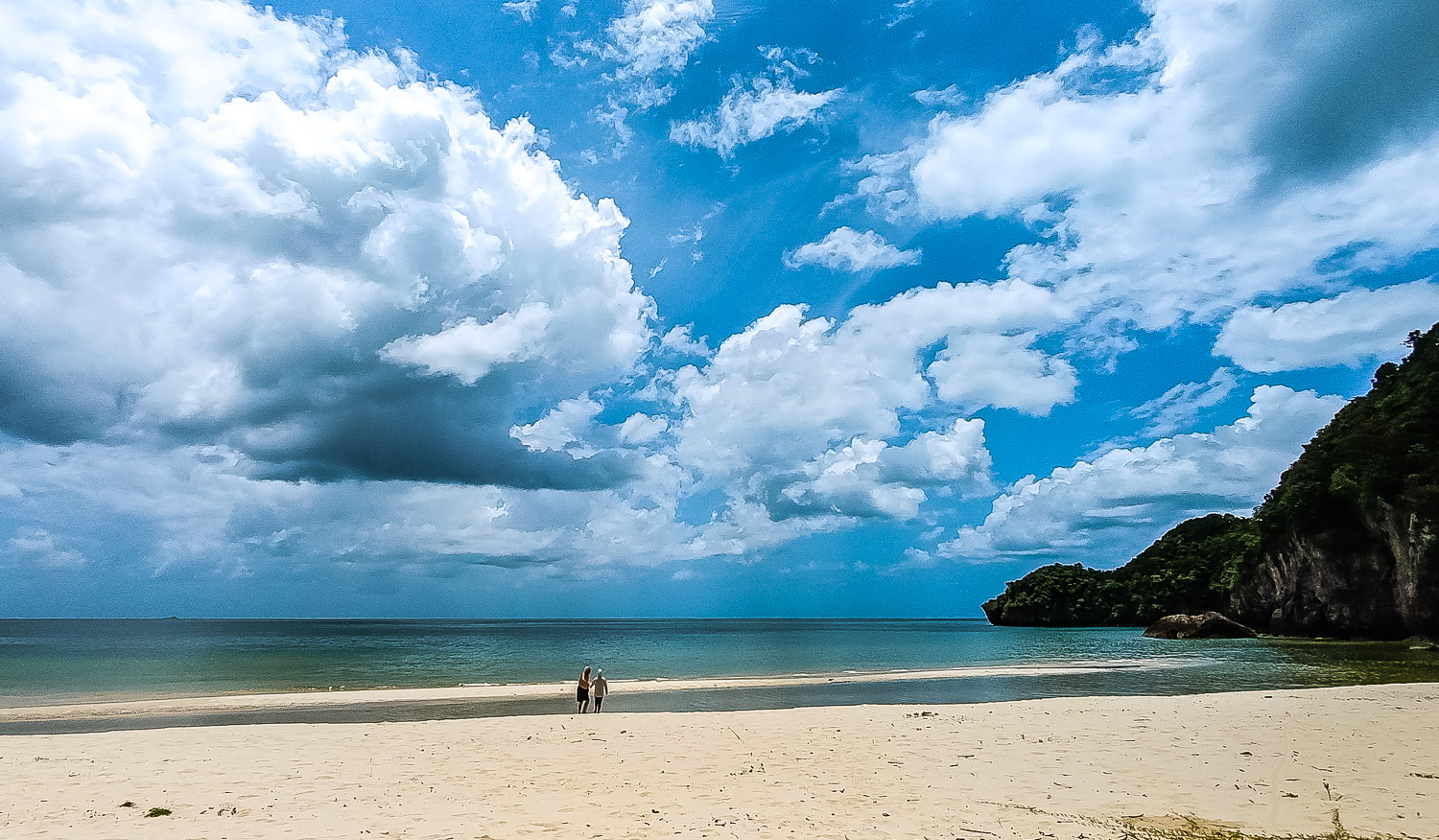
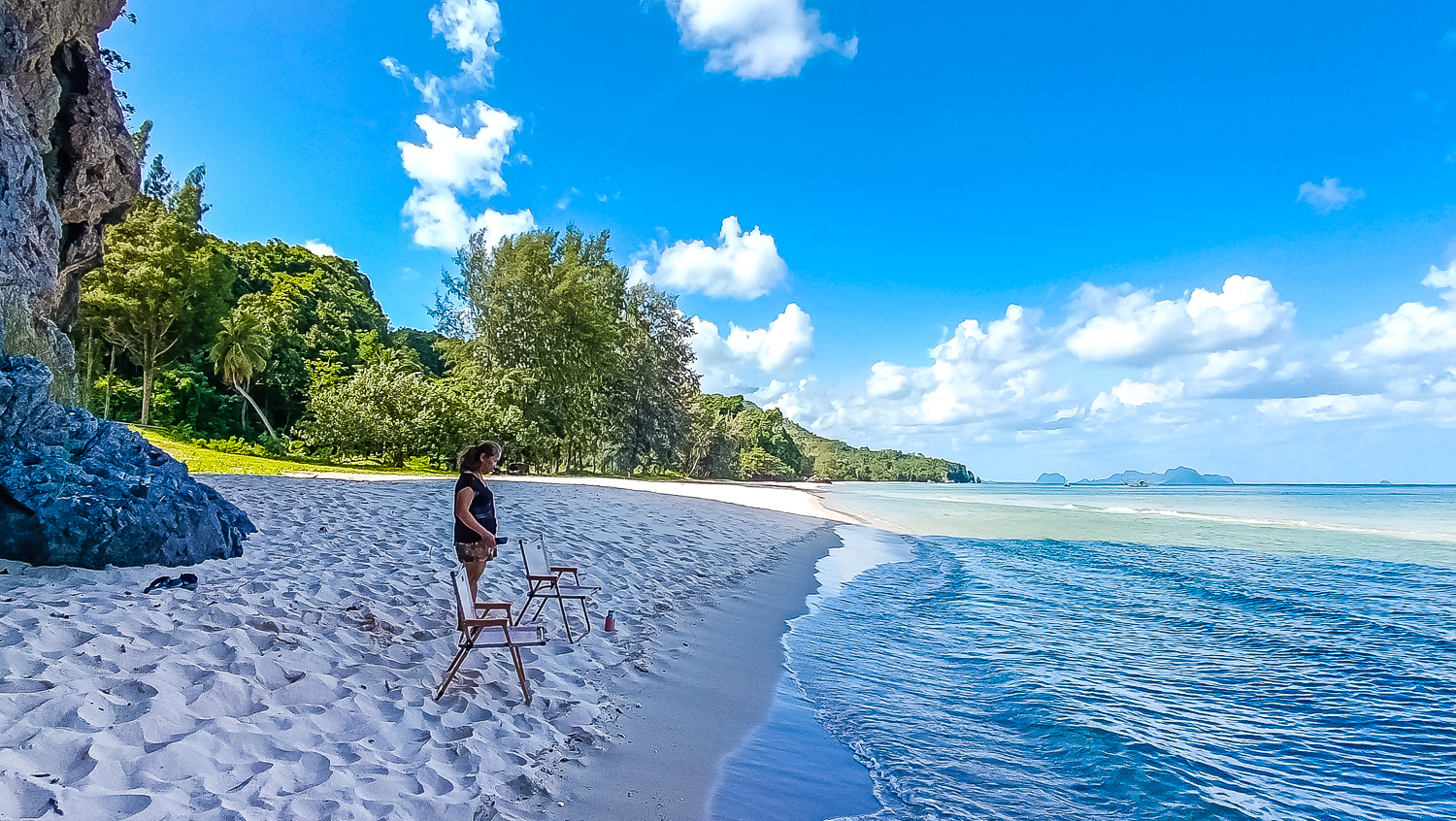
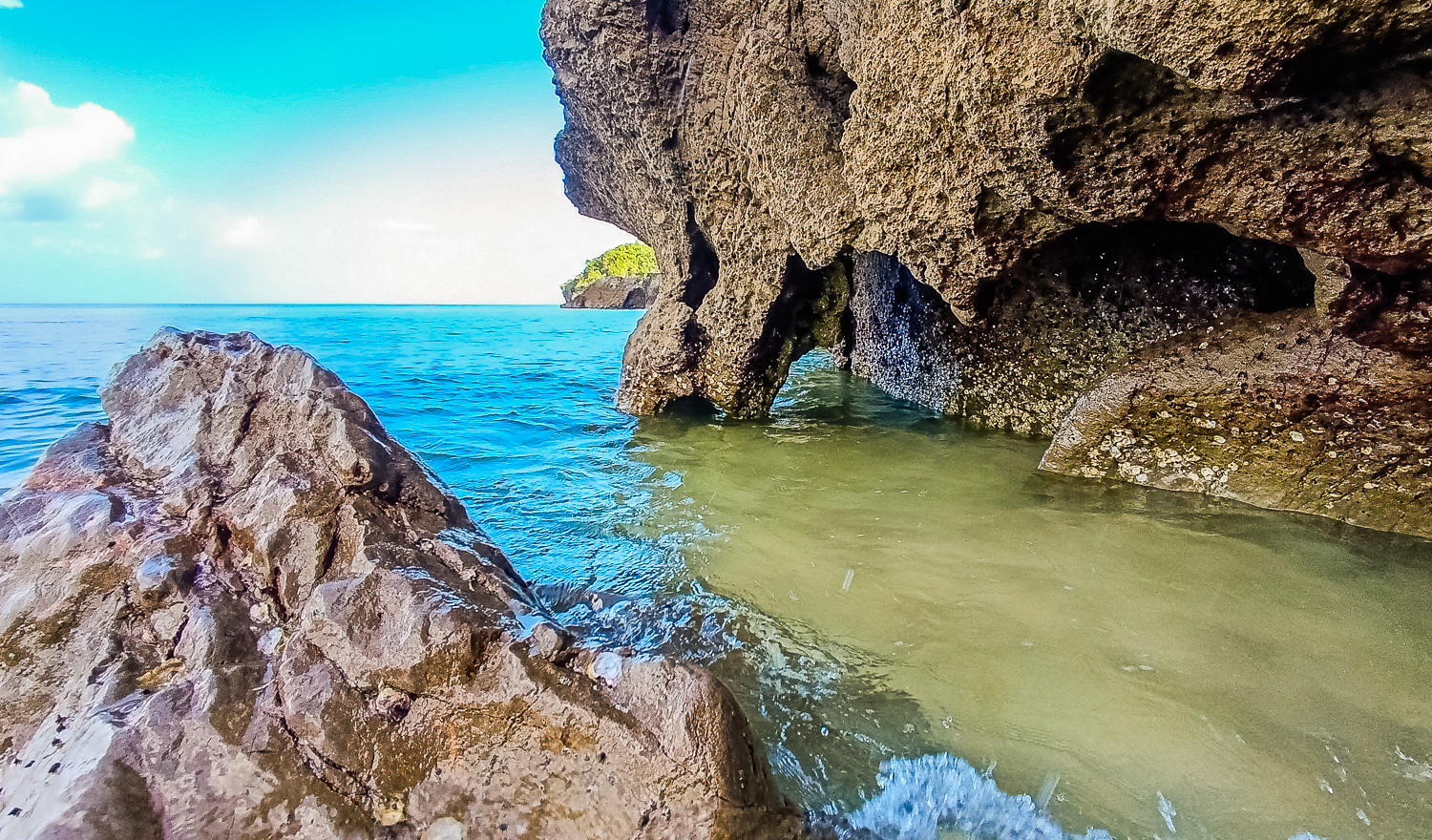
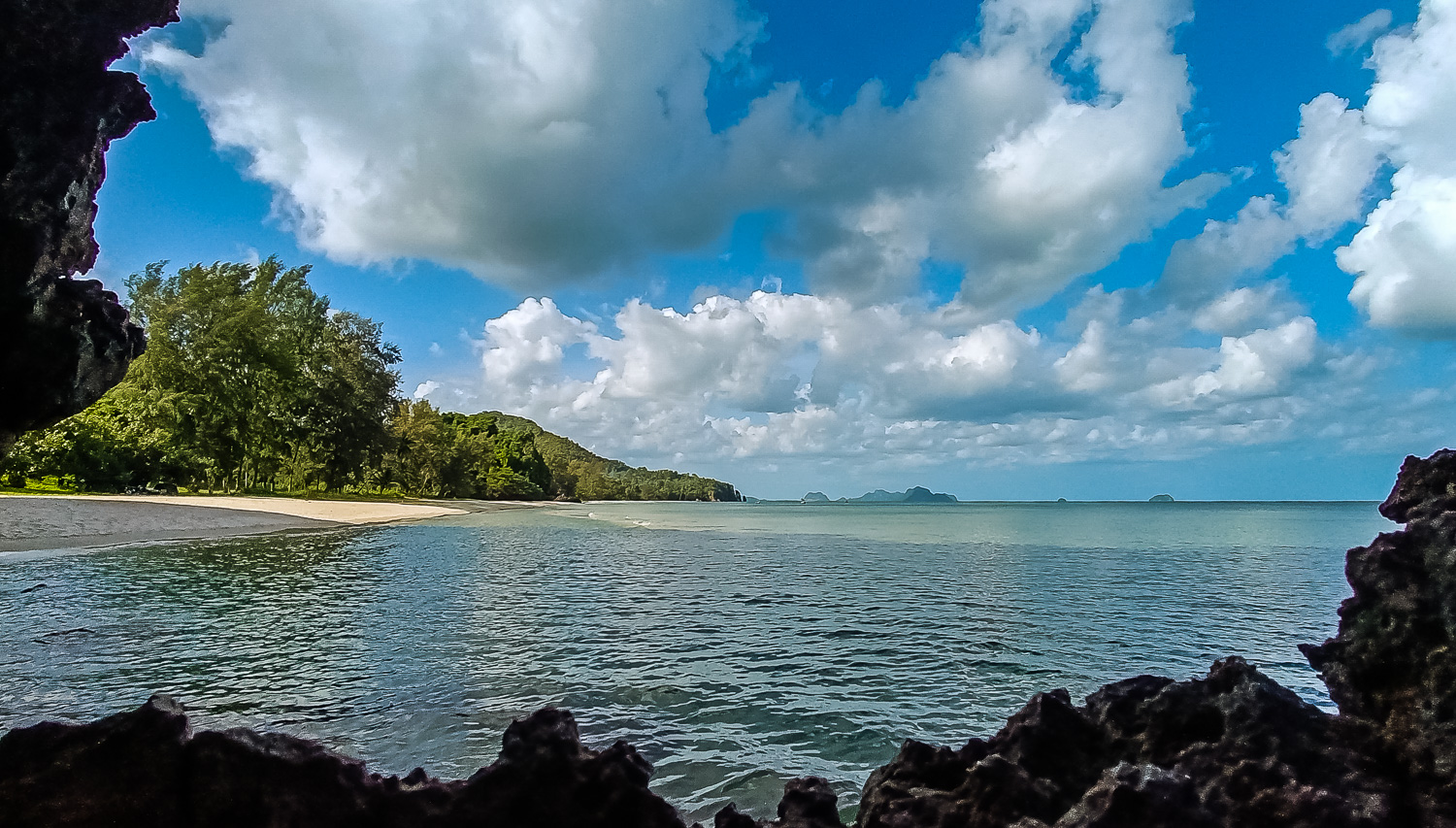
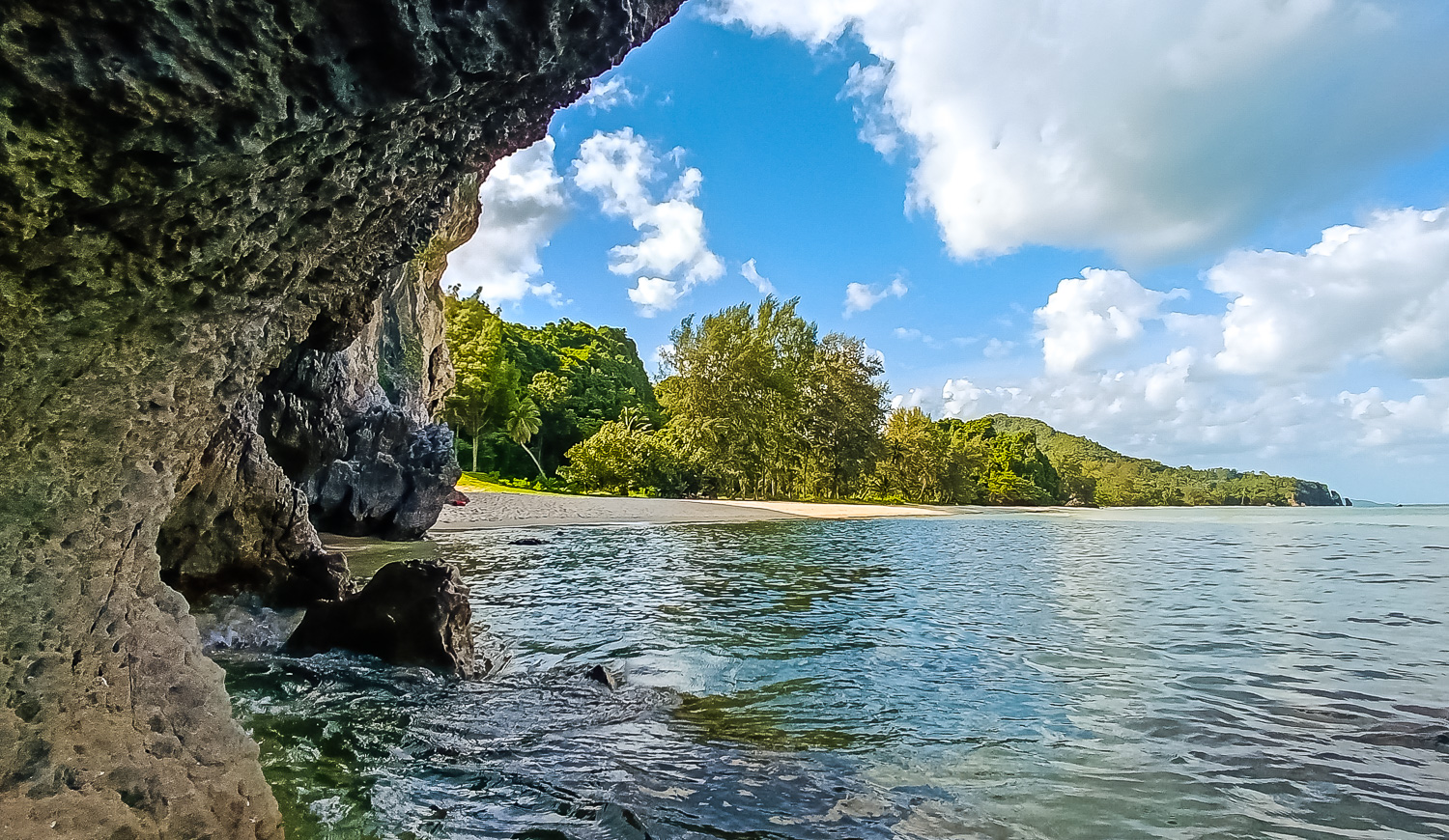
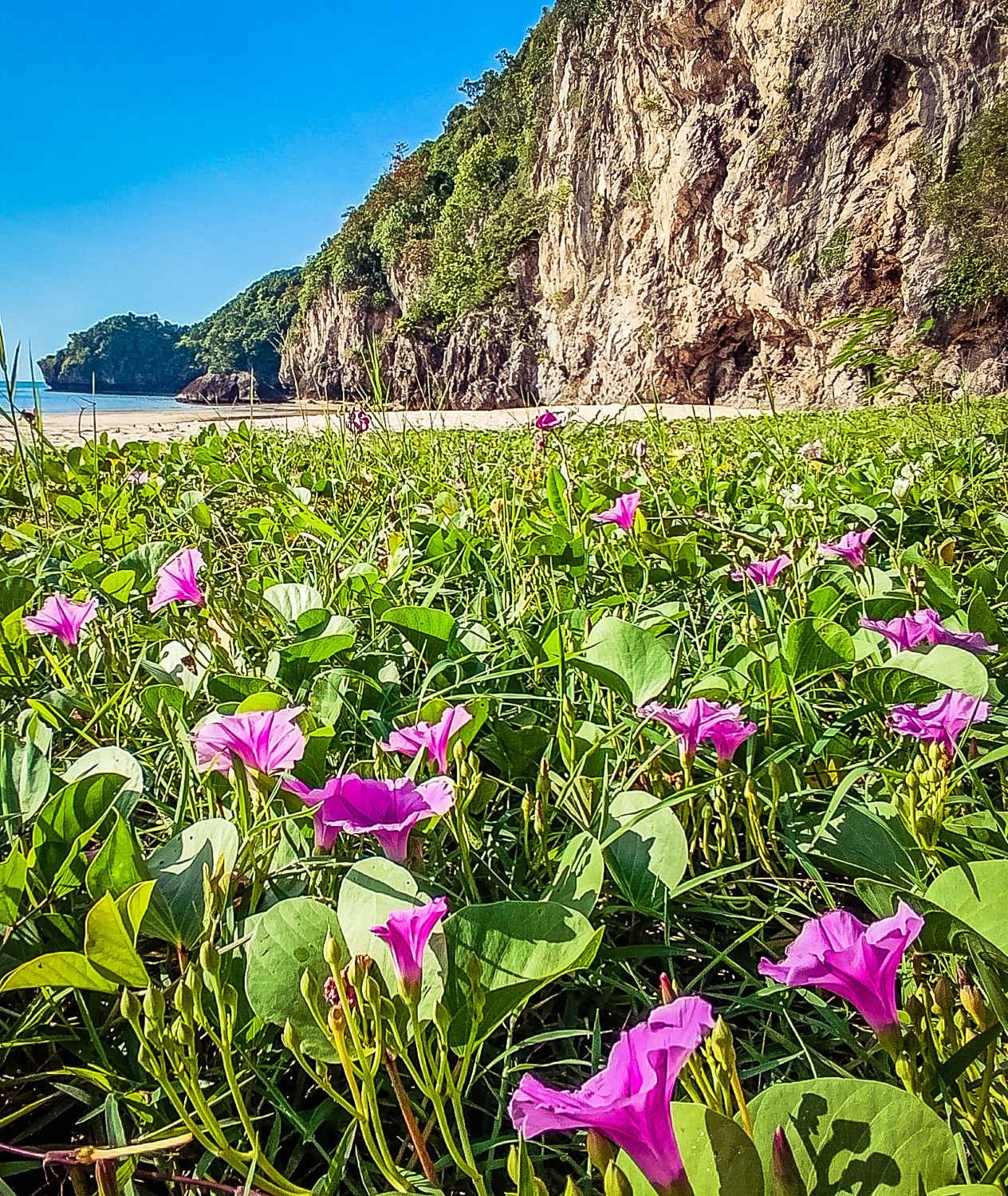
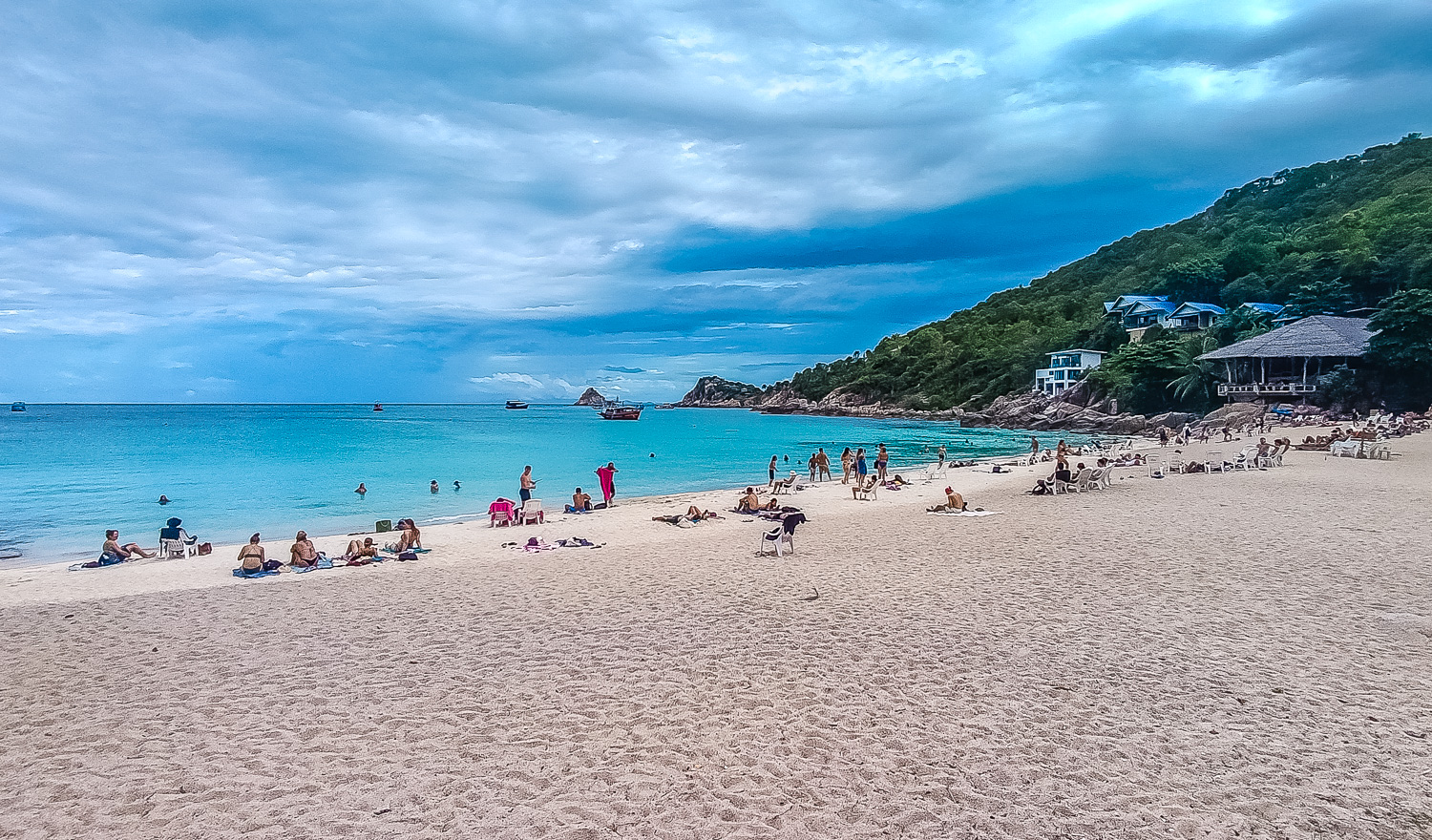
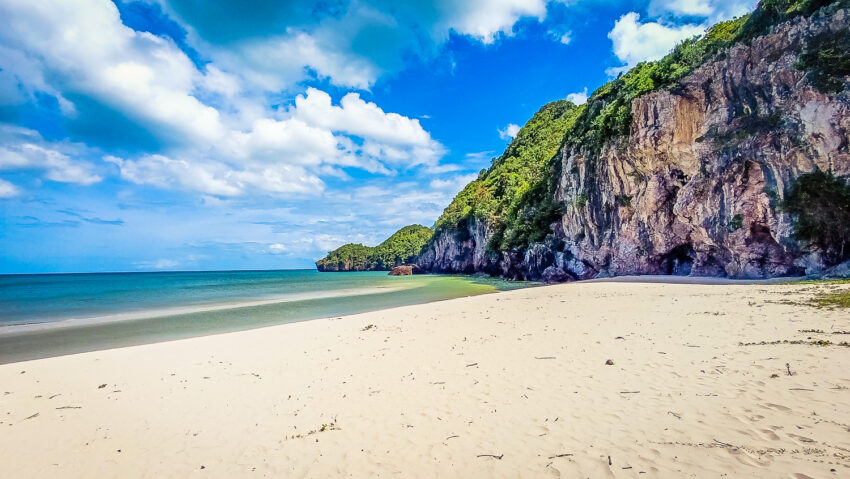
The first spot is a recently discovered secluded, empty beach called Thung San, around 30km north of Chumphon. There are literally hundreds of small coves and beaches like this between Bangsaphan and Chumphon that tourists wouldn’t ever know about. We’ve discovered a lot of them over the years by riding that coast road and just turning off whenever a soi or track leads to the beach.
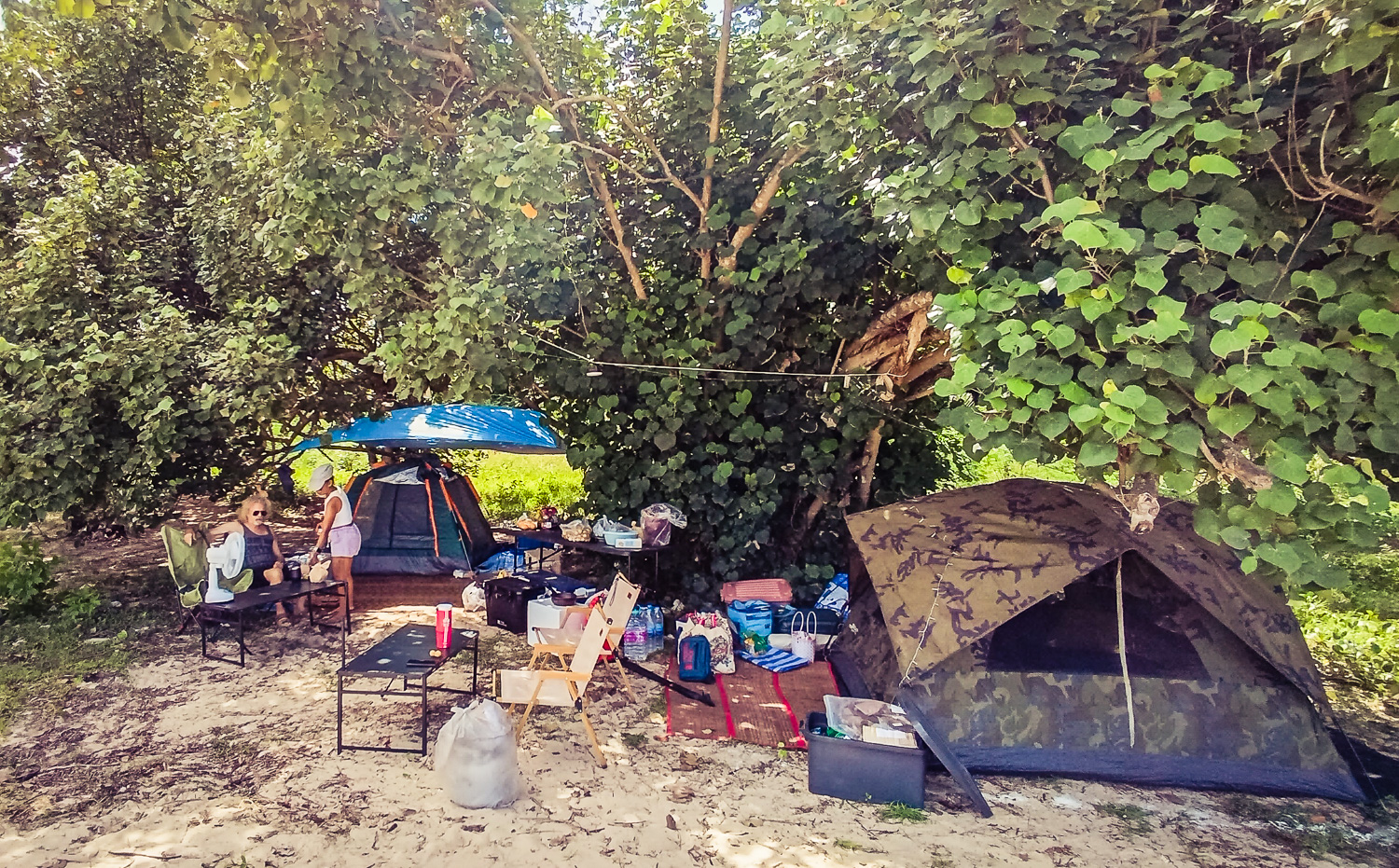
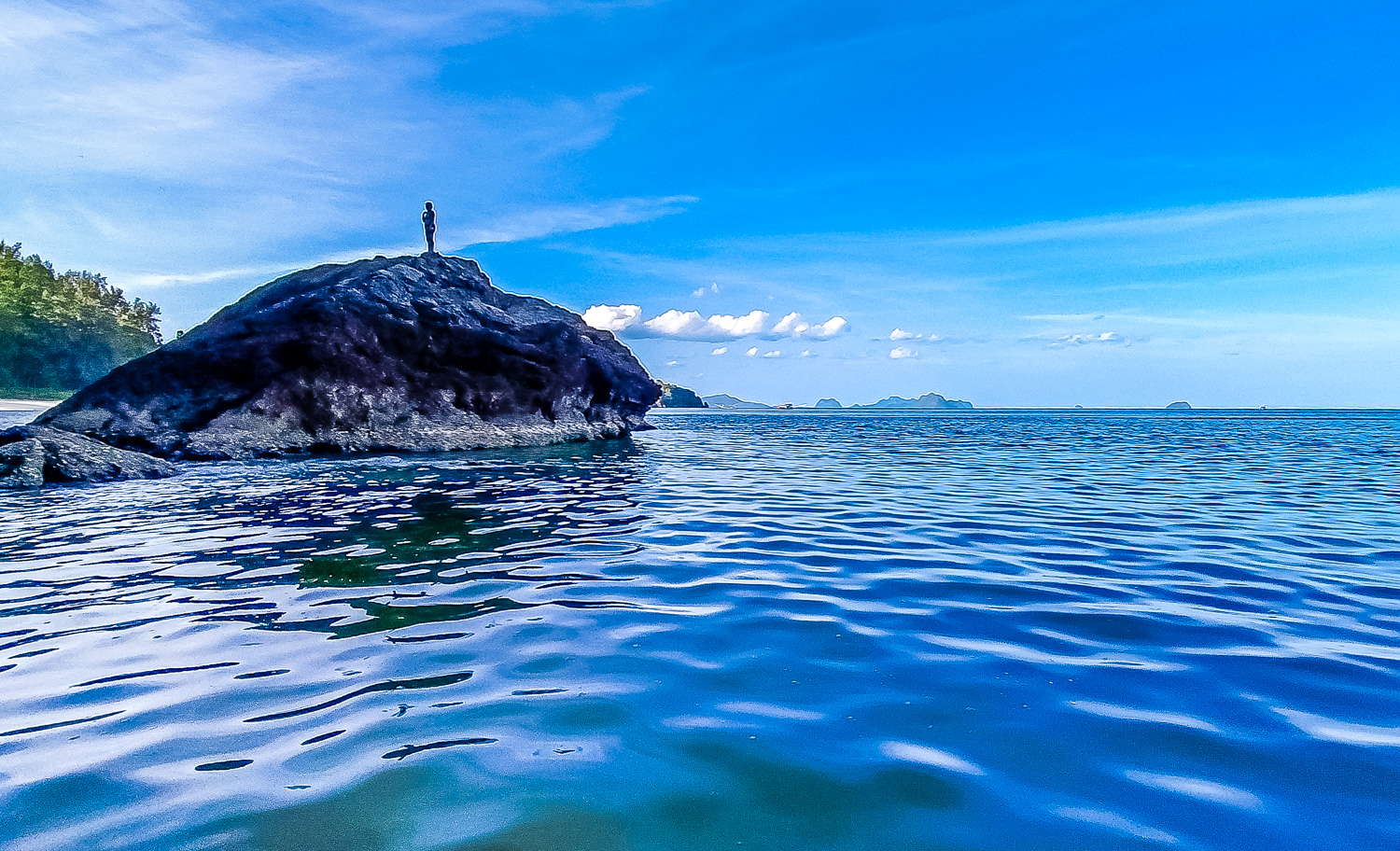
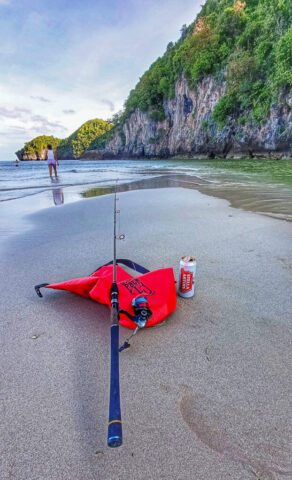
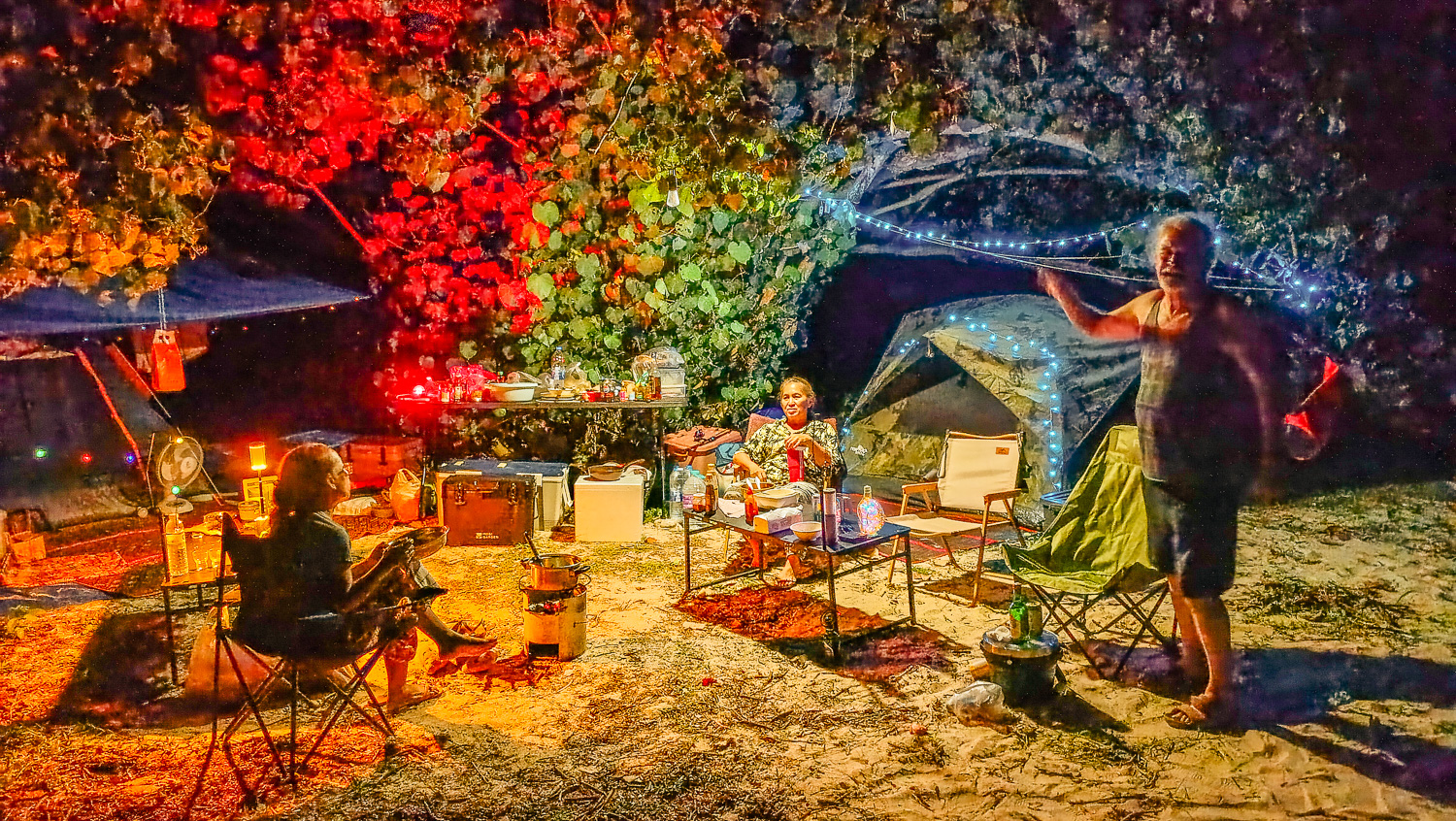
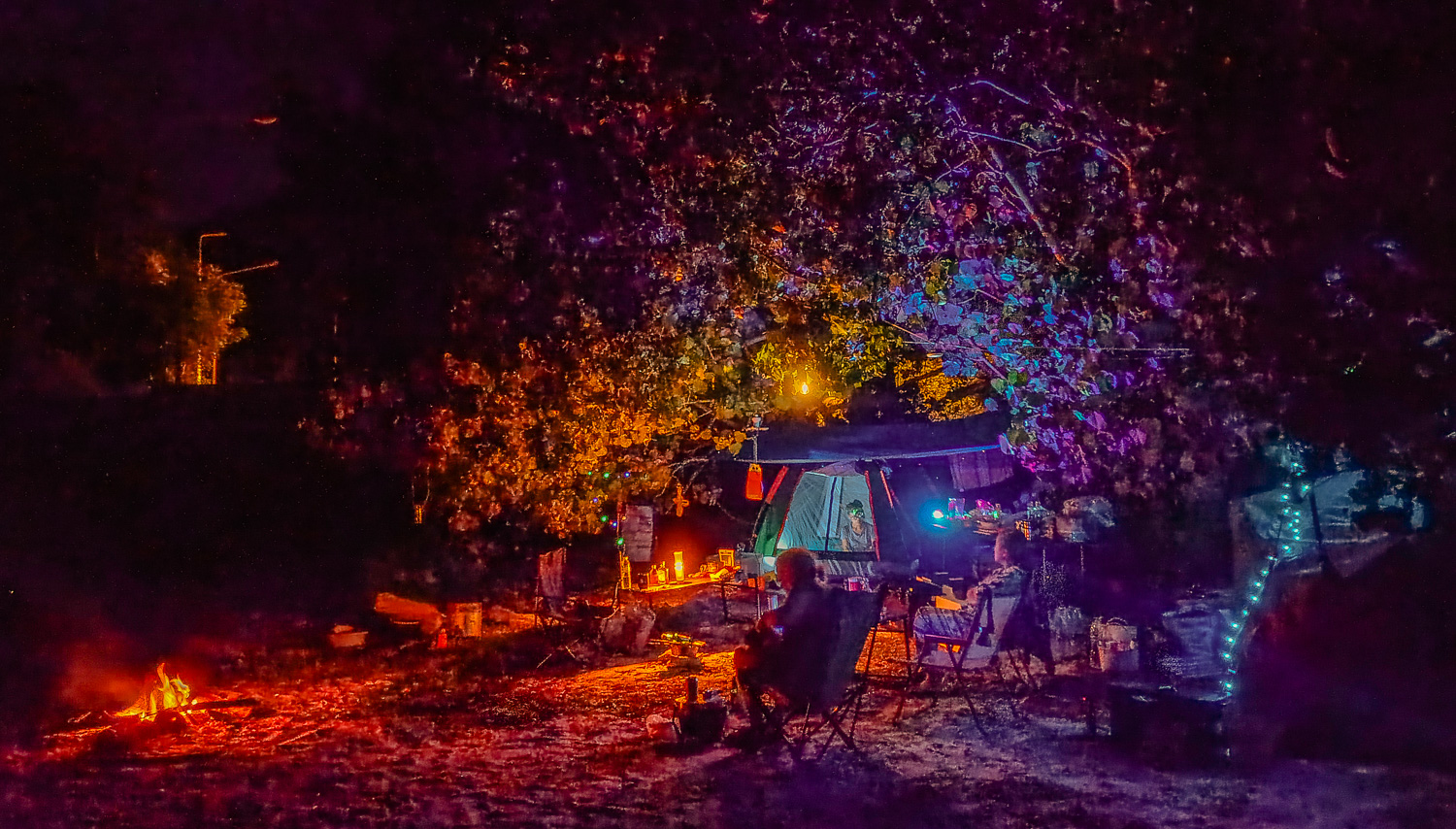
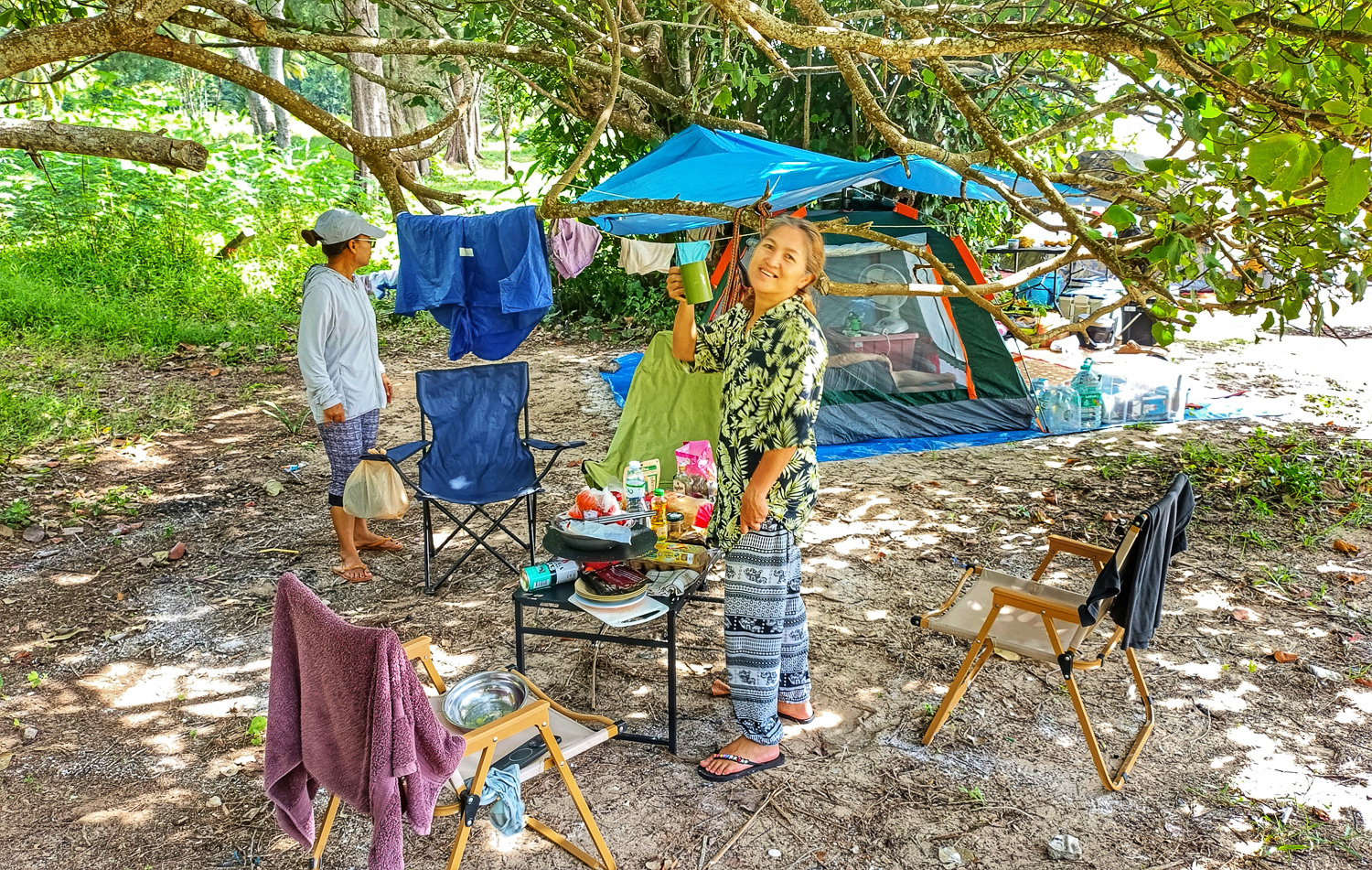
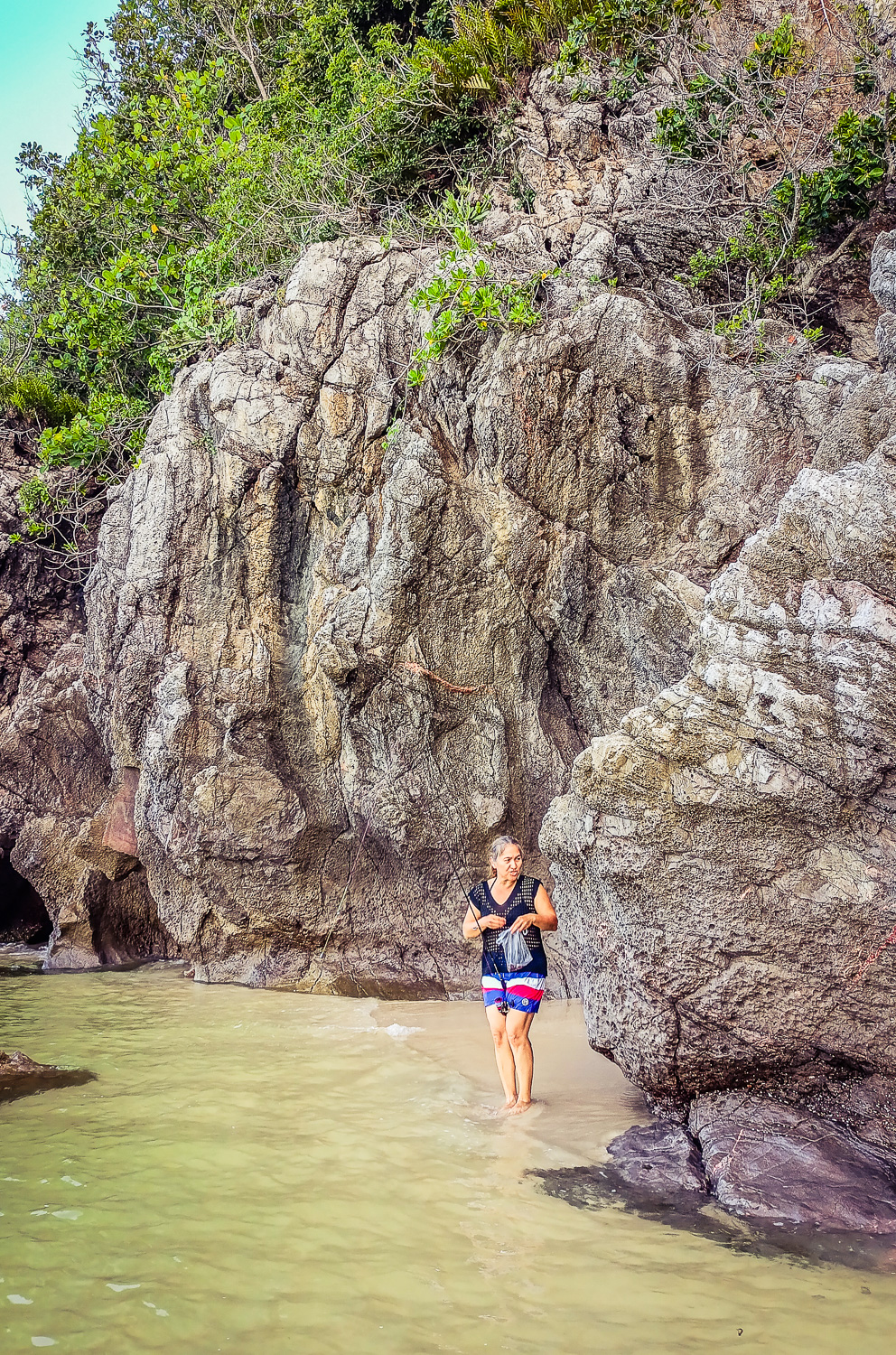
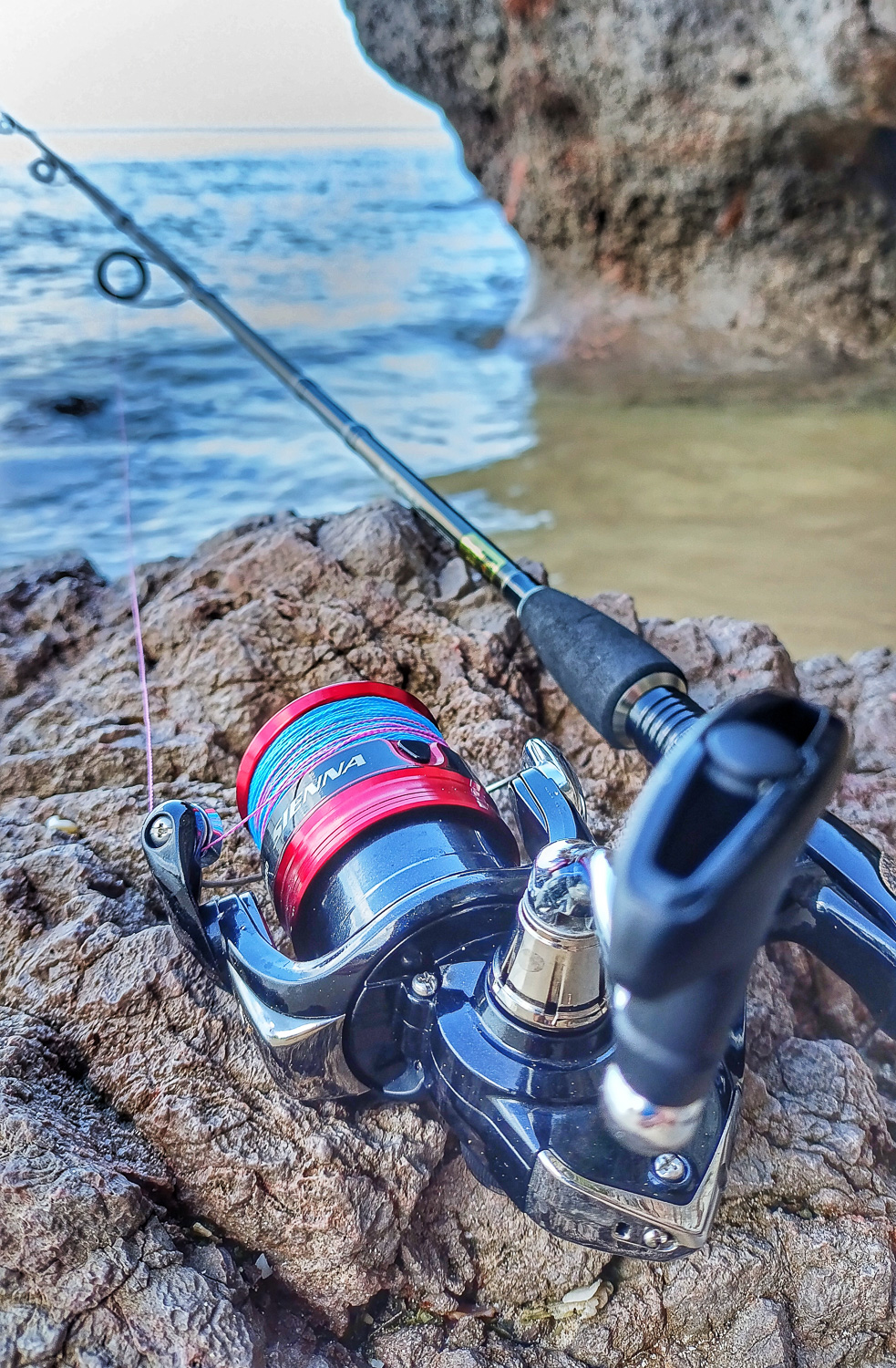
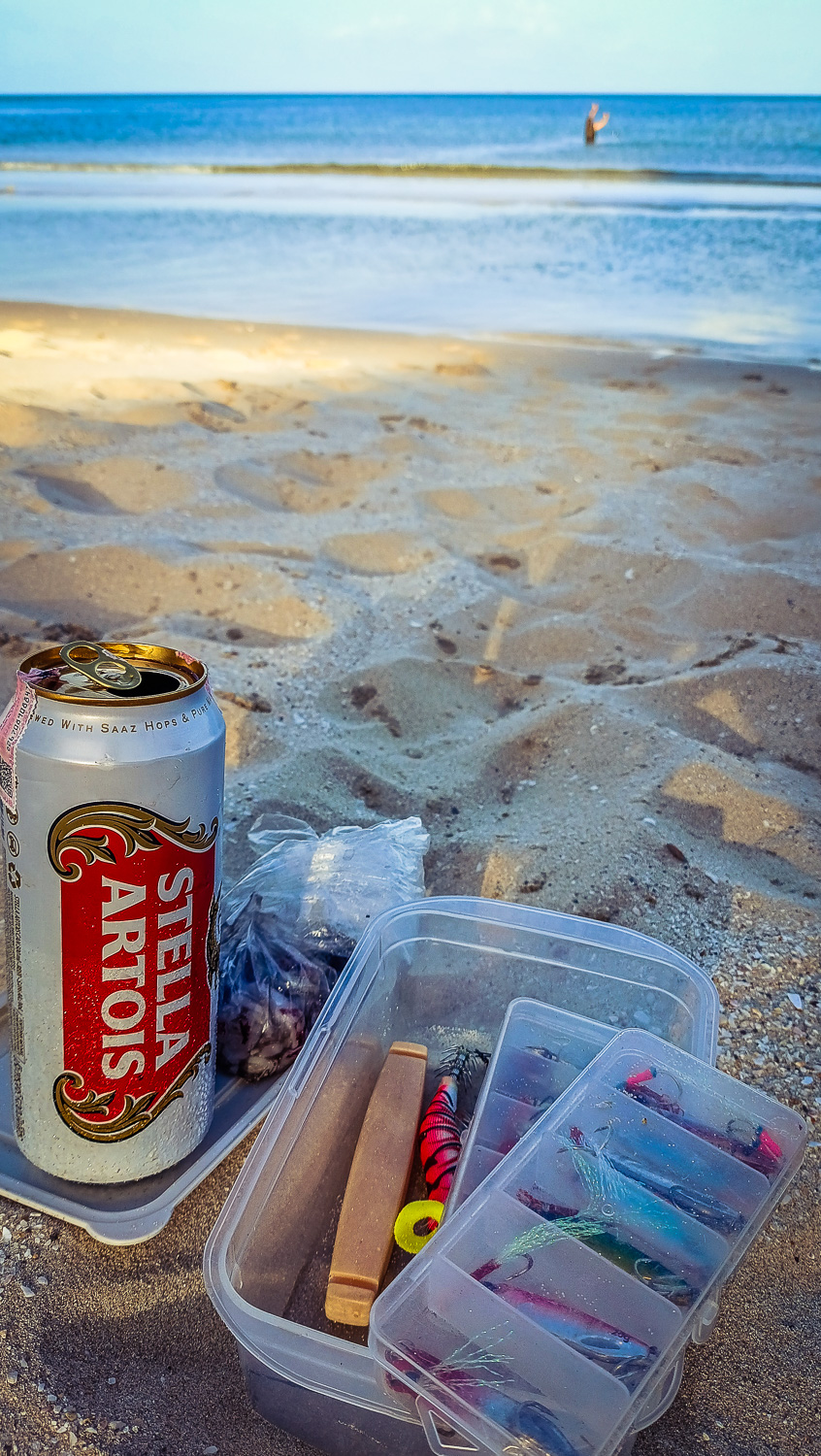
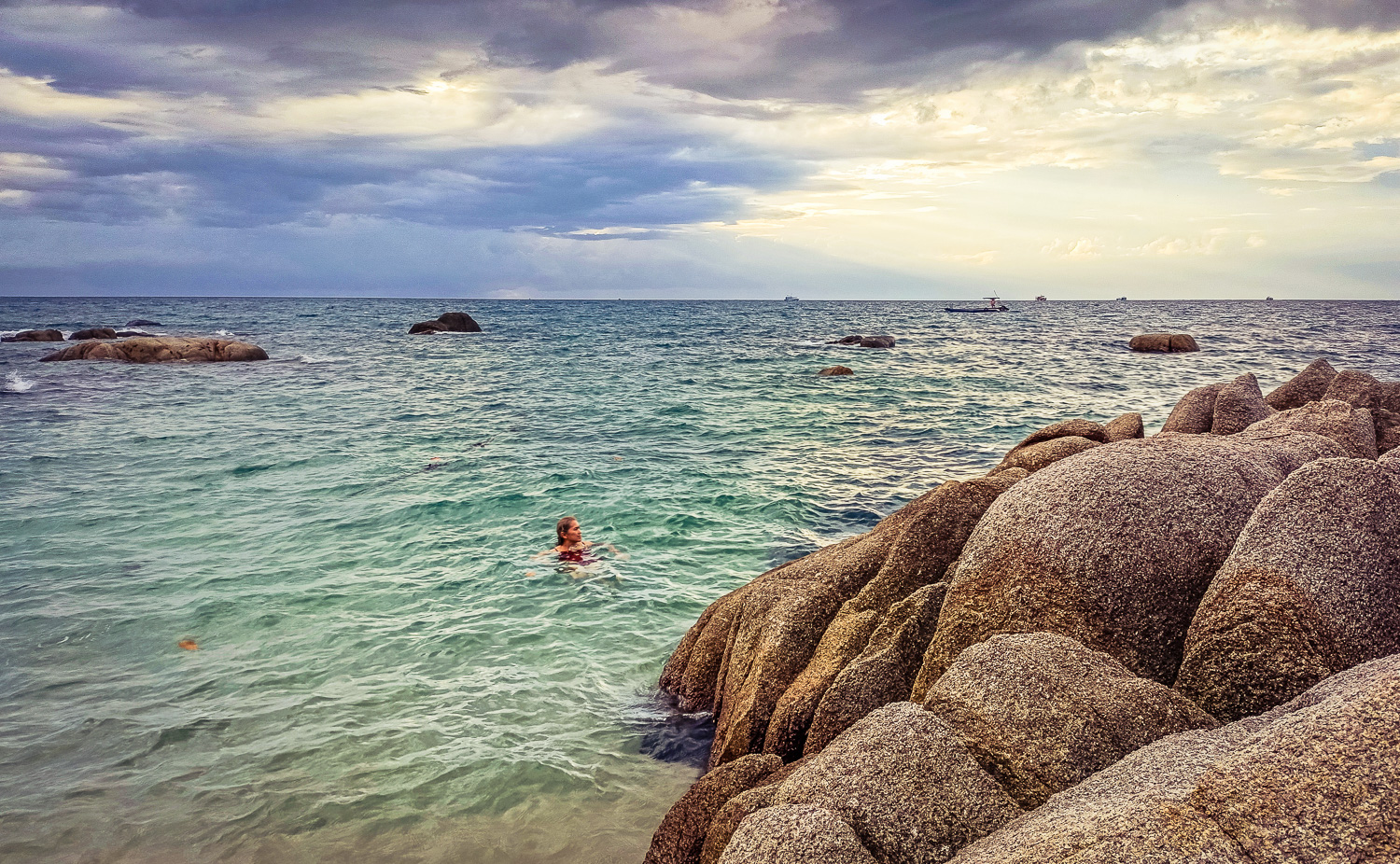
There is literally nothing on this beach, no development whatsoever, just a council-provided toilet block with fresh water, which was essential for living in nature for a couple of days. Other than that, we were self-sufficient. We did a little Trash Hero cleaning around the area, set up camp, and went for a swim in the crystal-clear water; we were the only ones on the beach. It costs nothing to pitch up here as nobody knows about it and it is public land. A few locals rocked up in the late afternoon (Thais don’t do midday sun) to sit on the beach or take their kids for a paddle. I went fishing over by the rocks as the tide was coming in.
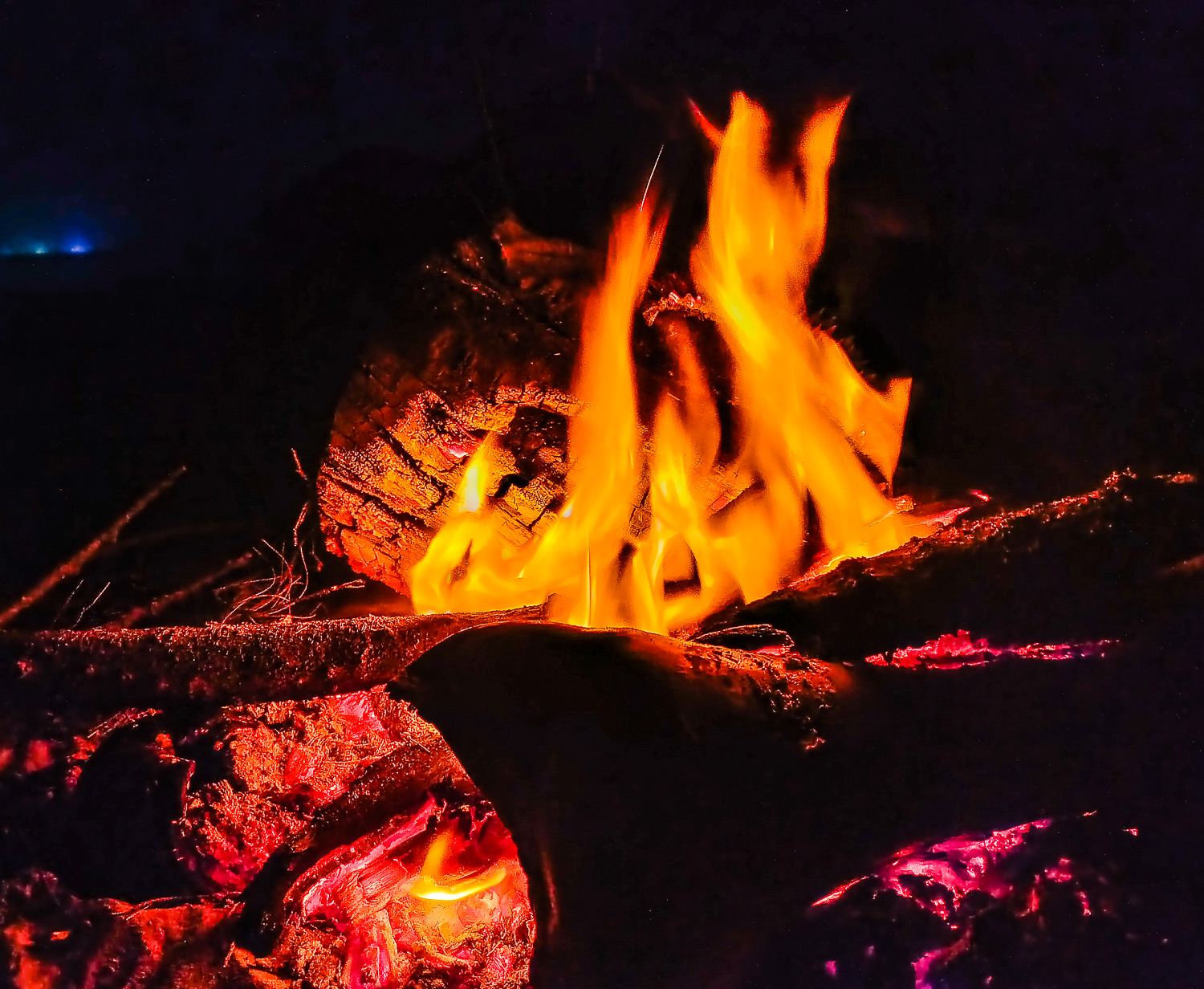
By nightfall, the place was desolate again, and we enjoyed the serenity of it – no dogs, no roosters, no construction, no traffic, no karaoke … just the sound of the surf and the crackle of the campfire.
We were up early to the blissful sound of silence and fired up the stove for a coffee. The trees we found offered shade for most of the day, but there were some of those persistent small flies that were a pain. A bit of bug spray solved it, though. The day was spent swimming and fishing around the rocks; nothing sizable was caught, though, just small black and white reef fish. There were many lumps of coral washed up on the beach, but no actual shore reef, so they must have come from the islands during a storm.
Again, we didn’t see anyone all day, and a few locals turned up for an hour at sunset before departing and leaving us to cook up the evening meal on the barbecue and enjoy the fire and solitude.
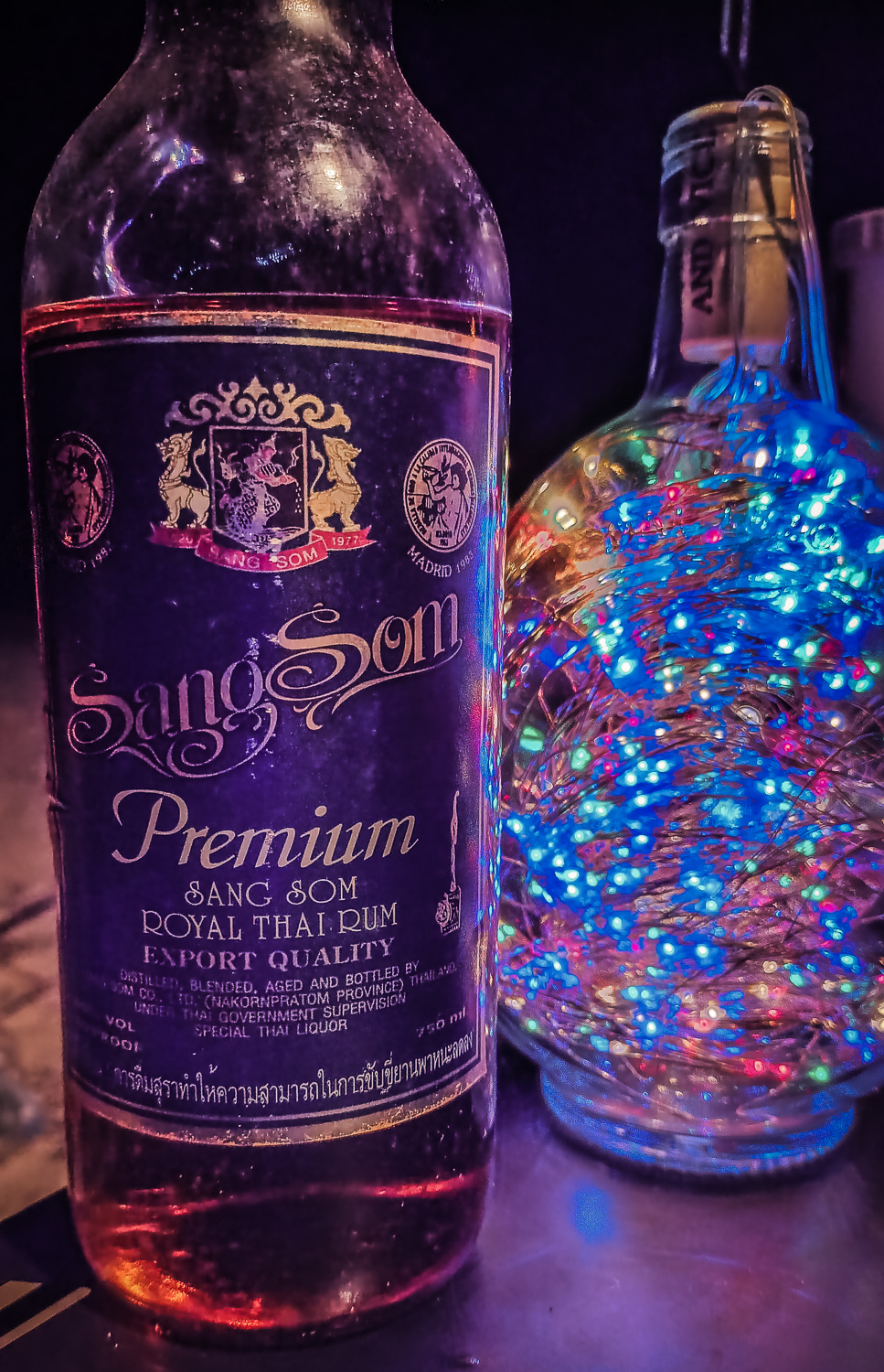
The great thing about camping is that it is a very low-cost trip; camping was free at this spot and is very cheap at national parks aside from the inflated foreigner entrance fees, and all it costs is the fuel and food (and a bit extra for a bottle of wine). The best part about wild camping is you can do what you like: swim, kayak, go fishing, have a fire/bbq, put on some music, have a drink, etc. Thai national parks are very clean and well-kept, but there are hundreds of restrictions and prohibitions, so they’re not much fun to camp in and are more akin to staying on a military base.
Koh Tao
Koh Tao is not a place I would choose to visit, however, friends who were visiting at the time sweetened the deal with an offer of getting back into diving (thanks JJ and JD). The last time I was on the island was in 2005, 21 years ago, and the first time I visited was in the late 1990s when there were no cars, ATMs, apartments, concrete roads, internet or phone signal, and the power was shut off at 6pm.
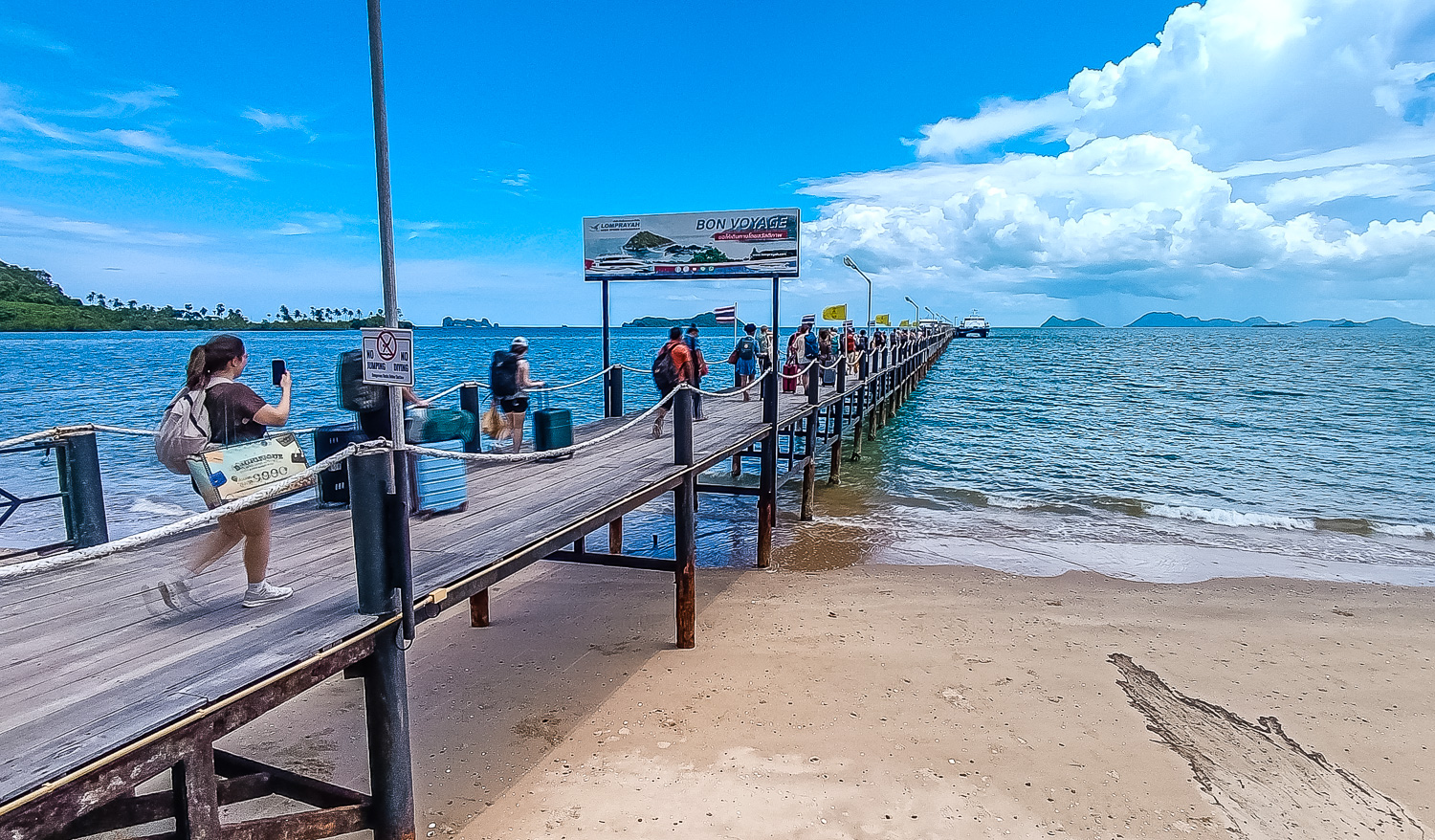
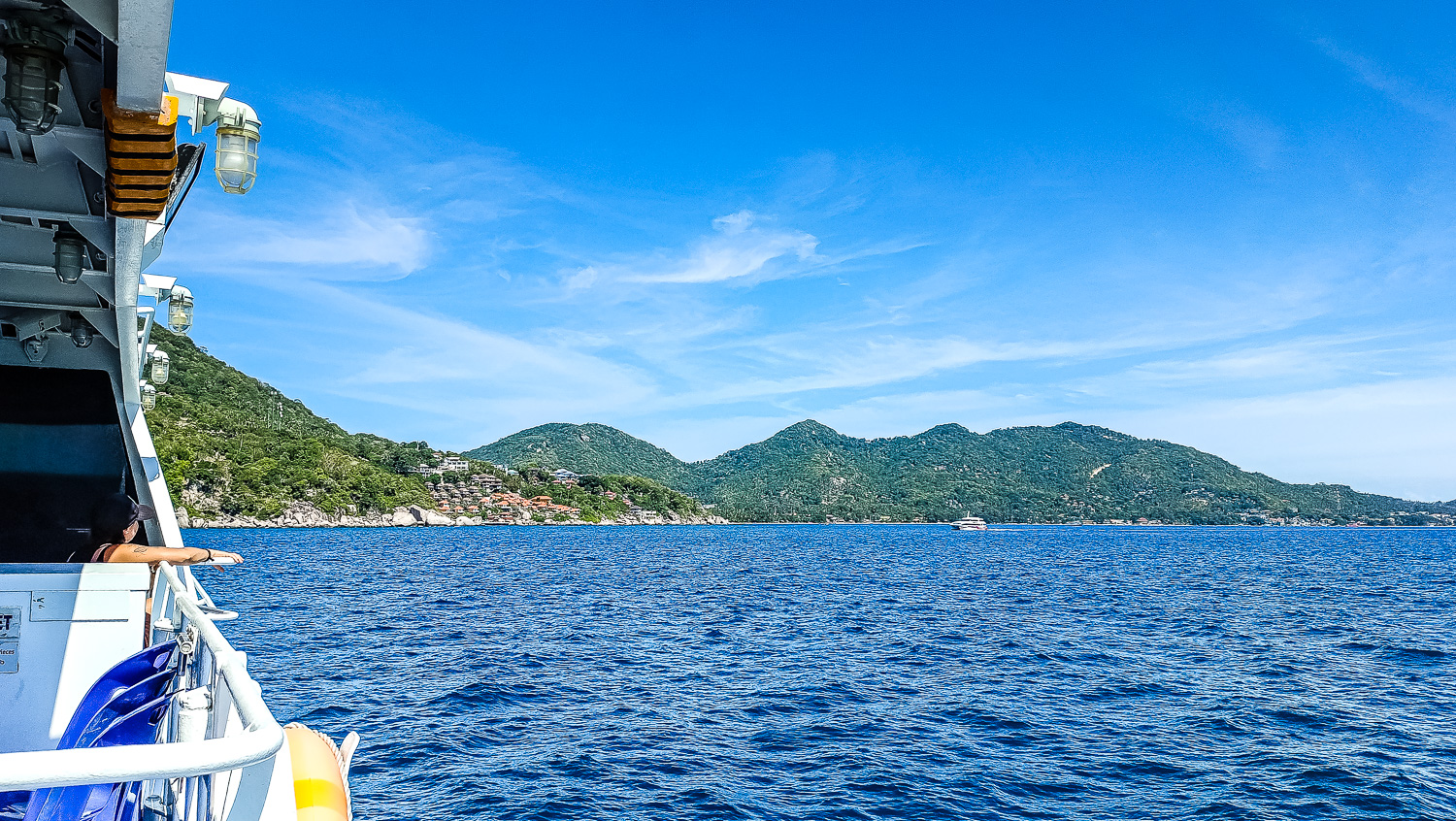
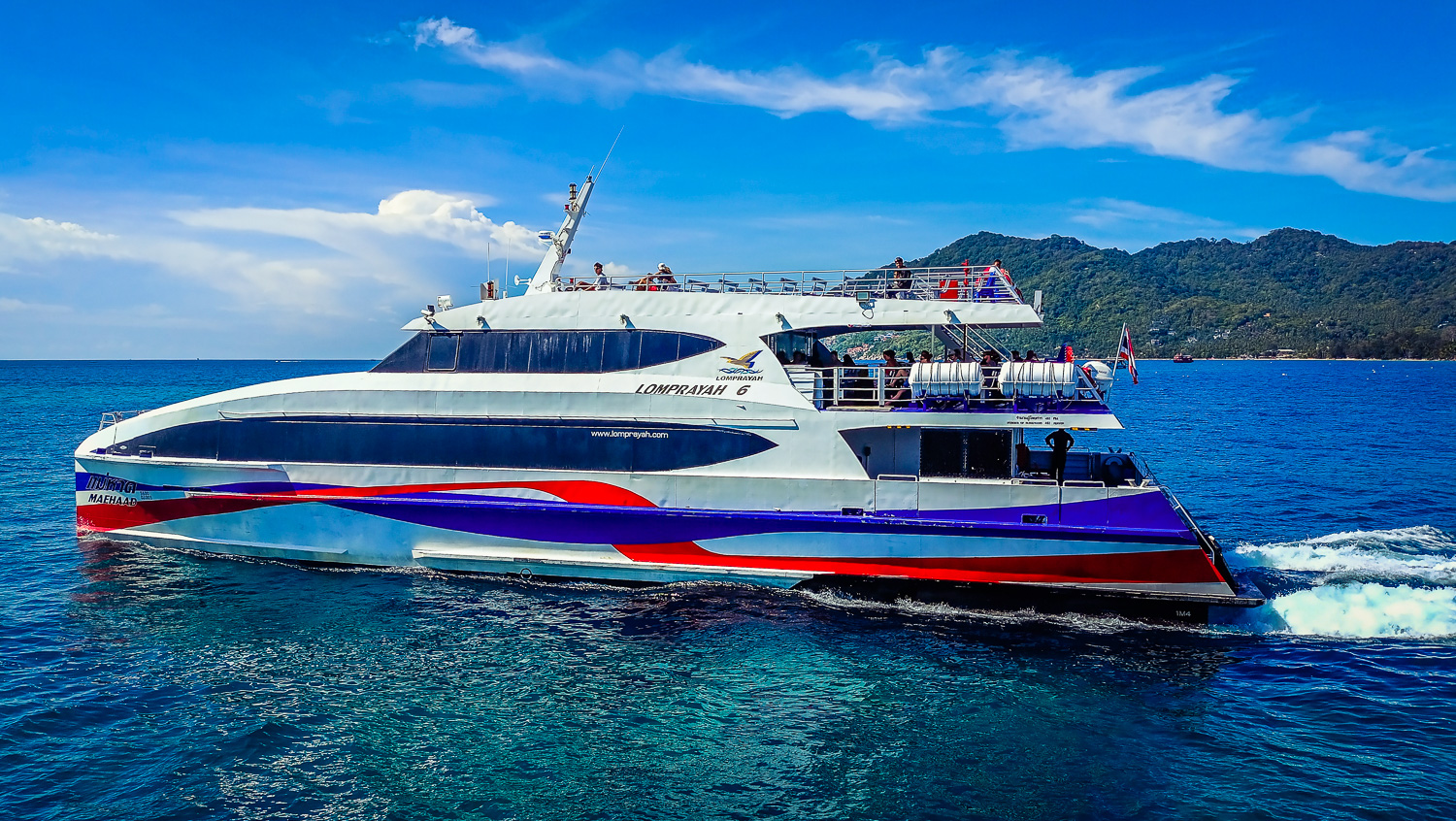
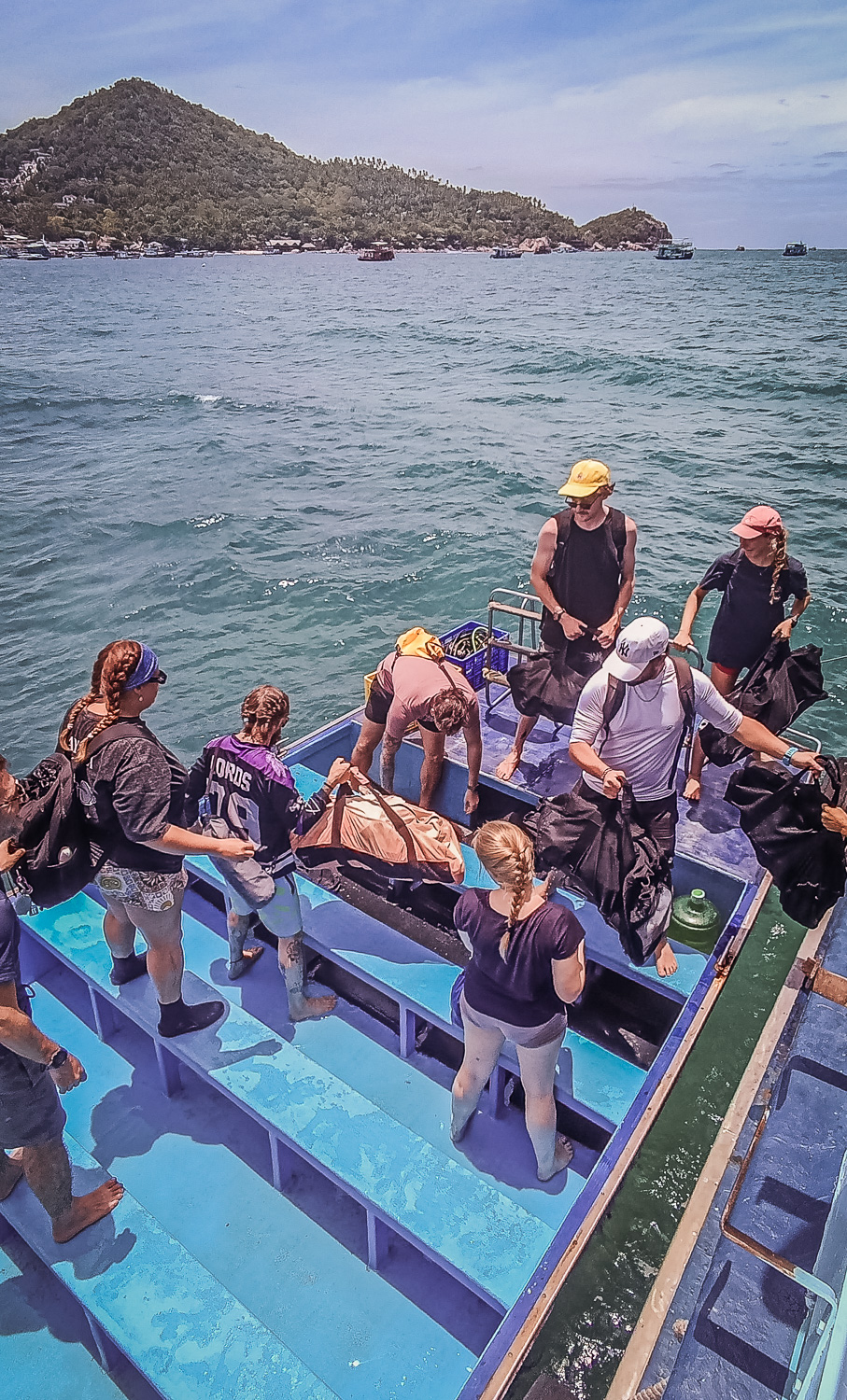
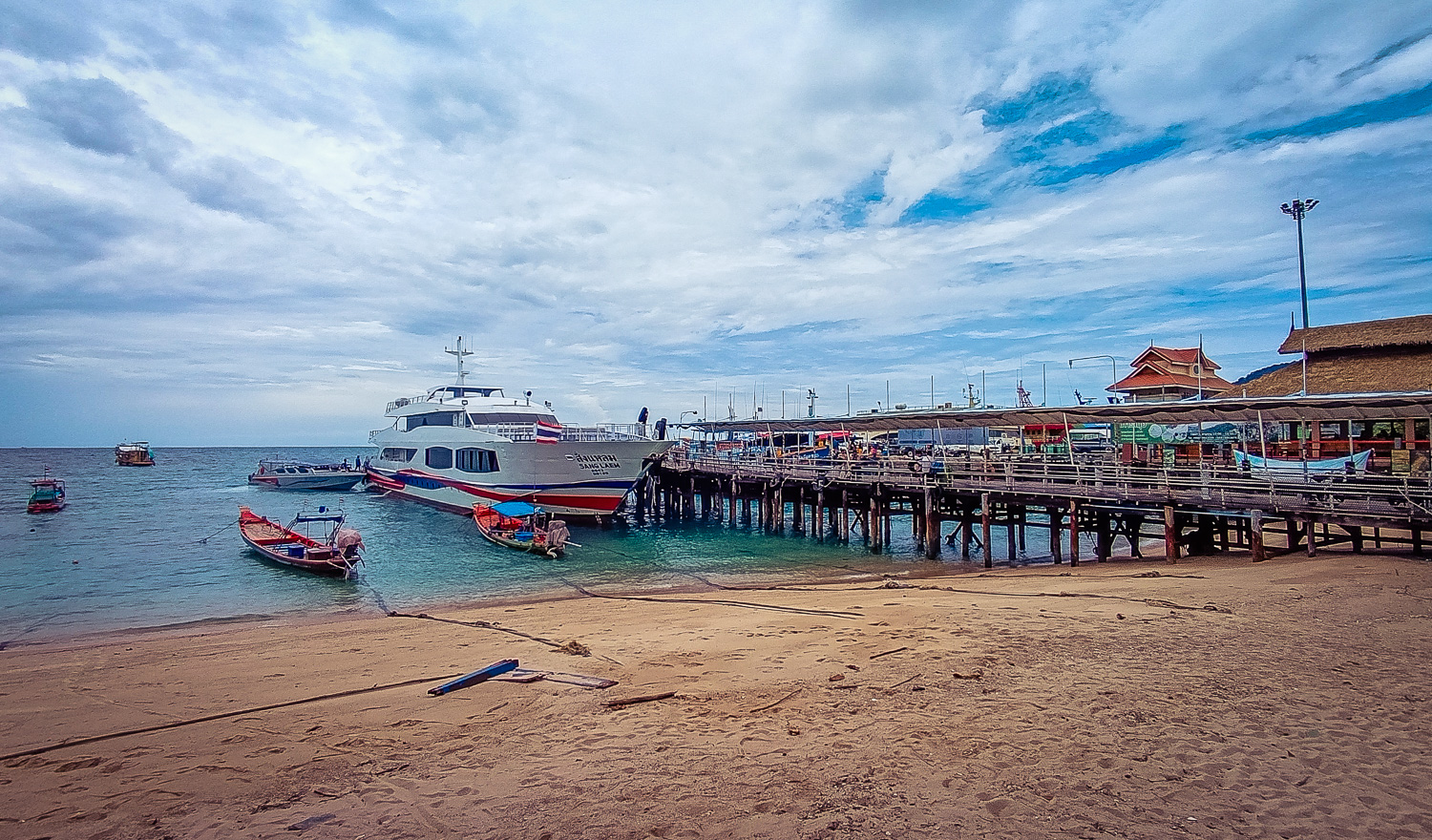
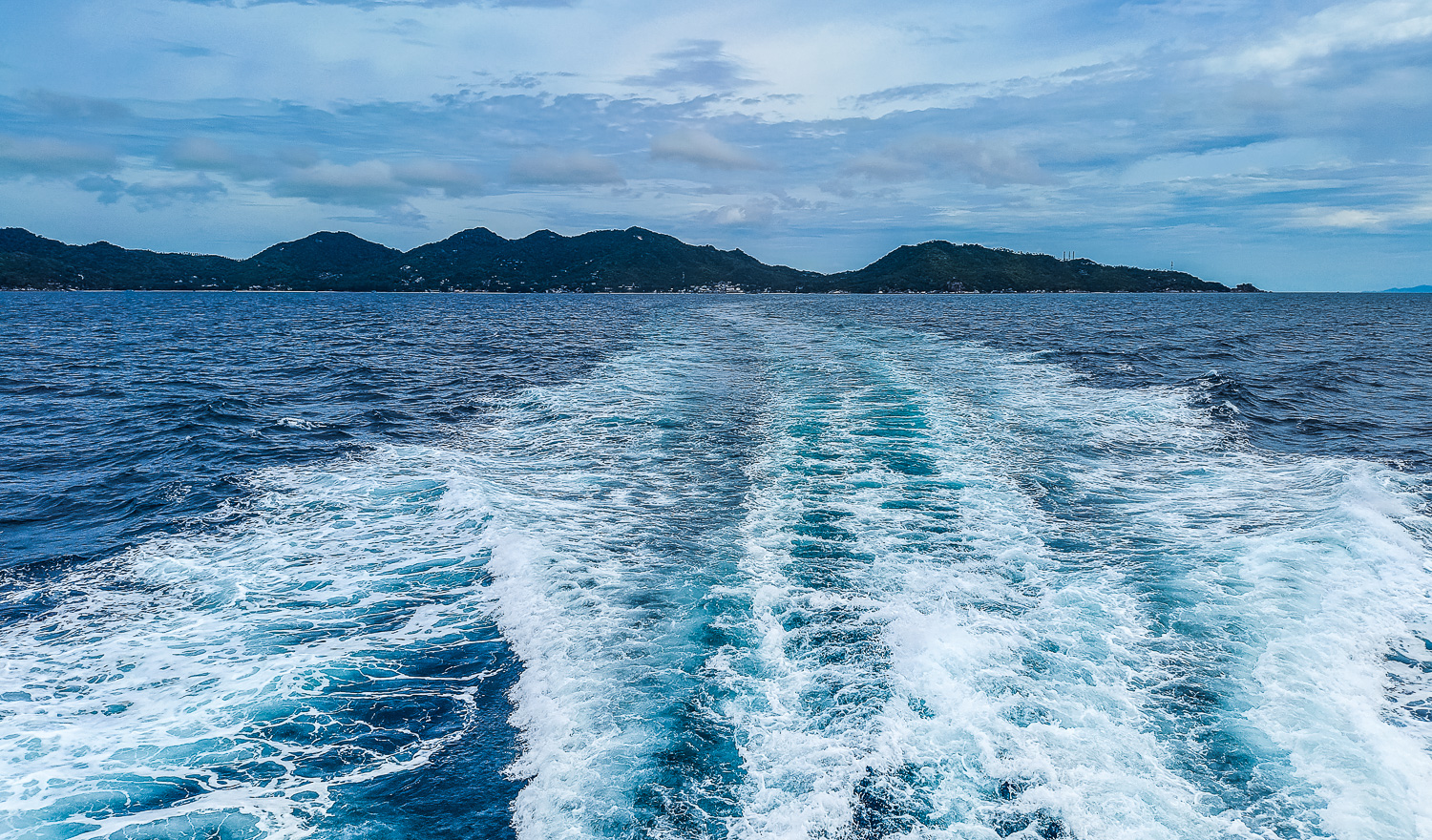
The Lomprayah ferry was 750 baht per person one way (four times more than I remember last time I went); it was about a quarter full, and the crossing took almost two hours.
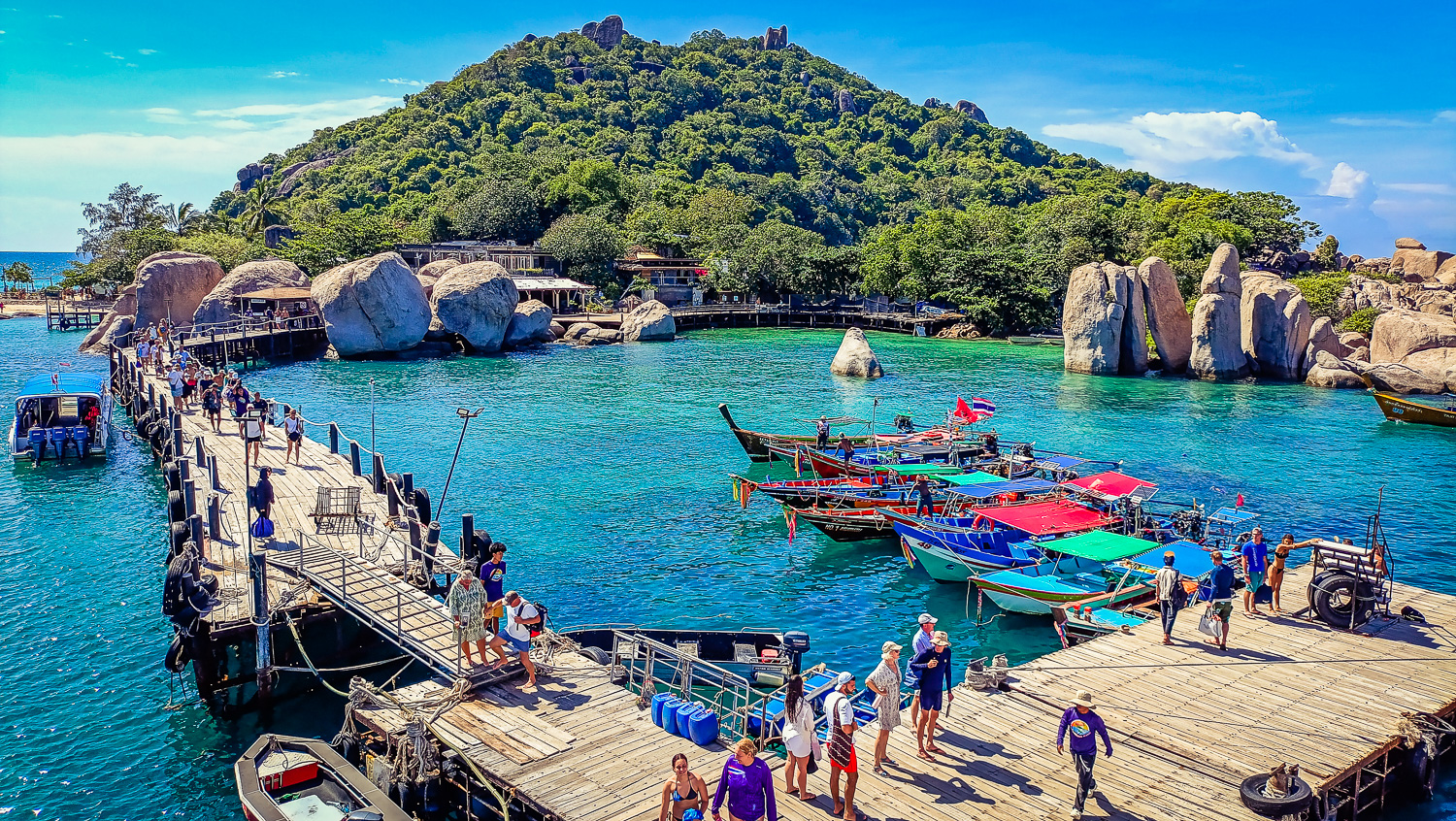
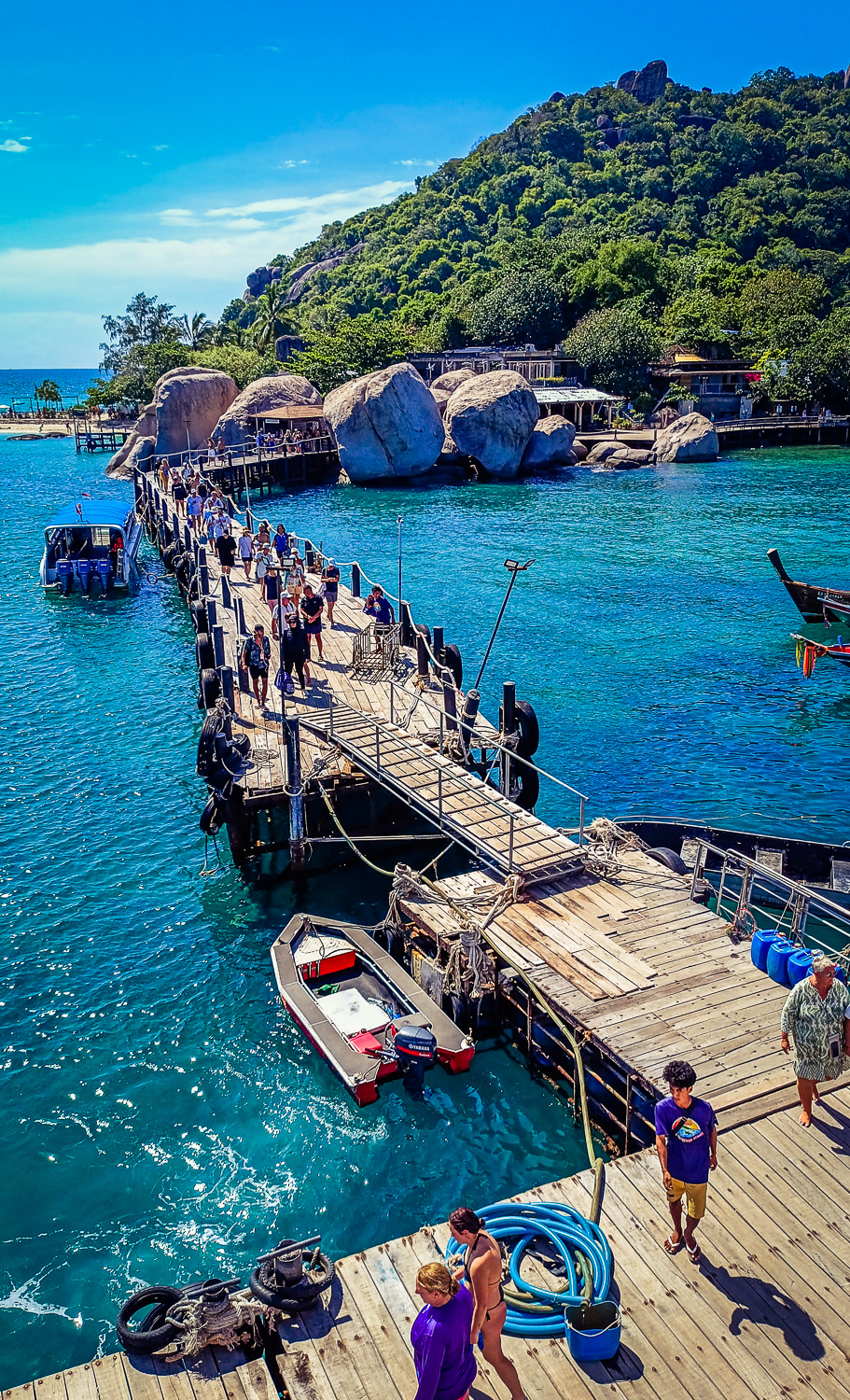
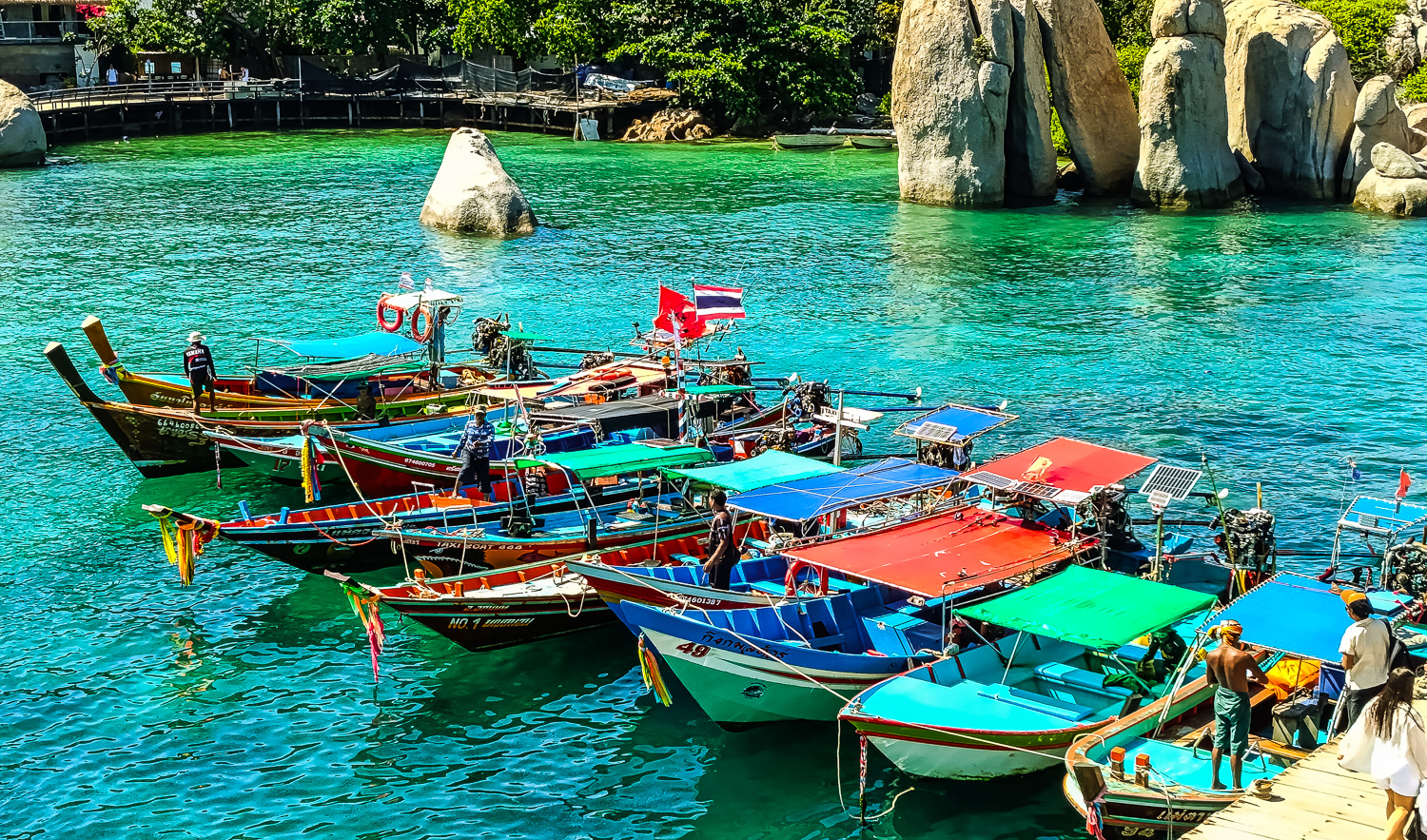
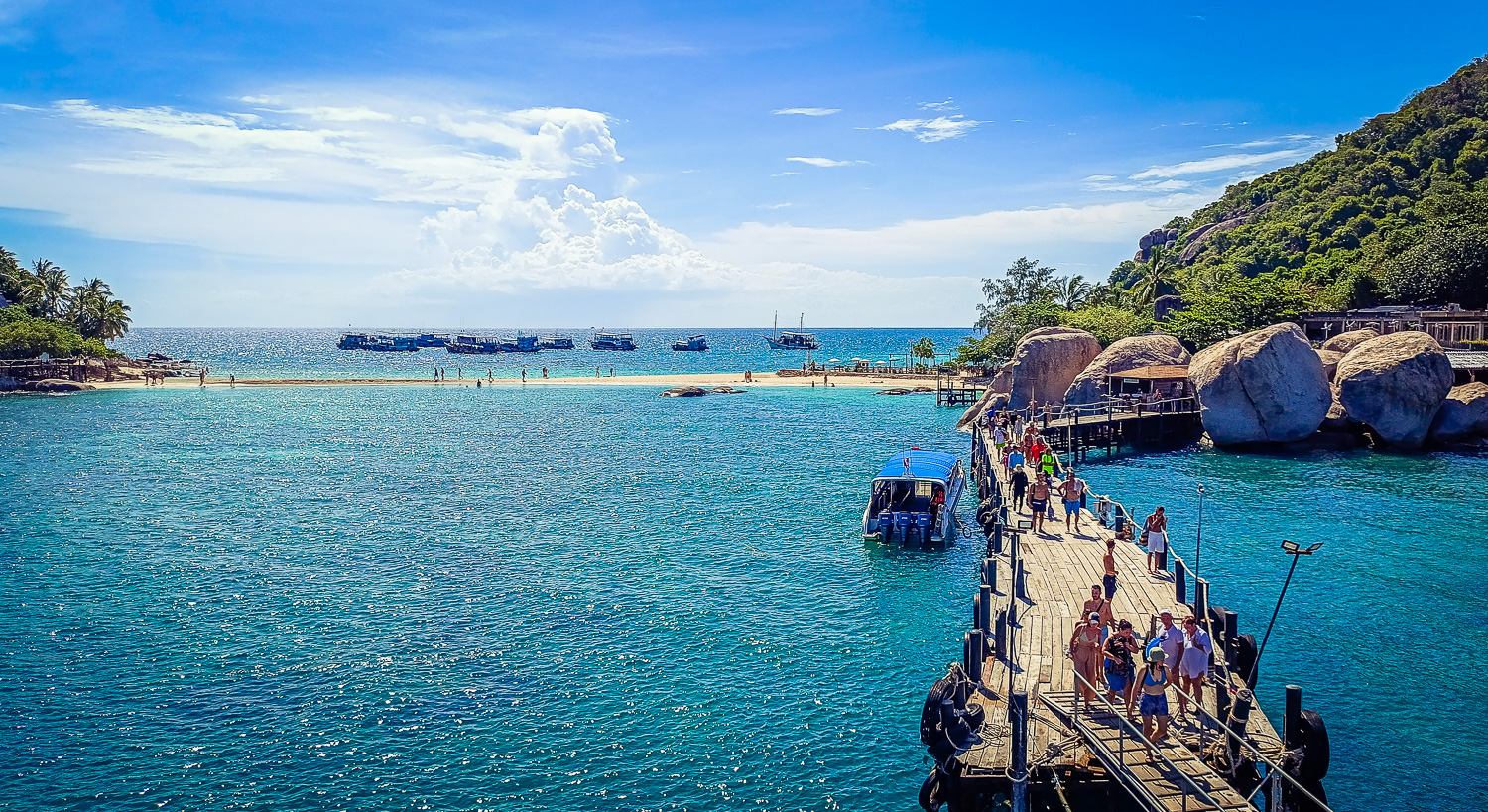
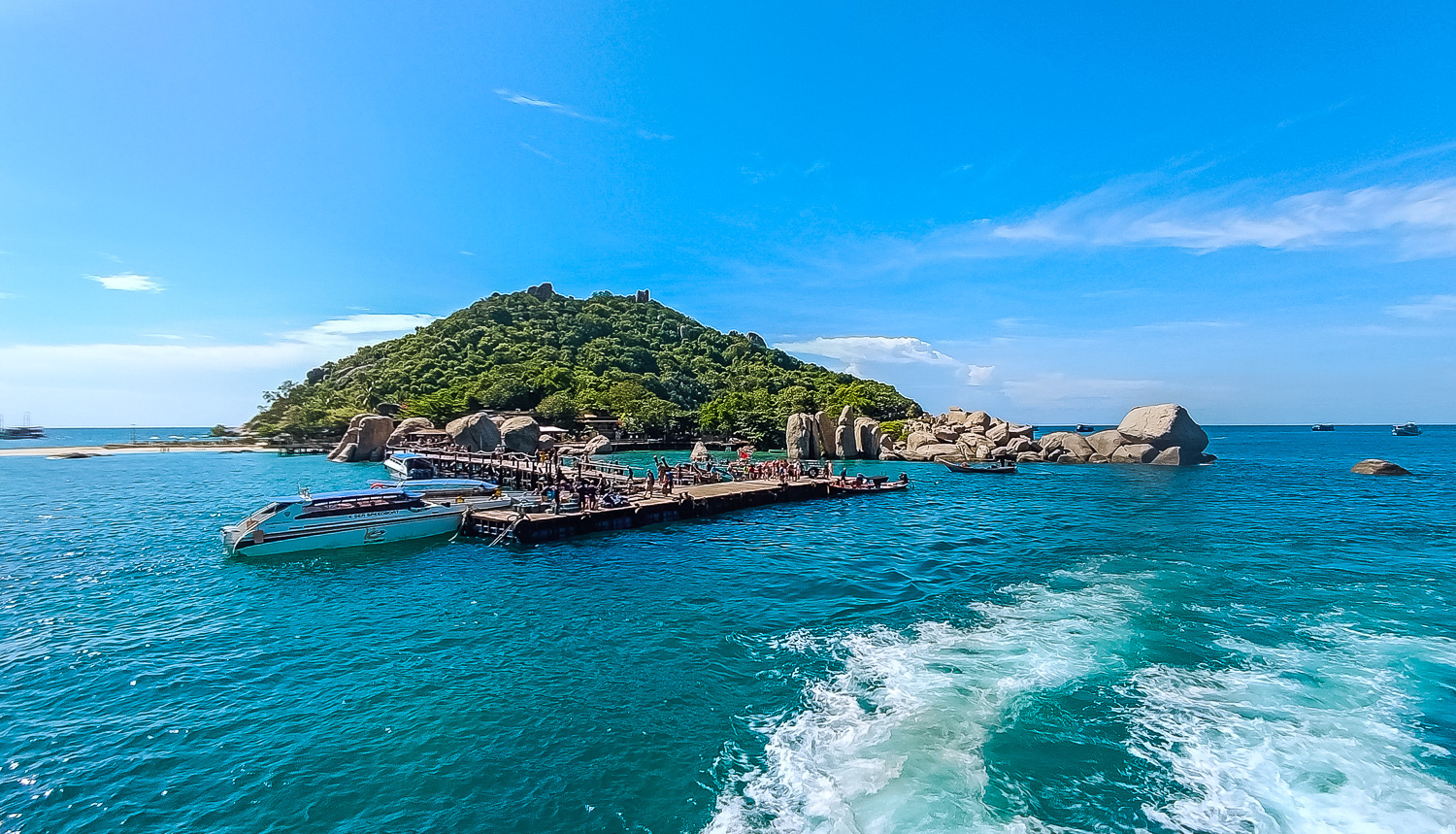
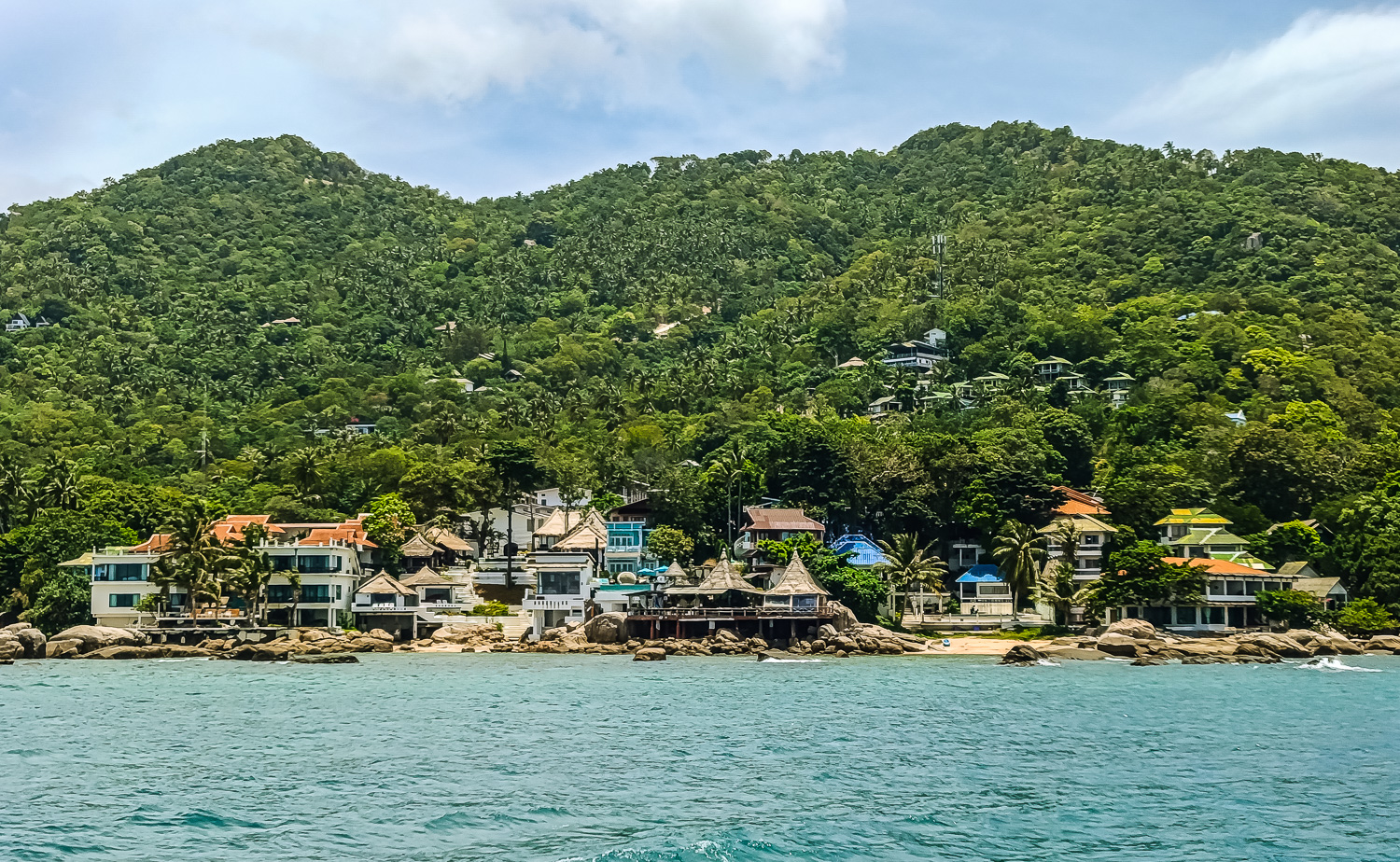
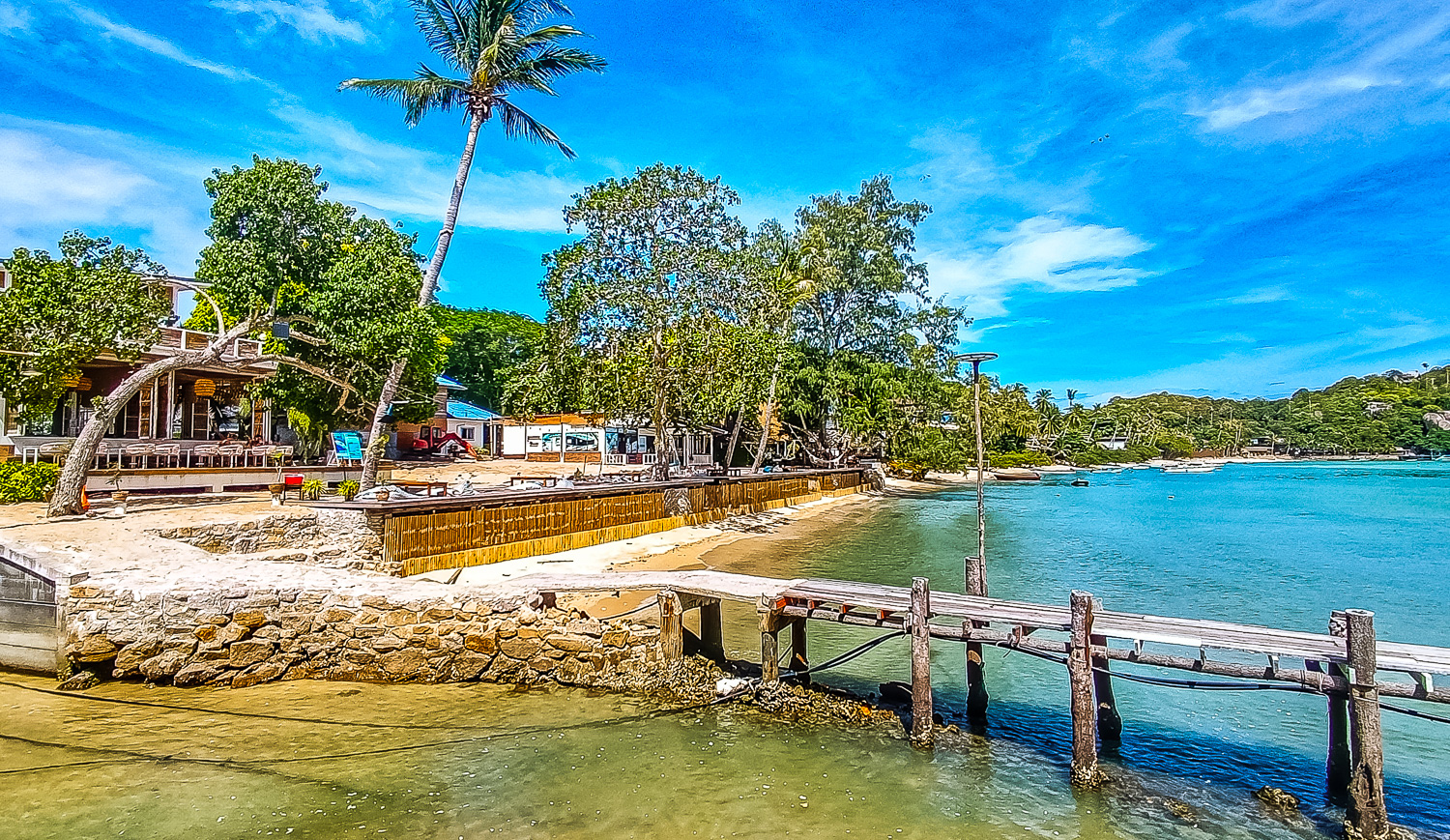
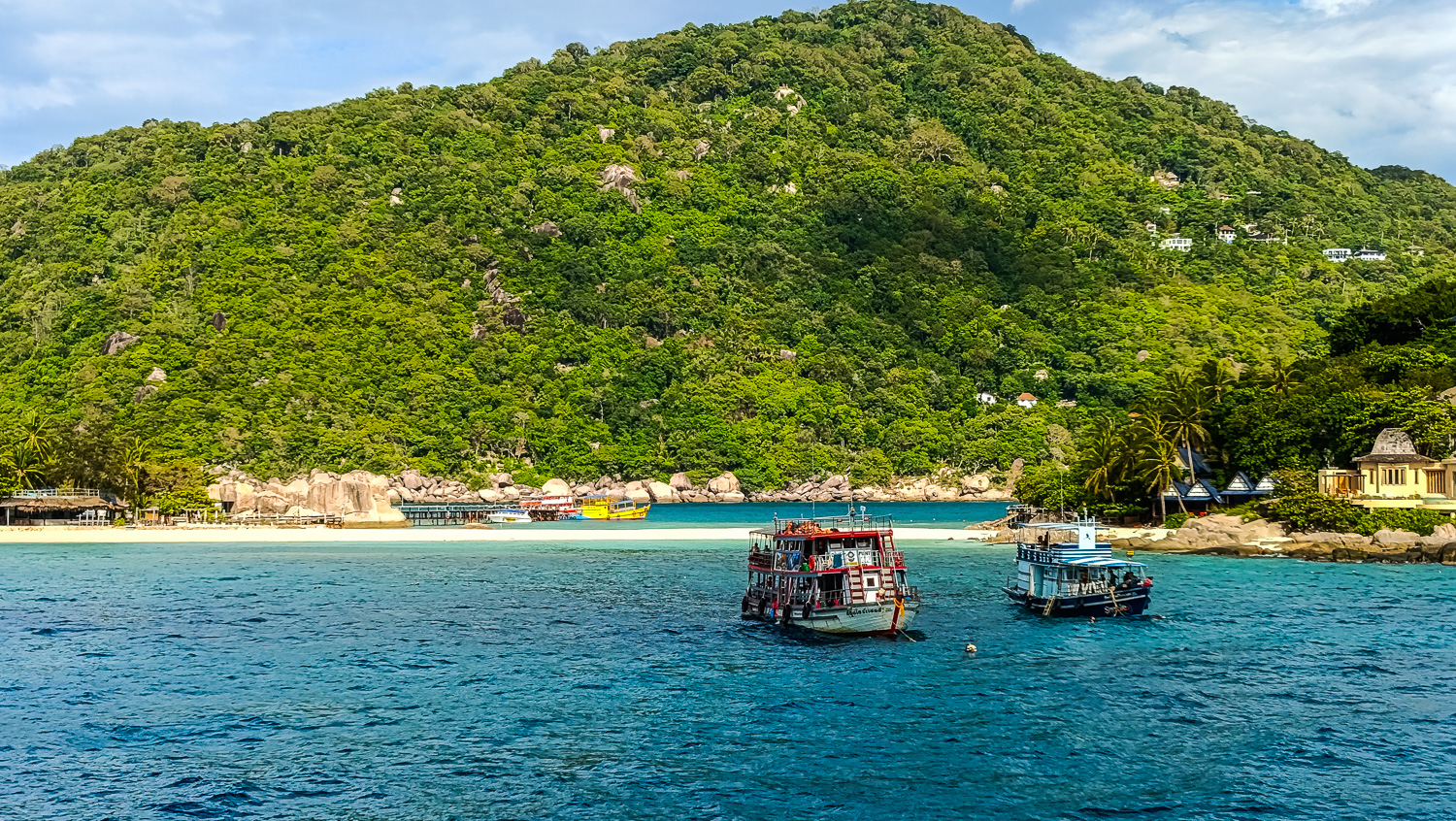
Upon arrival, it was like docking in a different country; almost the entire island has been built up, and it was 70% farangs who were under 25, 20% Burmese, and about 10% Thais. The bustling Mae Haad pier was a hive of activity with the usual rip-off taxi touts wanting 500 baht for a 1-kilometer journey, overpriced scooter rentals, expensive restaurants, and more dive shops than I could count.
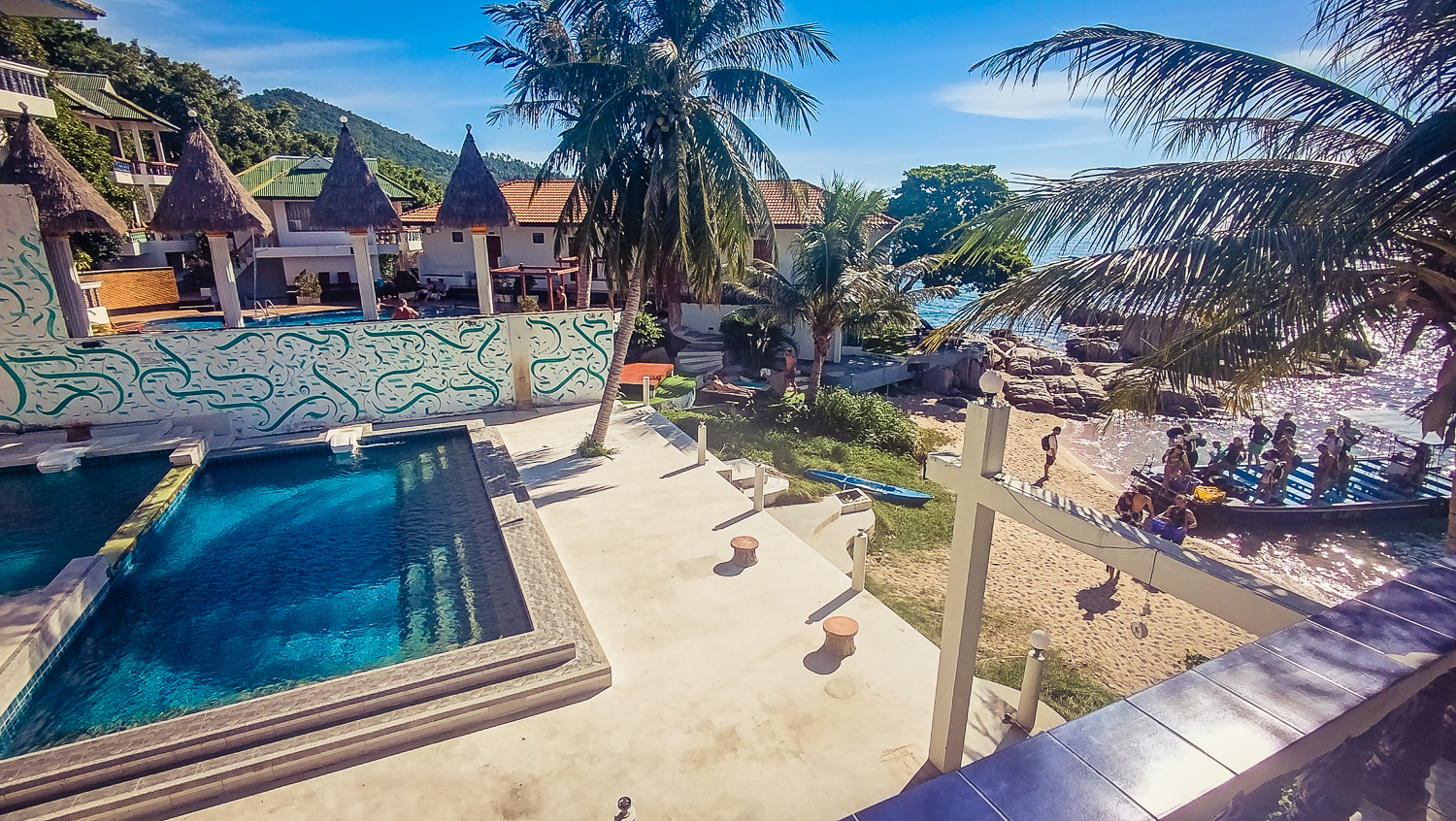
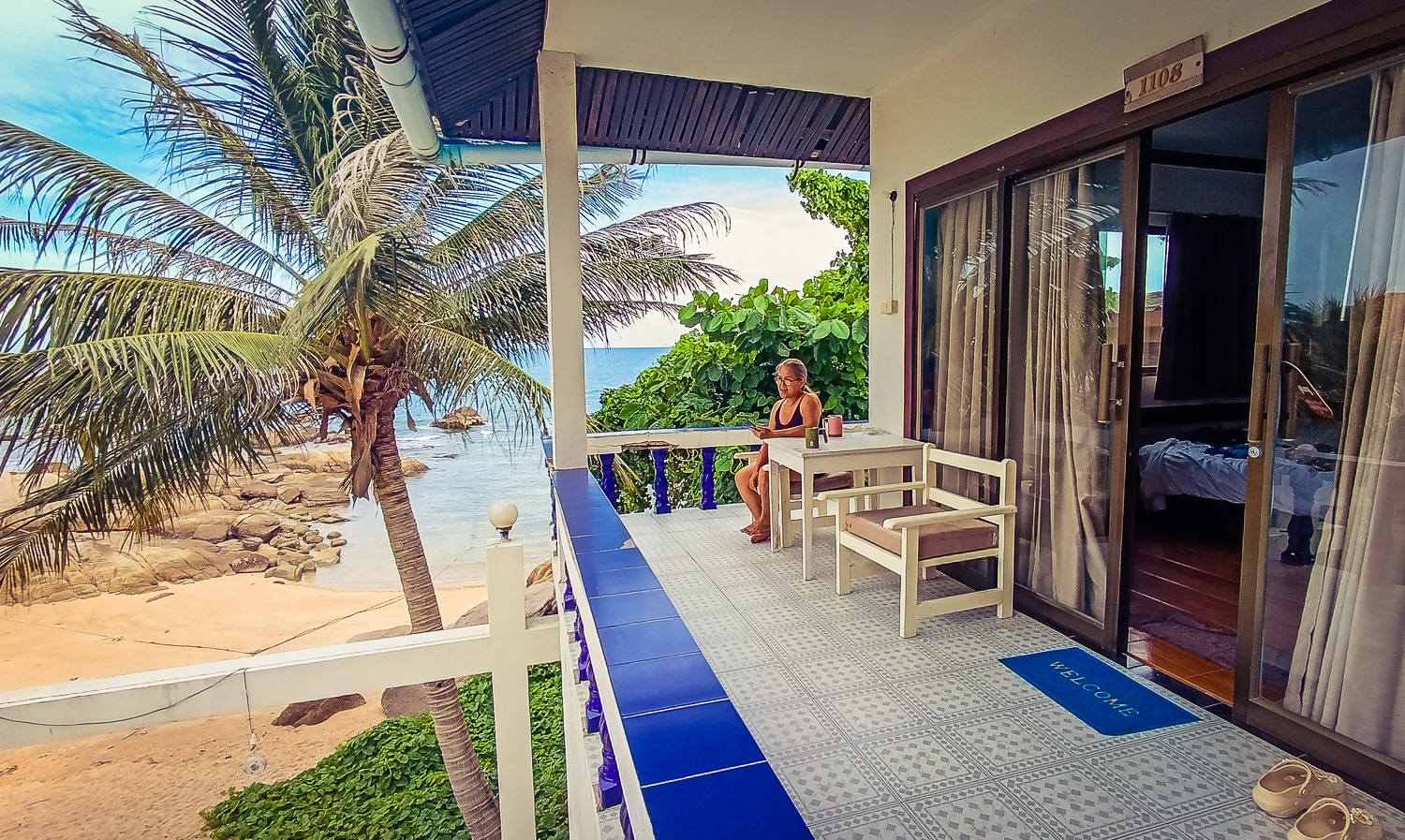
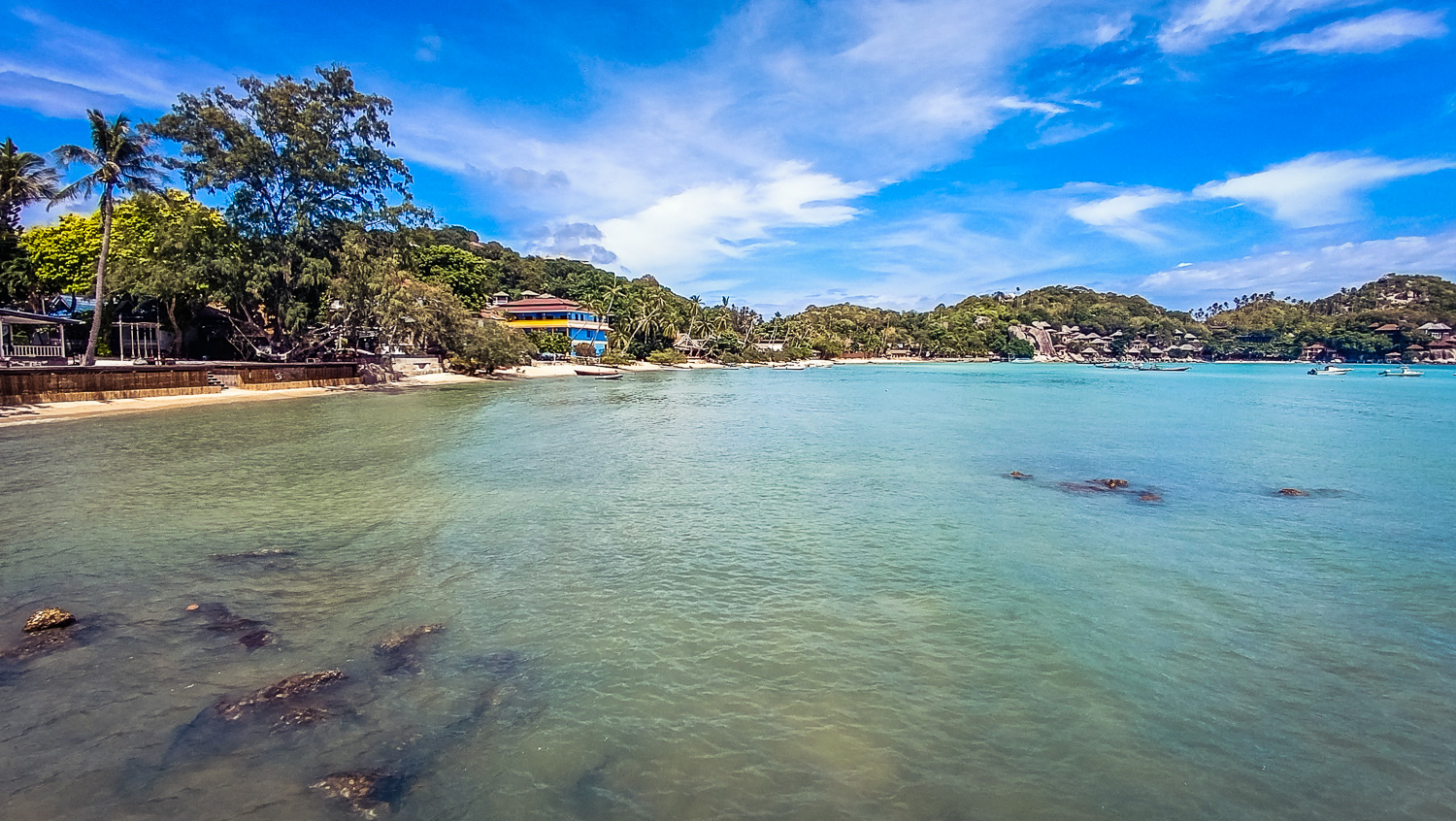
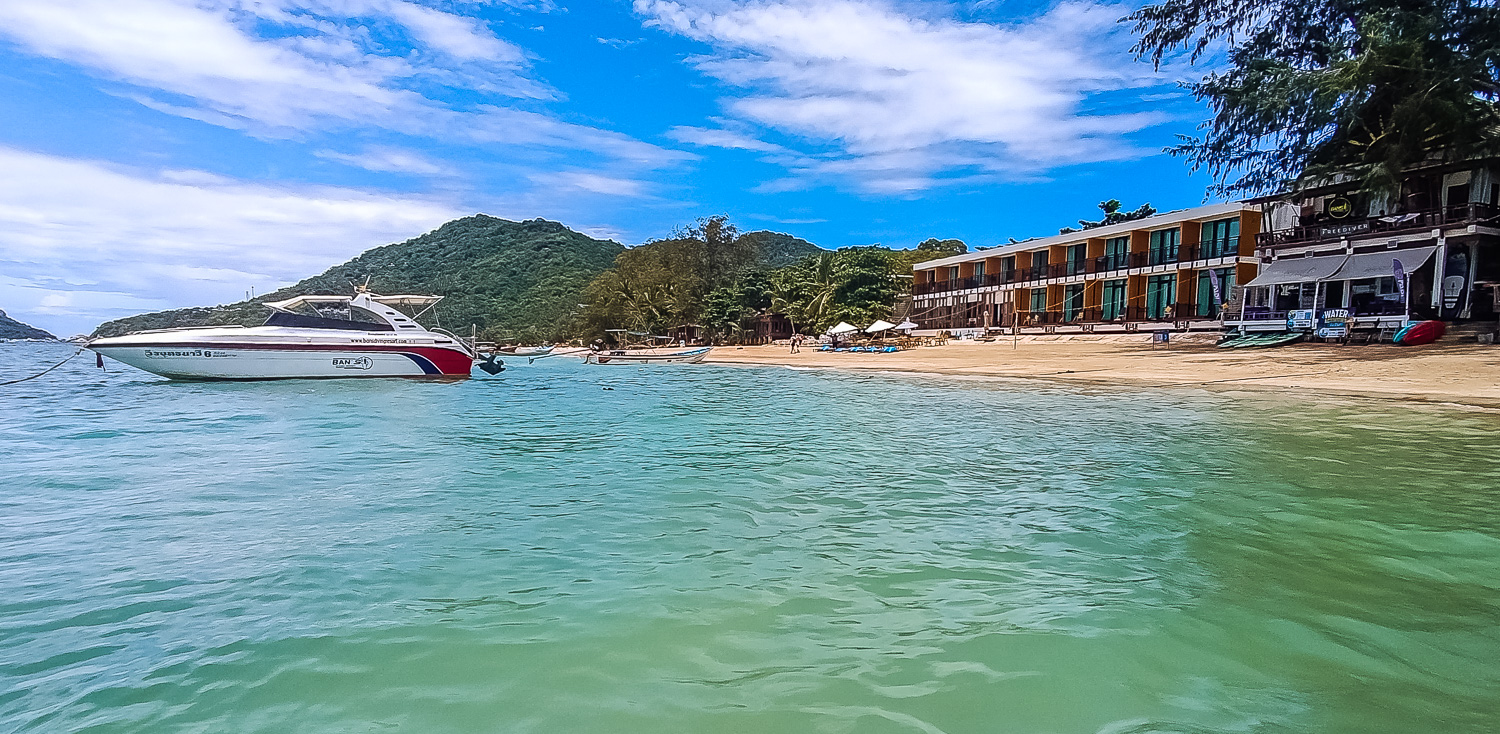
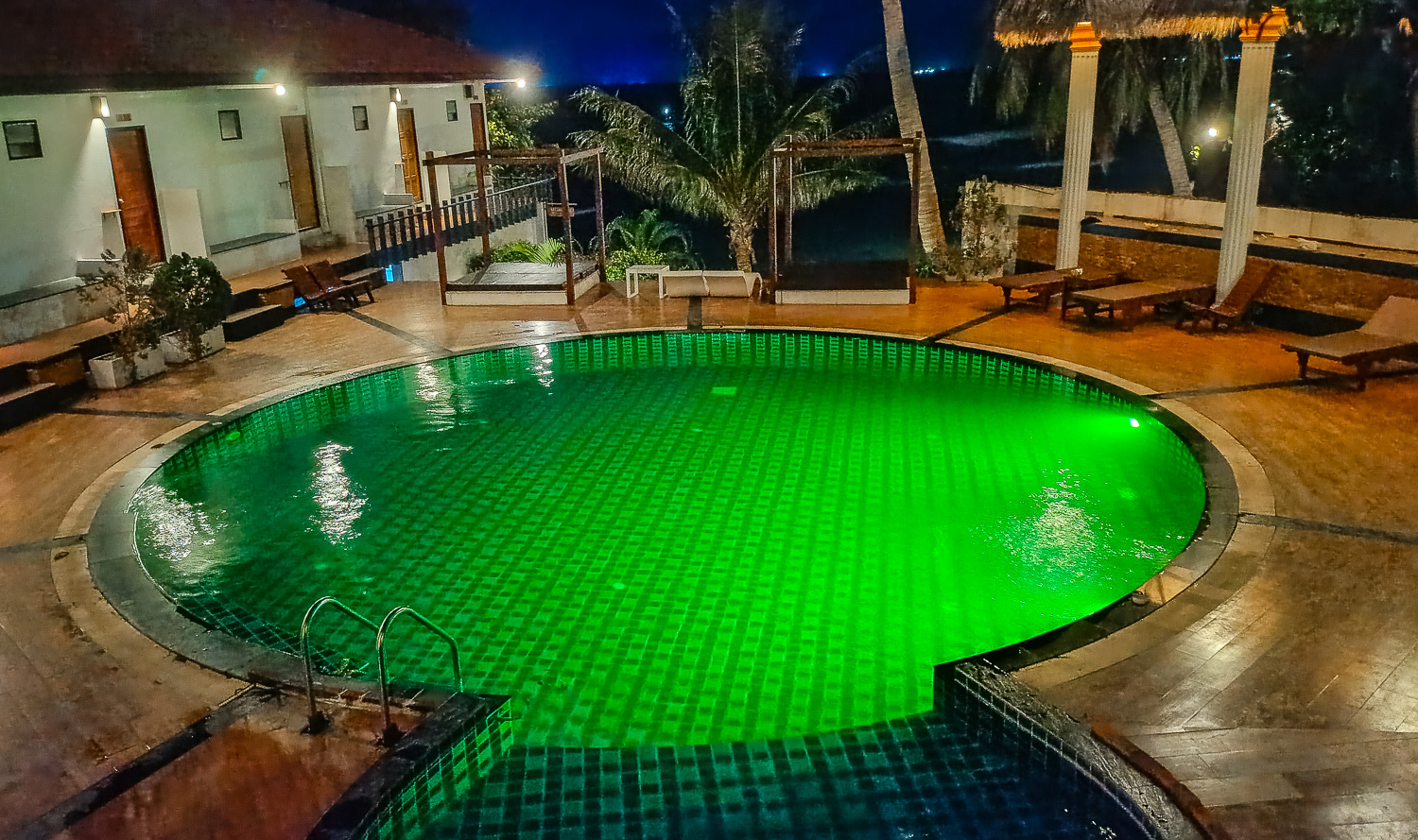
We walked the 1km to our accommodation at the Simple Life Talay Divers Resort and checked in to our room, right on the ocean. We arranged our dive trip for the following morning and had to fill in extra paperwork being over 45, creating a good laugh for the farang dive staff who were young enough to be my kids. I hadn’t dived for a decade, so booked the PADI refresher course as part of the trip.
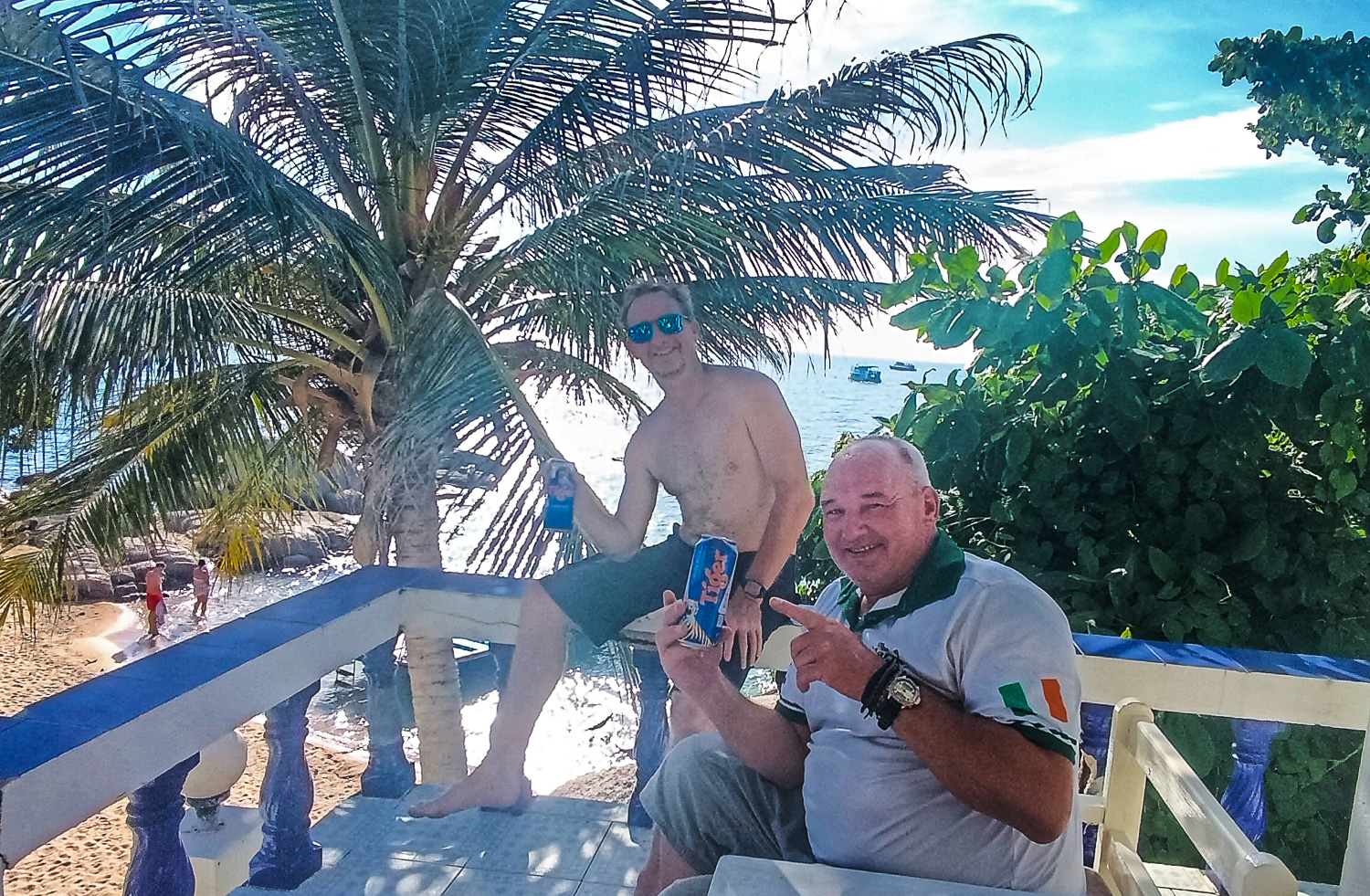
I certainly felt my age on Koh Tao where nobody is over 30! The girls would wear very little, even when going into shops and restaurants, so you’re looking at tiny triangles of fabric and bare butts all day. Plus there is the cost issue: Koh Tao has a triple whammy of Thailand premium, Tourist premium, and Island premium, making everything that can be purchased at least 30% more than on the mainland. A basic pad krapao was 100 baht, a baguette/sandwich that would cost 40 baht in Vietnam was 150, a small tin of beer was 100, even stuff in the 7-Eleven was 20-30% higher, and there was a pier tax and fee for every viewpoint – you could easily spend 5,000 baht a day here, putting it on a par with most of Europe. Even water was shipped in from military vessels out of Suratthani.
The main attraction for me was the diving, and today I was doing my refresher with some trepidation. My last dive was in 2016, and I was a lot younger and fitter then! My Divemaster, a cute Kiwi girl who was young enough to be my daughter, took me through the basic skills such as mask clearing, reg recovery, and buoyancy control that I first learnt in 1997. It all came pretty naturally, and I was at home again underwater; the peace and serenity of floating through a marine aquarium had me hooked again. No issues with equalizing or air consumption (or a cranky wisdom tooth), which were my main concerns, so on to the next dive site – White Rock. This site was impressive with schools of yellow fusiliers, jacks, lots of butterfly and angelfish, pufferfish, morays, blue spotted stingrays, and the largest hawksbill turtle I’ve ever seen. Was also impressed to see the coral was in good condition despite the warming of the oceans, which has decimated it elsewhere.
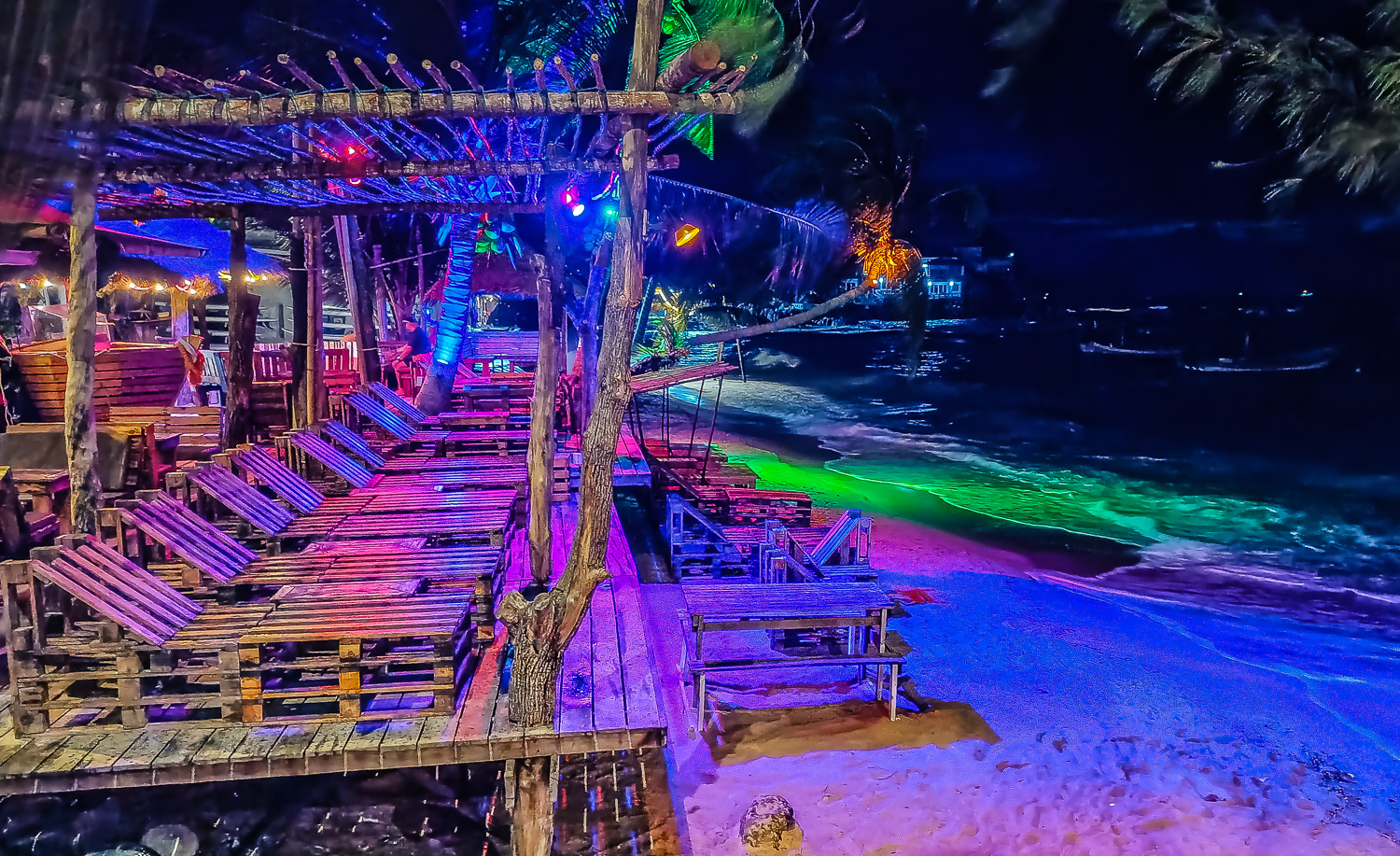
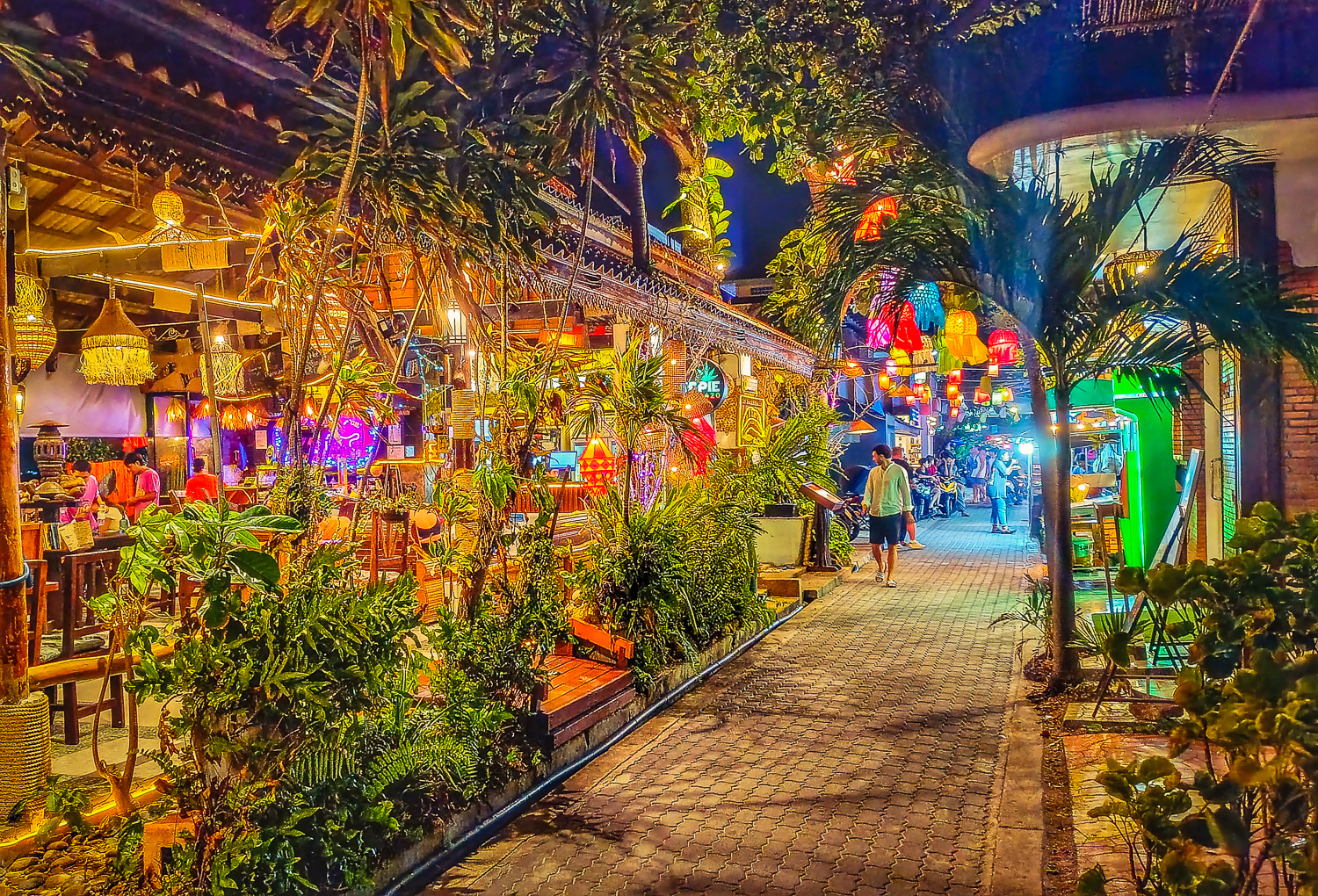
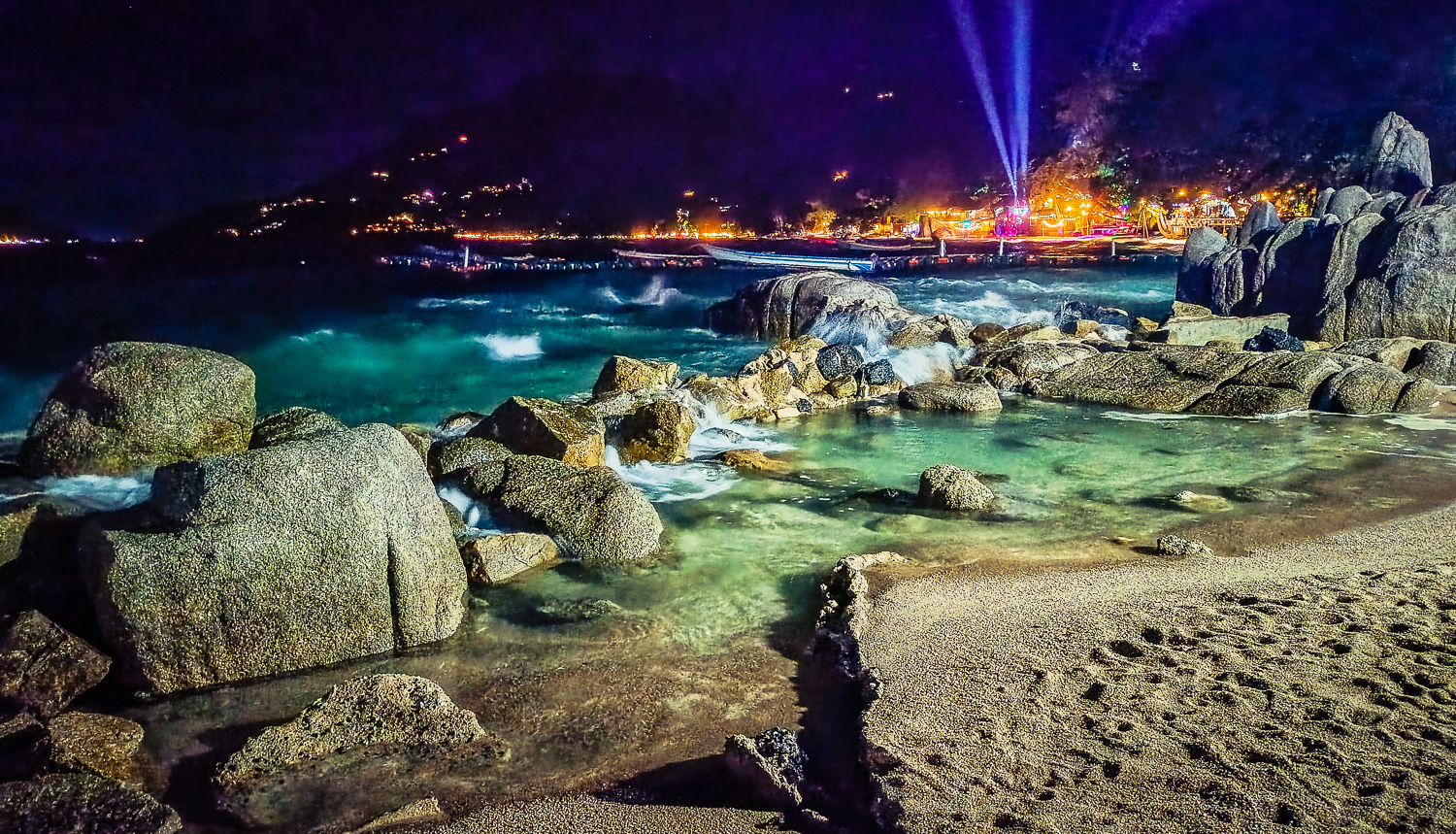
That night we went out to the northern end of Sairee, which has become the nightlife district. The bars openly had farangs working and DJing in them, with no care about Thailand’s ongoing foreigner witch hunt. Again, we felt very old with our table of four exceeding 200 years, more than the rest of the bar combined!
The next day we rented a scooter to explore the island. Getting them by the pier is expensive at 400 baht, but further away you can get them for half the price, albeit older ones. I didn’t see a single cop on the entire trip, nobody wears a lid, and most farangs belted around at full throttle half-naked.
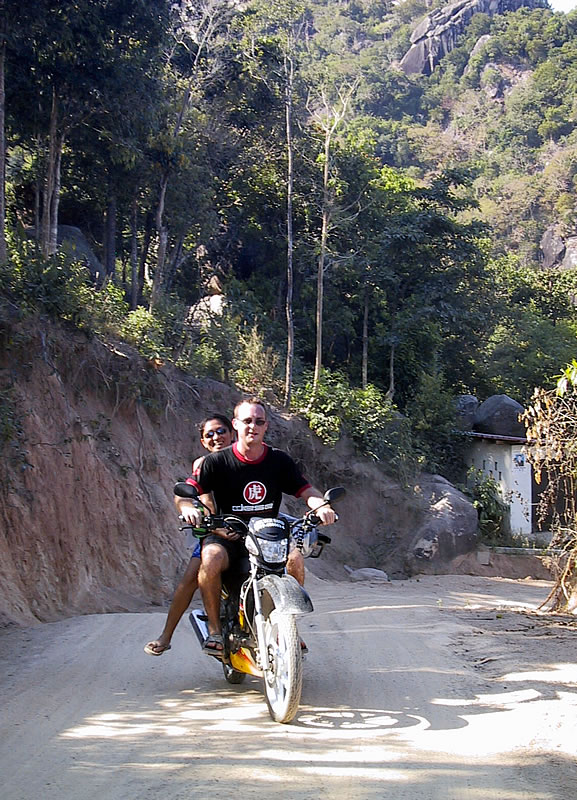
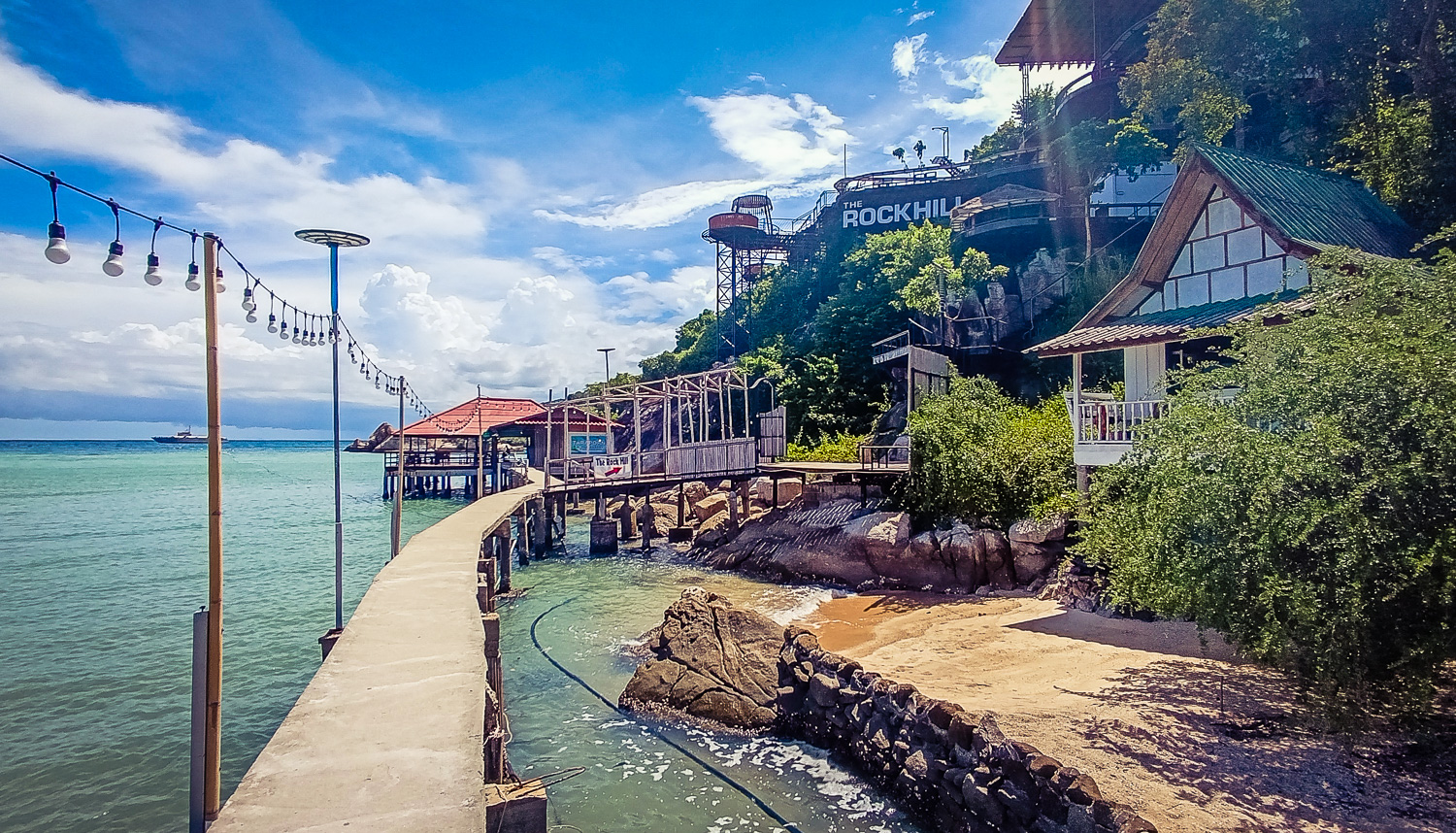
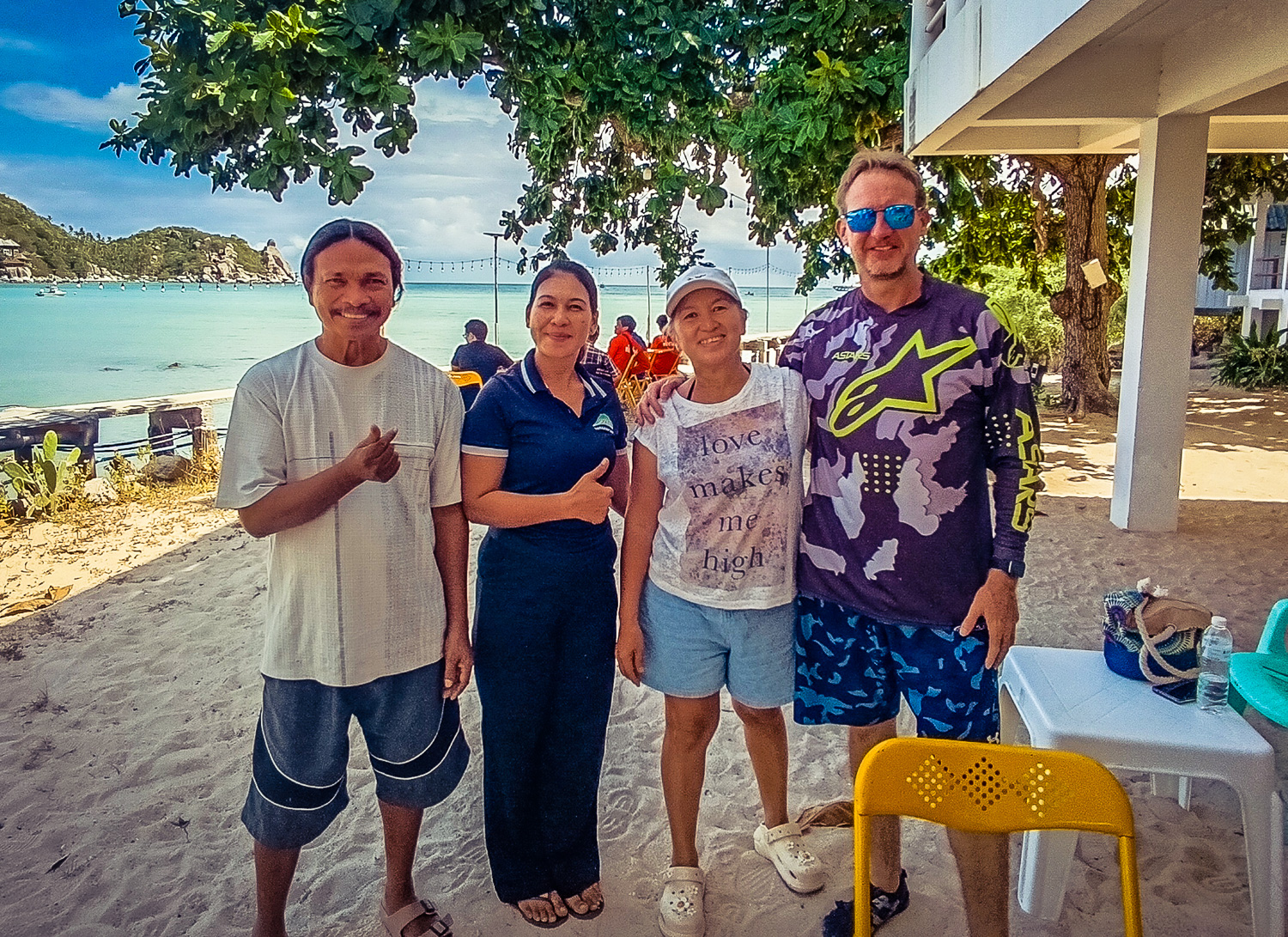
When I first visited Koh Tao, it was all dirt roads and motorcycles only. Today there are major roads, trucks, cars, traffic lights, and even a tunnel. We arranged diving for the next day before heading south to Chalok Baan Kao Bay through the swarm of crazed Gen Zs riding like Thais. The last time I was here, it was a rustic little beach with a few huts to stay in and some street food vendors. Now you can’t even see the beach, which has been blocked by a wall of resorts, restaurants, and shops. We headed to Rock Hill at the northern end of the bay to meet up with friends who had relocated from Bangsaphan.
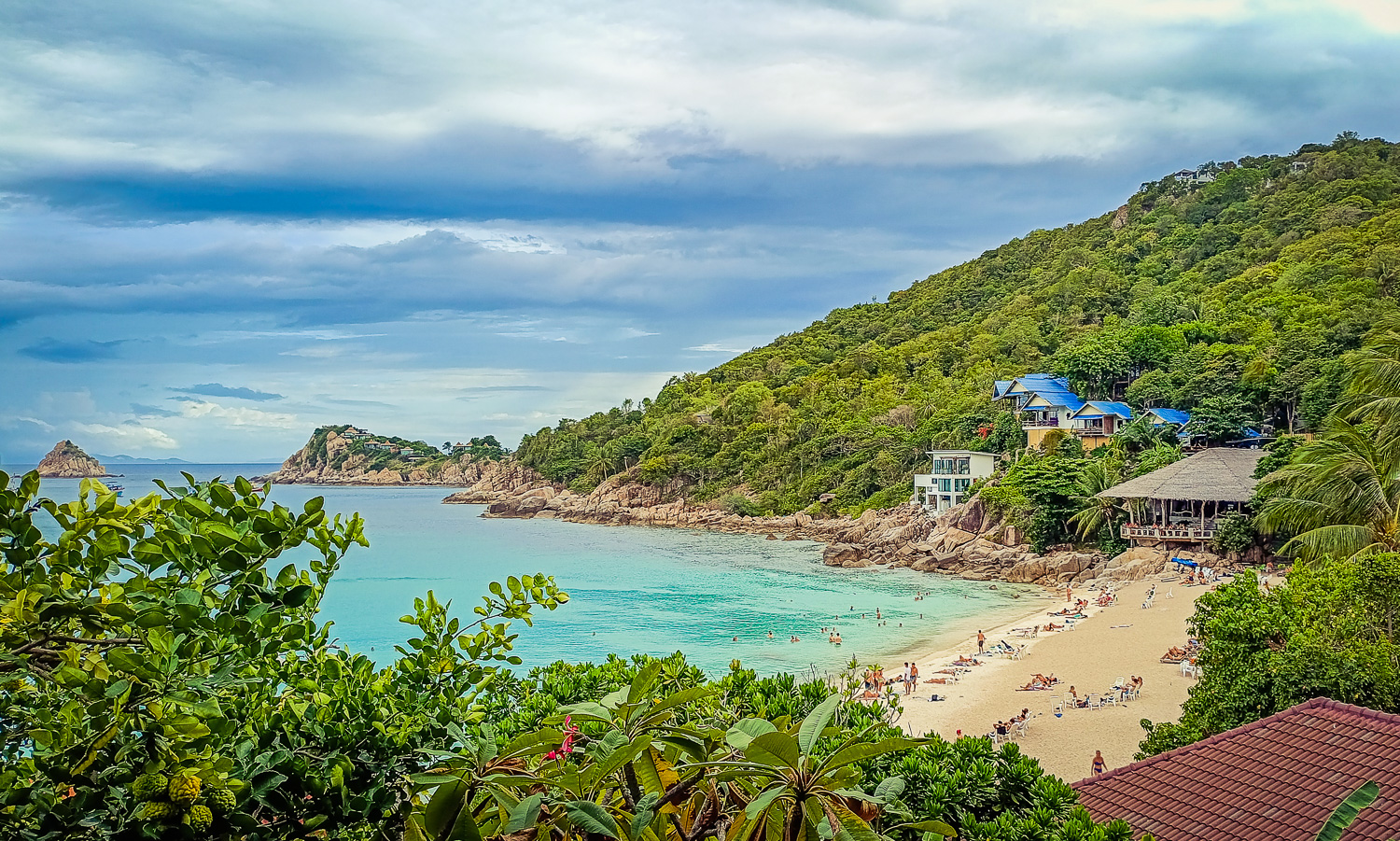
The next stop was Ao Leuk, an empty, secluded coral-fringed cove good for snorkeling that was a challenge to get to back in the day on steep dirt trails. Today, it is more like Benidorm, with paid parking and more half-naked white bodies on the beach than I could count; we beat a hasty retreat.
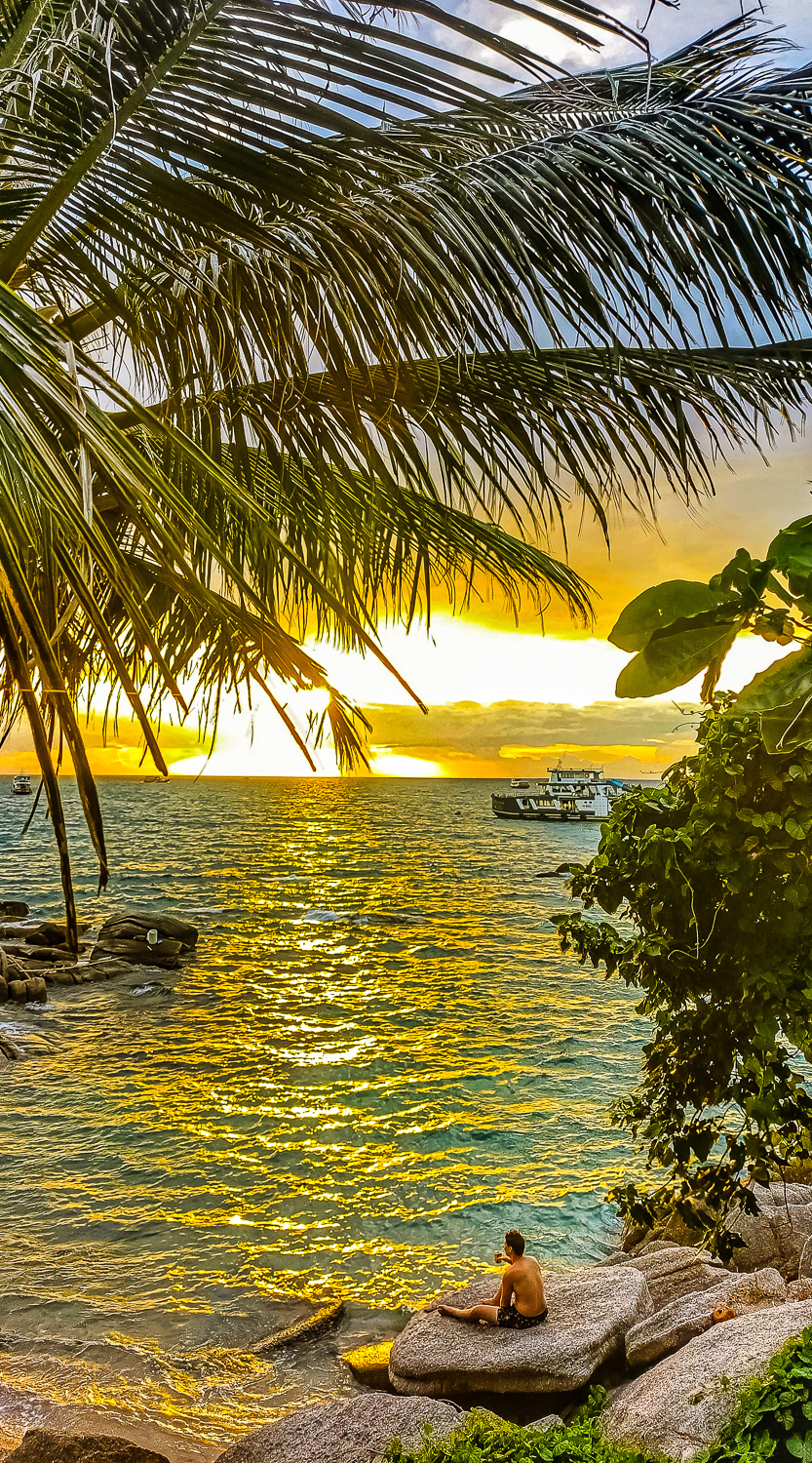
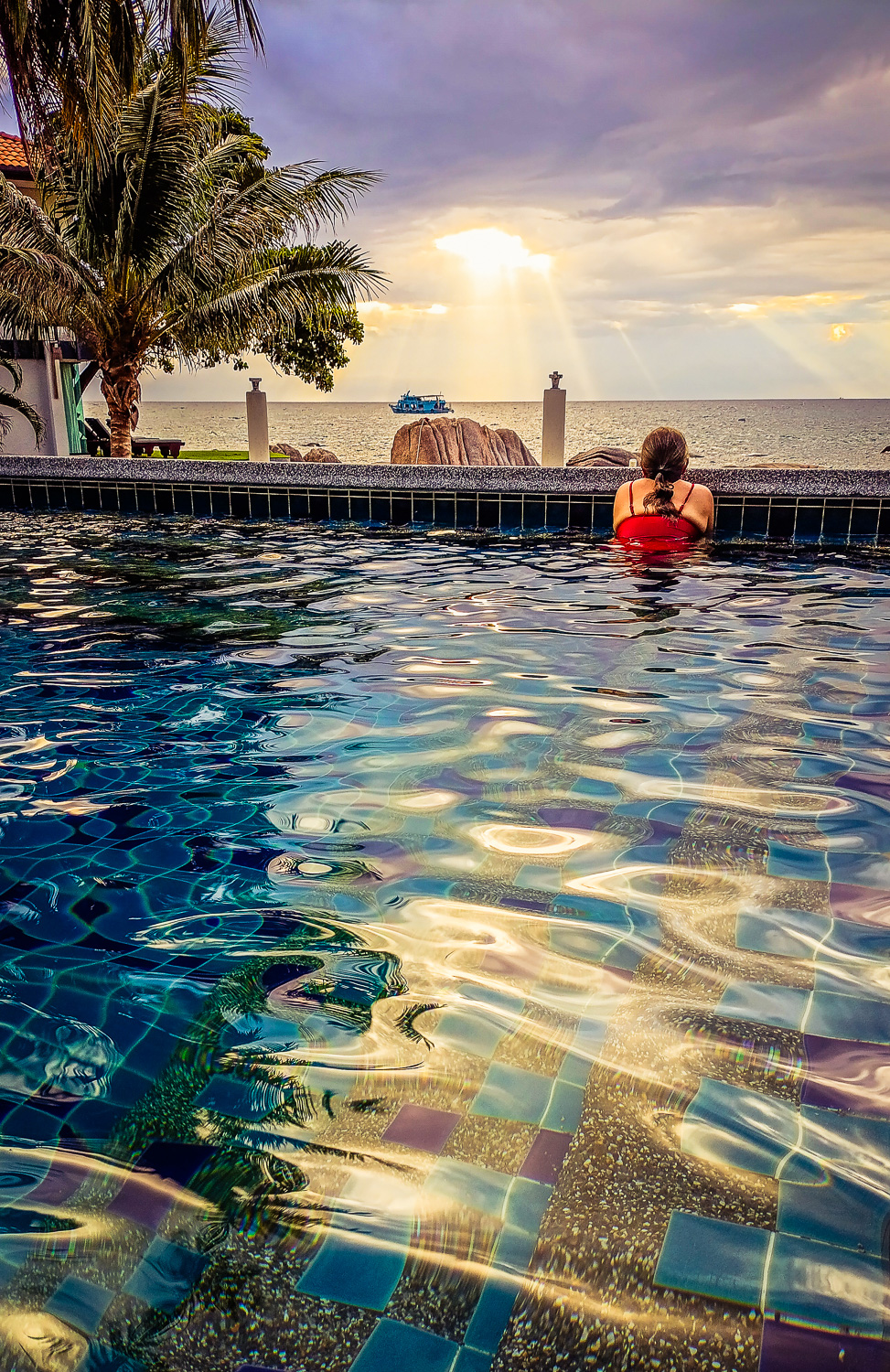
Having seen enough, and not wanting to pay 100 baht to stop at every viewpoint, we headed back to the hotel to enjoy the sunset in our pool. That evening we walked along Sairee Beach (which was pretty busy for low season) to a restaurant for dinner.
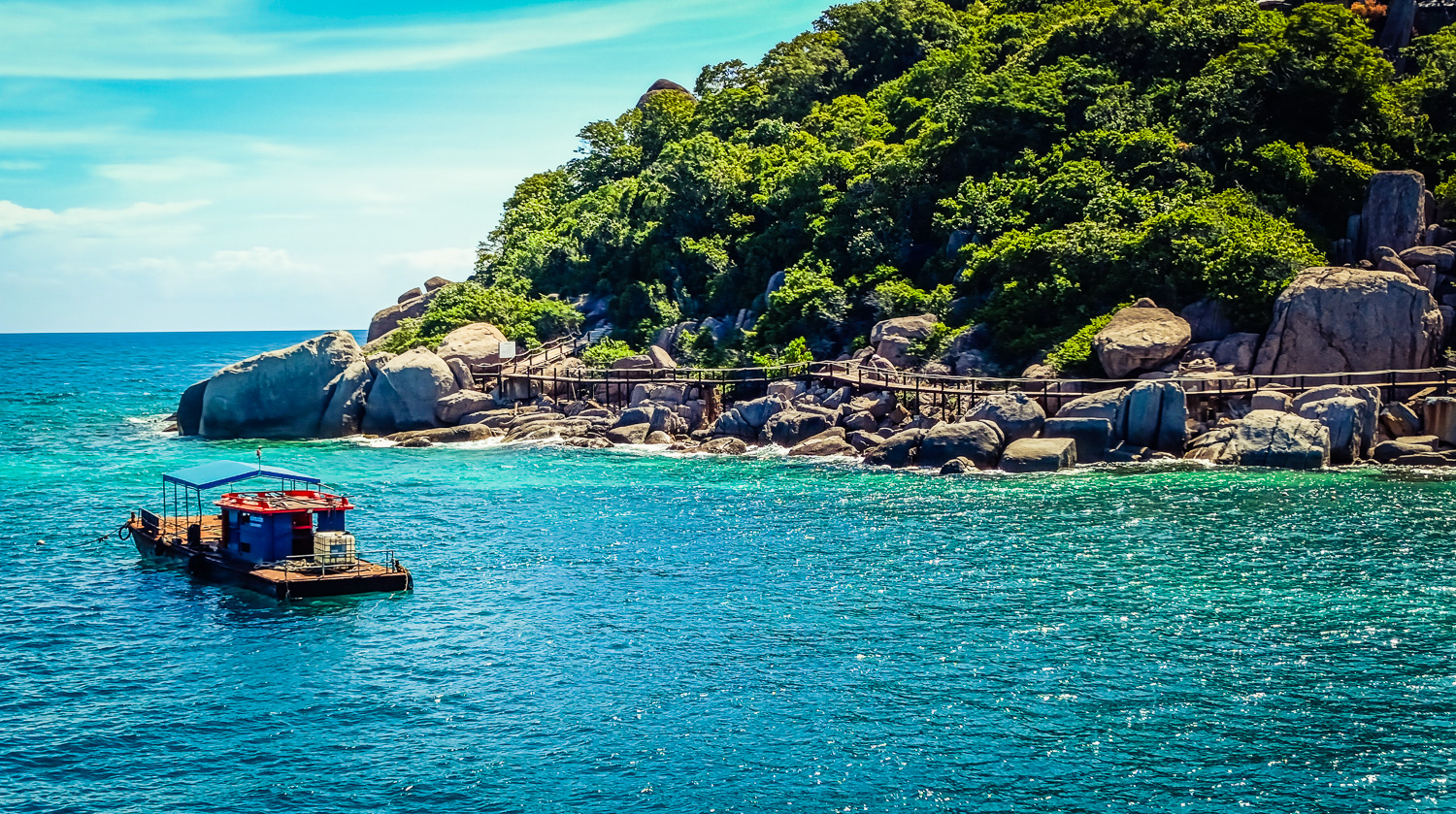
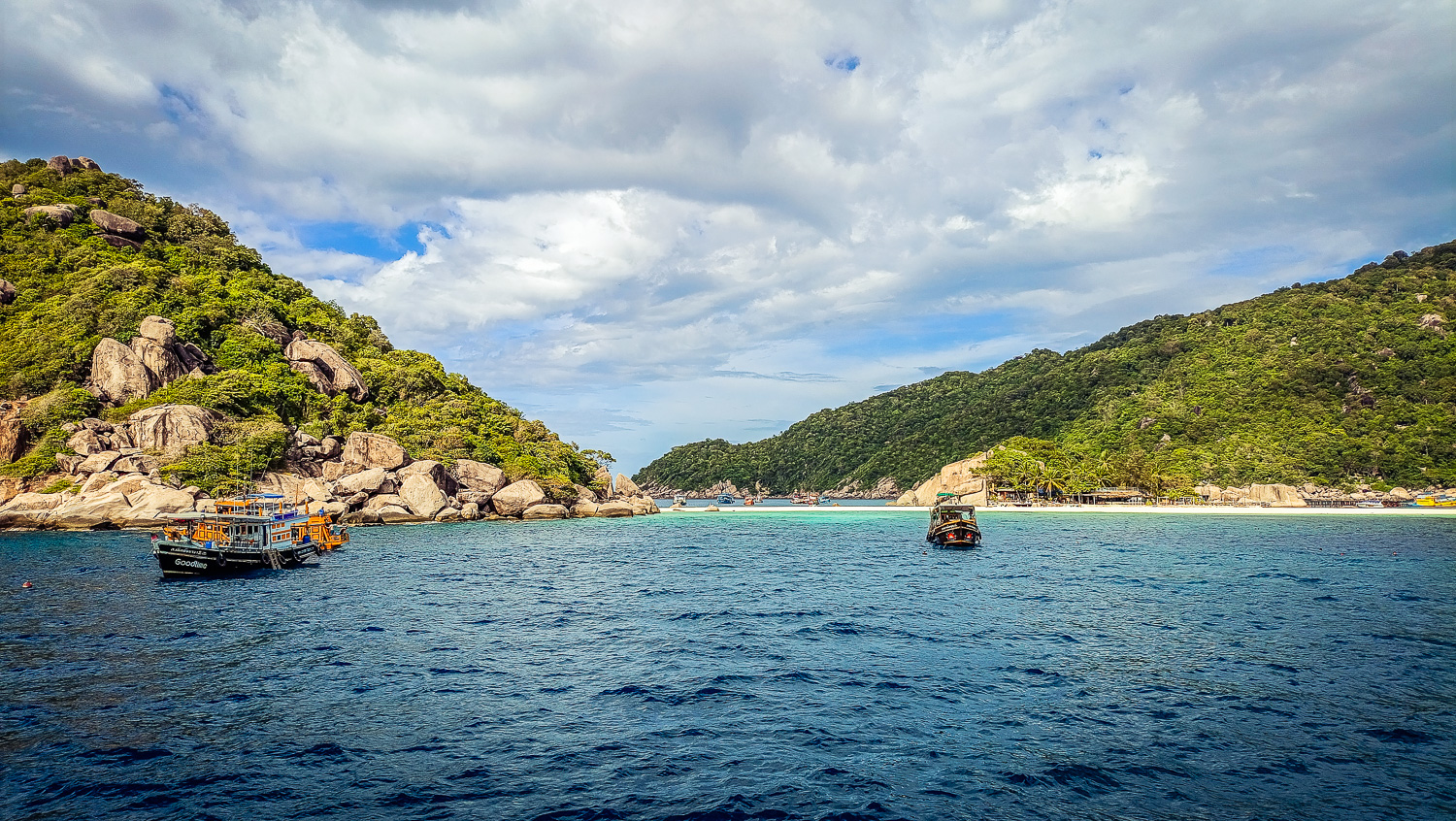
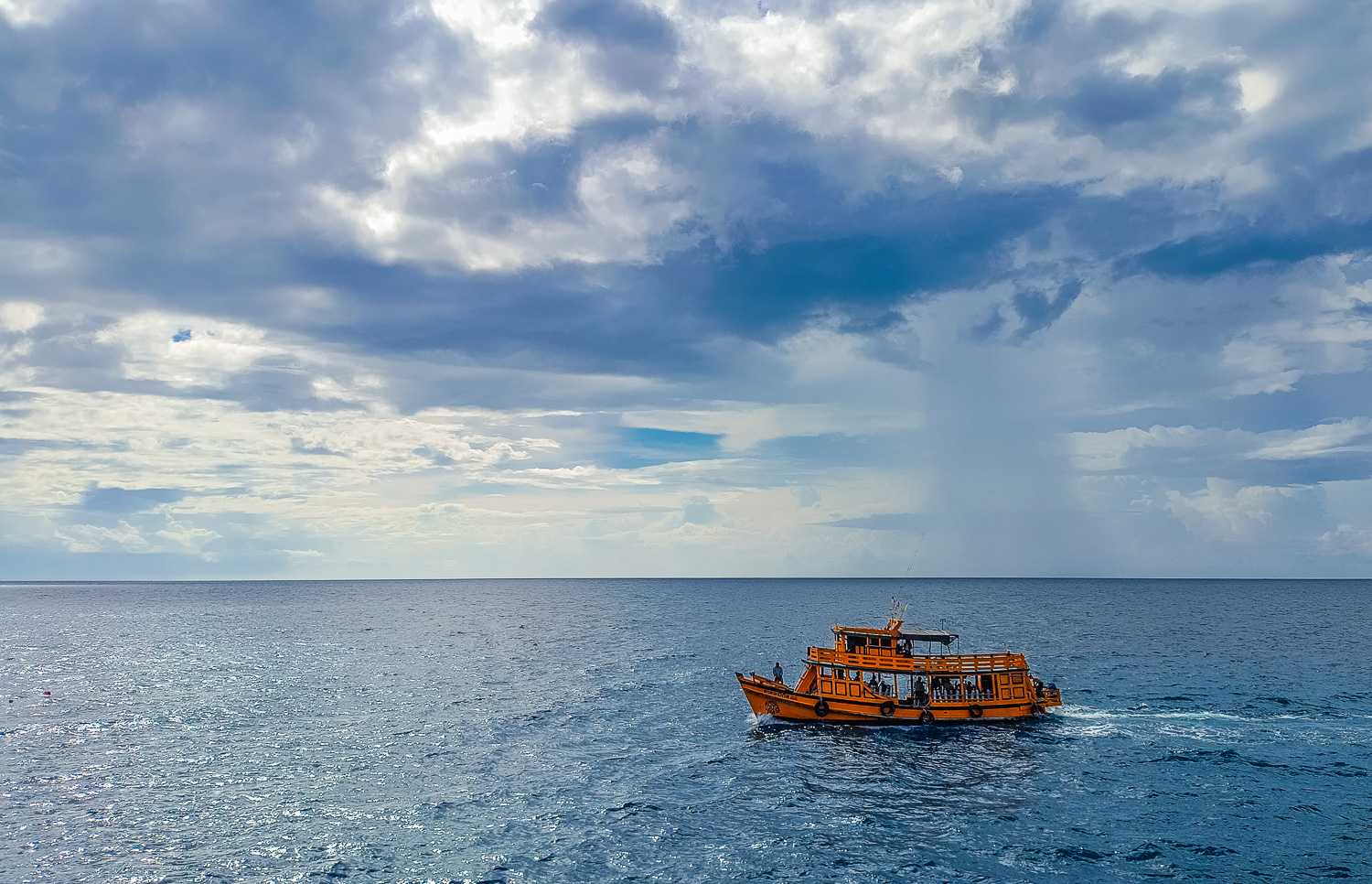
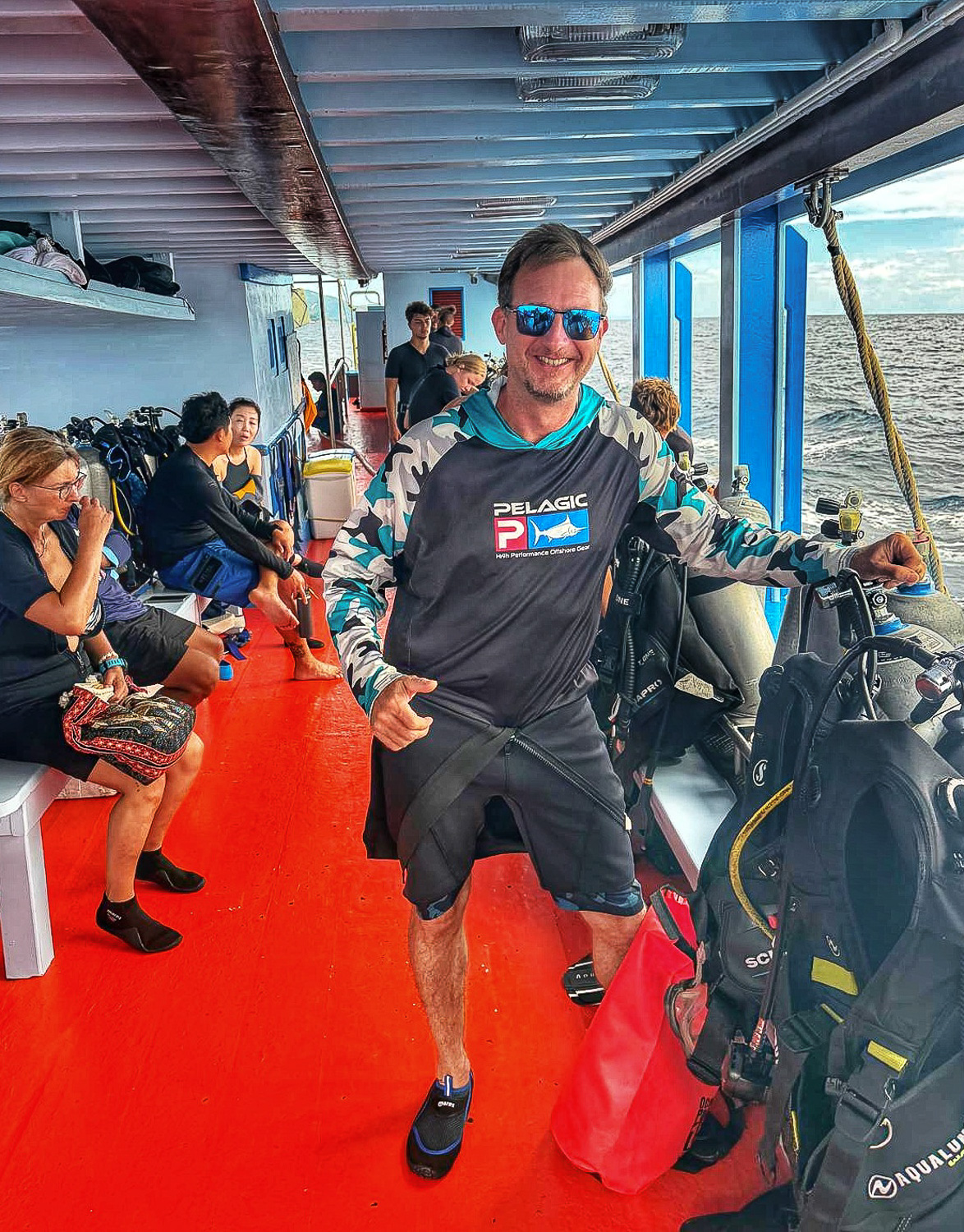
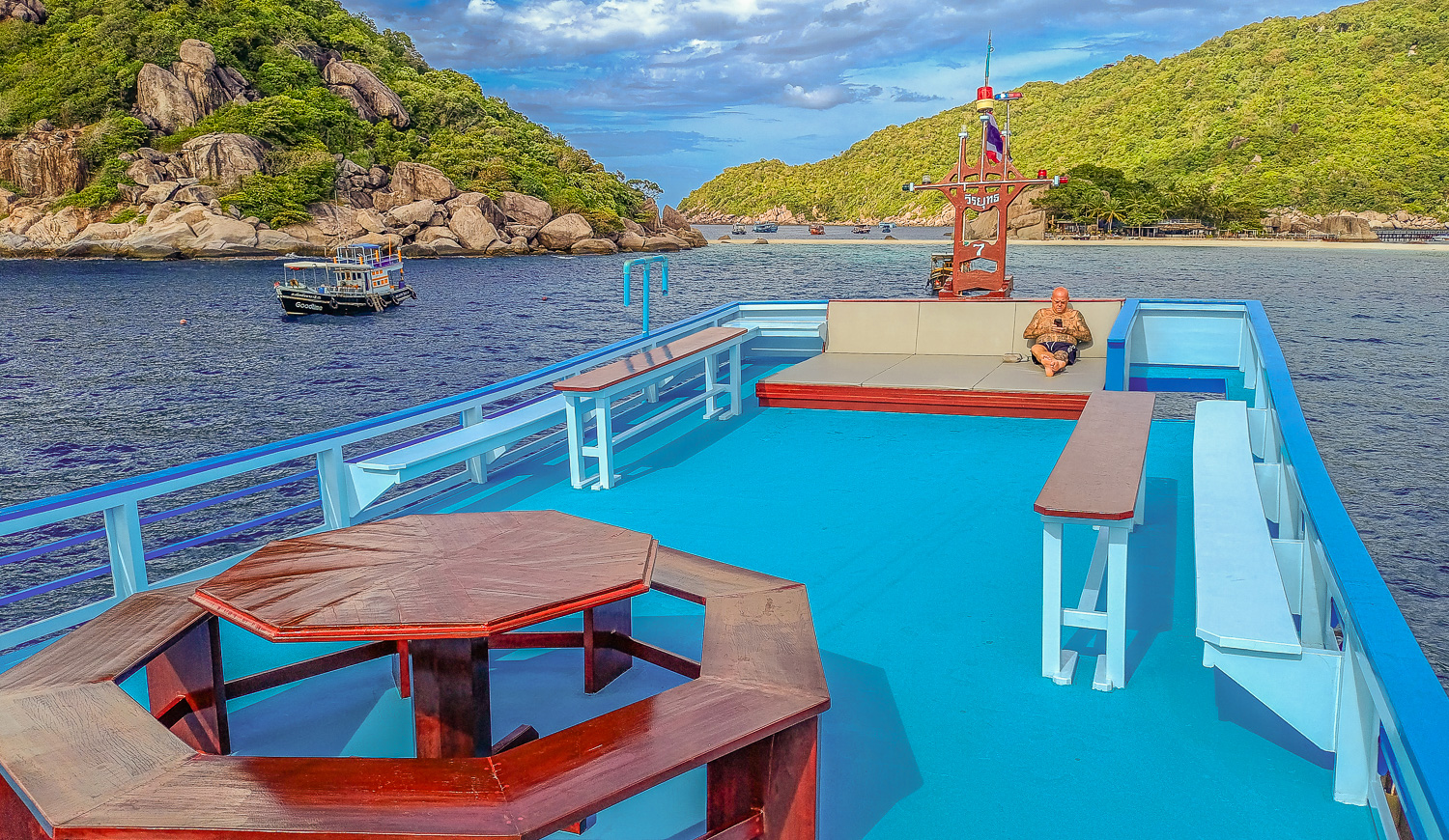
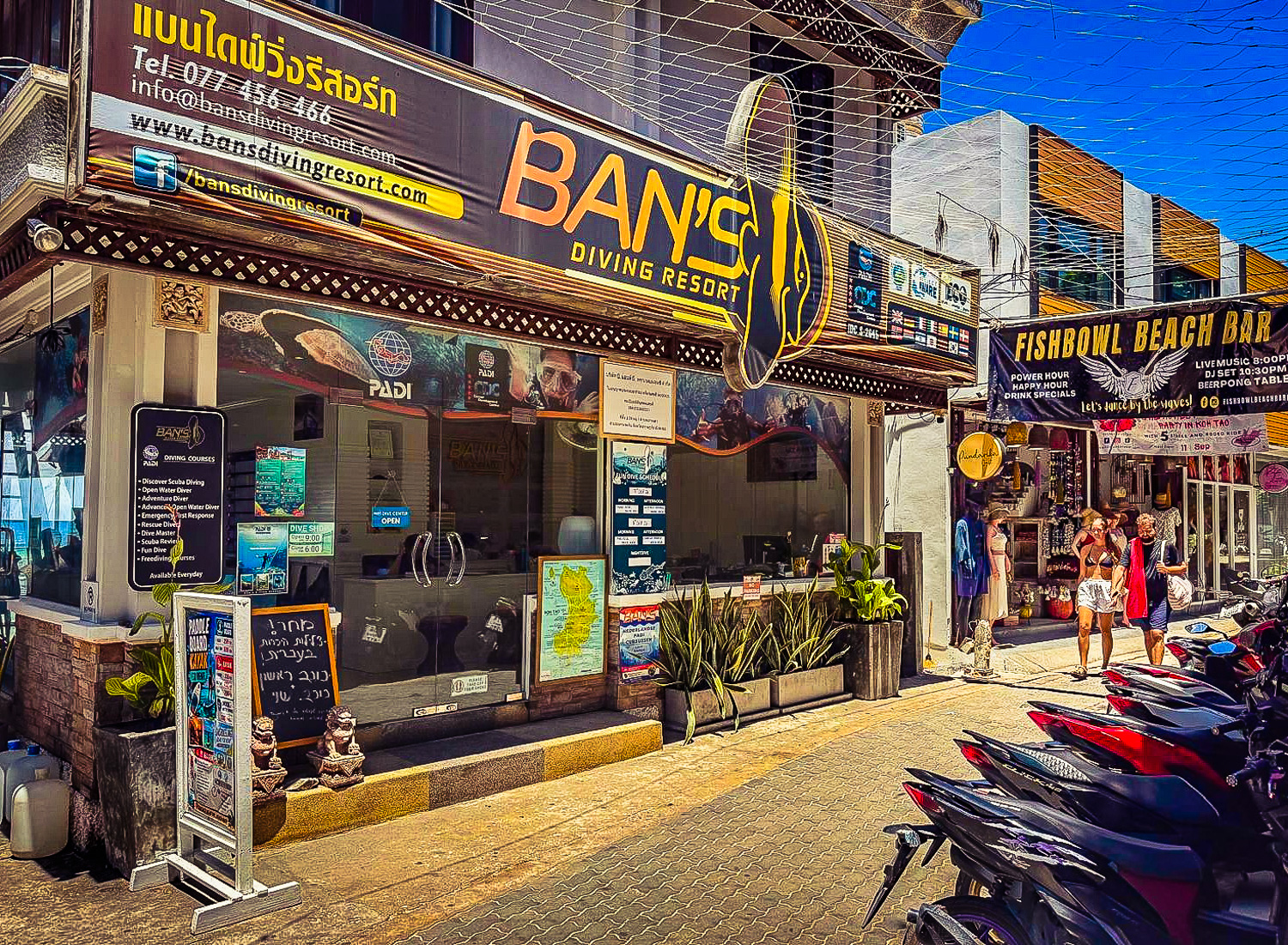
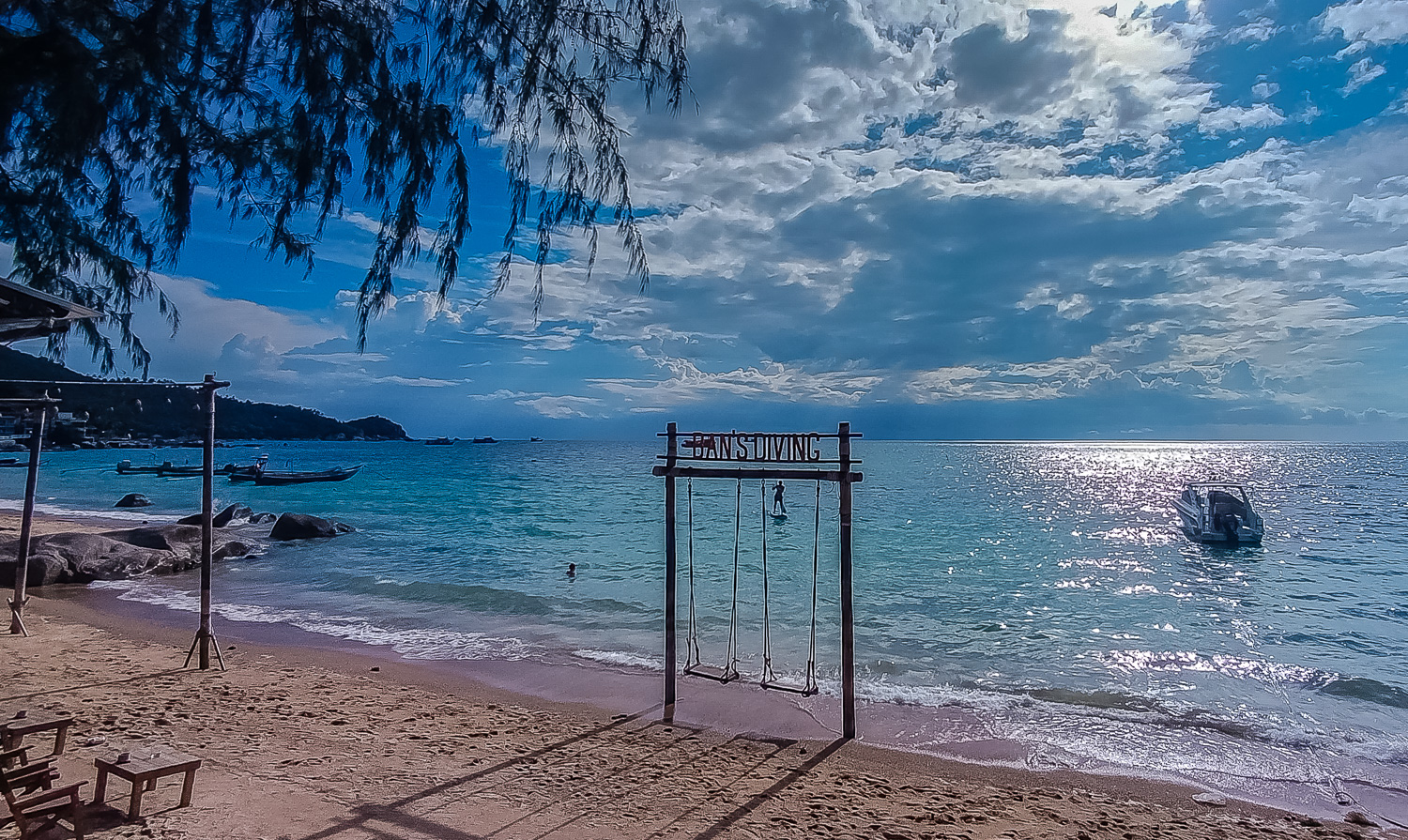
Today was another dive day, and we were going with a different shop – Bans Diving, which is one of the oldest and most established outlets on the island. Needless to say, it has become a bit of a ‘dive factory’ today with its own resort, nightclub, and more boats than I could count. Ours was about a third full with about 30 people, and we motored out to the first spot at Chumphon Pinnacle. This was a deep dive down to 30 meters or so, but the two divers I was with were novices at only Open Water level, so they could only reach 18. The dive guide saw that I was a Divemaster and said I could do what I wanted but keep the group in sight – luckily, the visibility was good at about 20 meters. This was a spectacular ‘big fish’ dive with huge shoals of yellow fusiliers and trevally and a massive ‘barracuda tornado’ similar to those you see on Nat Geo documentaries. There was a lot to see on this dive, and it was over too soon; the second was more sedate at a shallower spot back near the island.
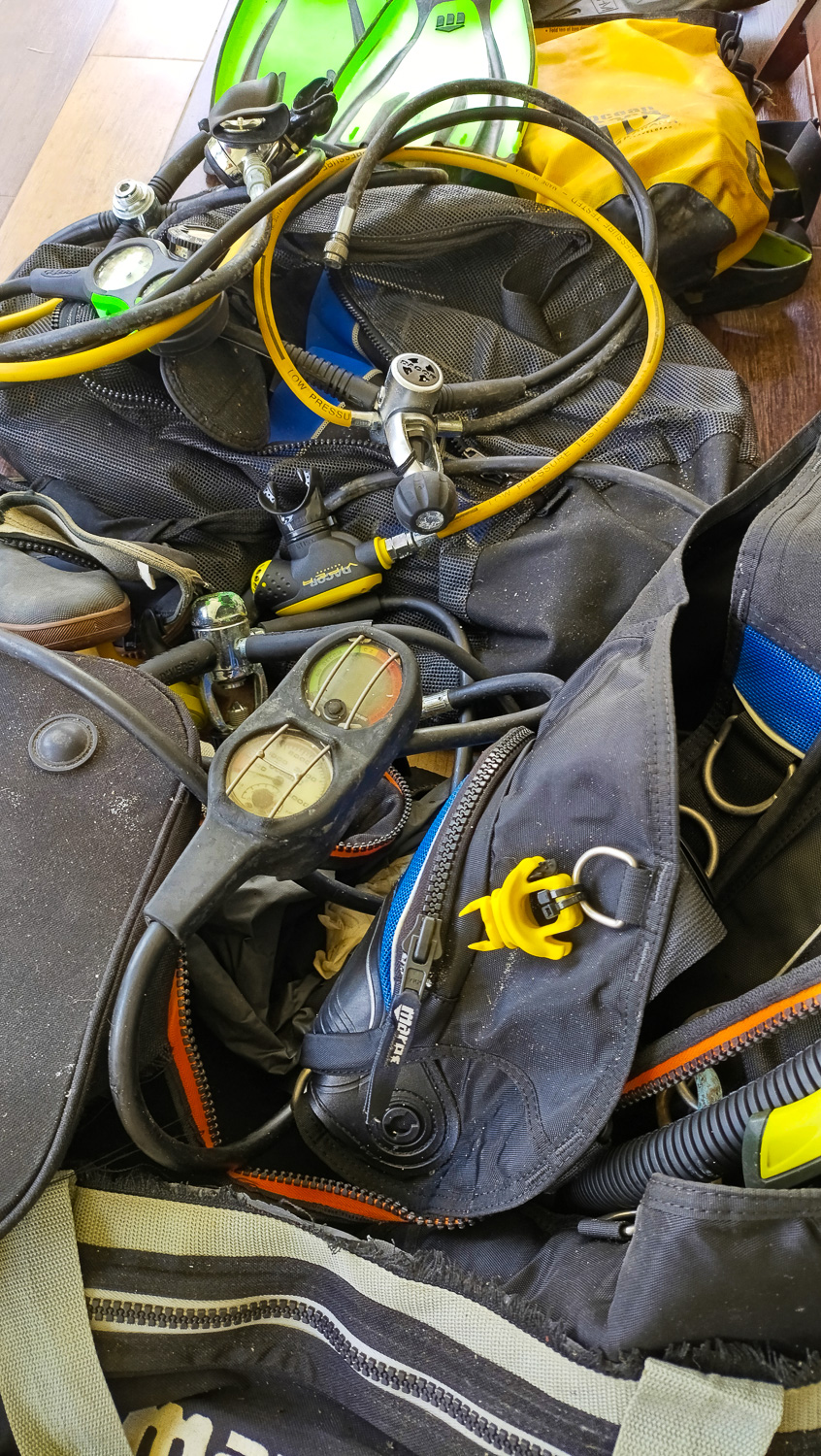
I’d done four dives, bringing my total to 330, and was hooked again. The cost of diving was about 1,000 baht per dive, so not too much more than years ago – with all of the fierce competition, they have to keep the prices sensible. Unfortunately, my dive gear is ancient and leaky, and the cost of new dive gear has skyrocketed, so that wasn’t an option, but I did spend some time dreaming in the big dive stores!
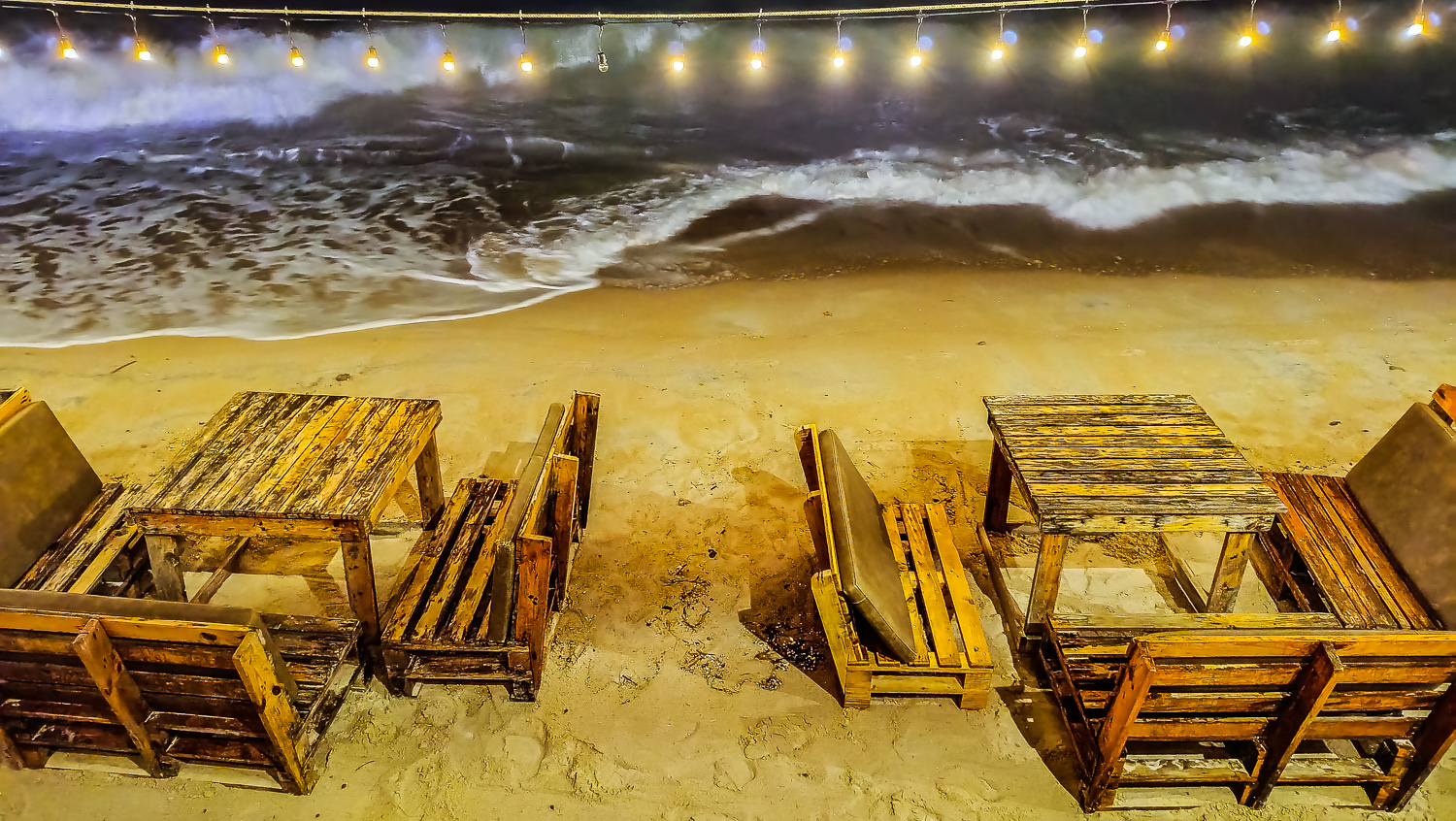
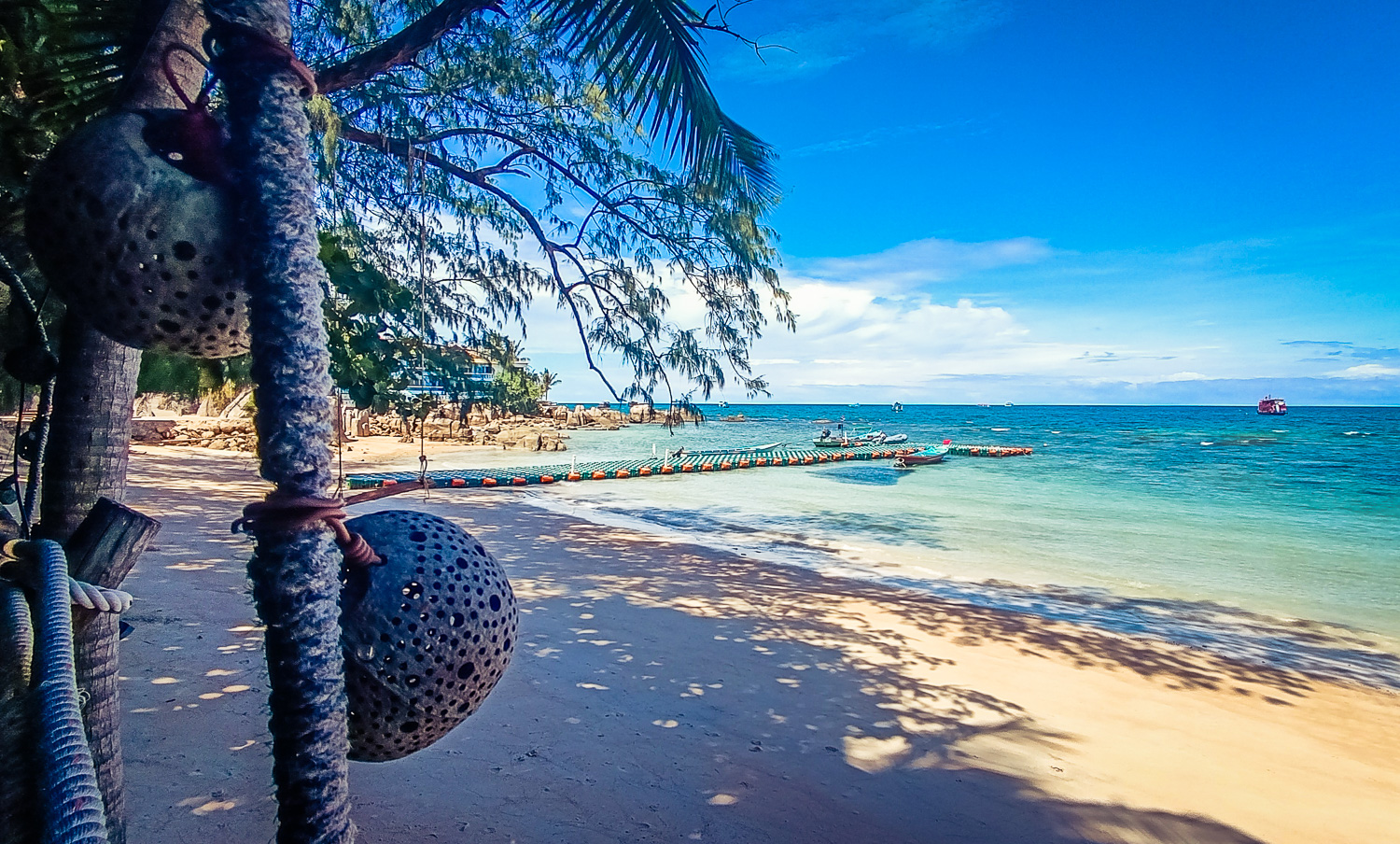
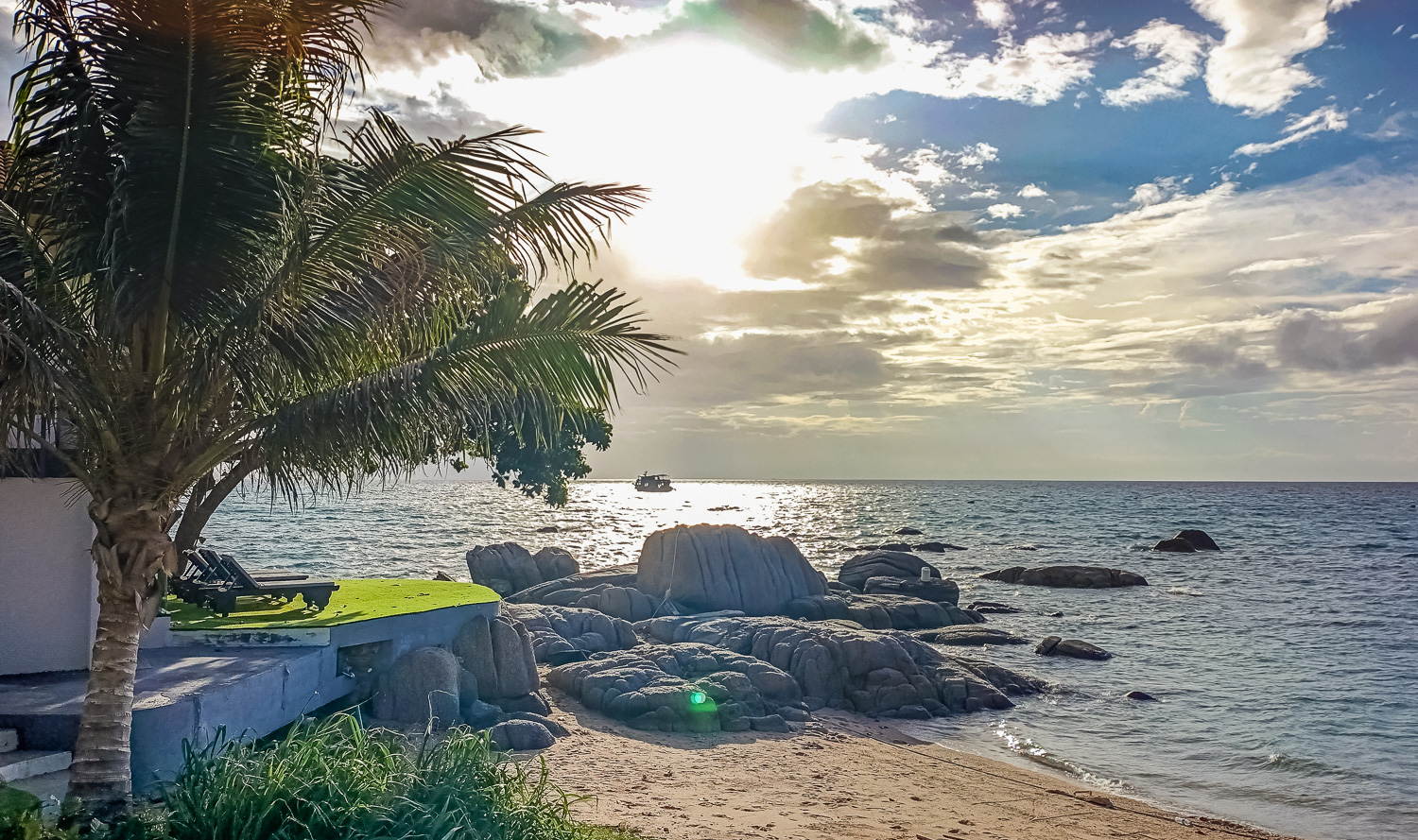
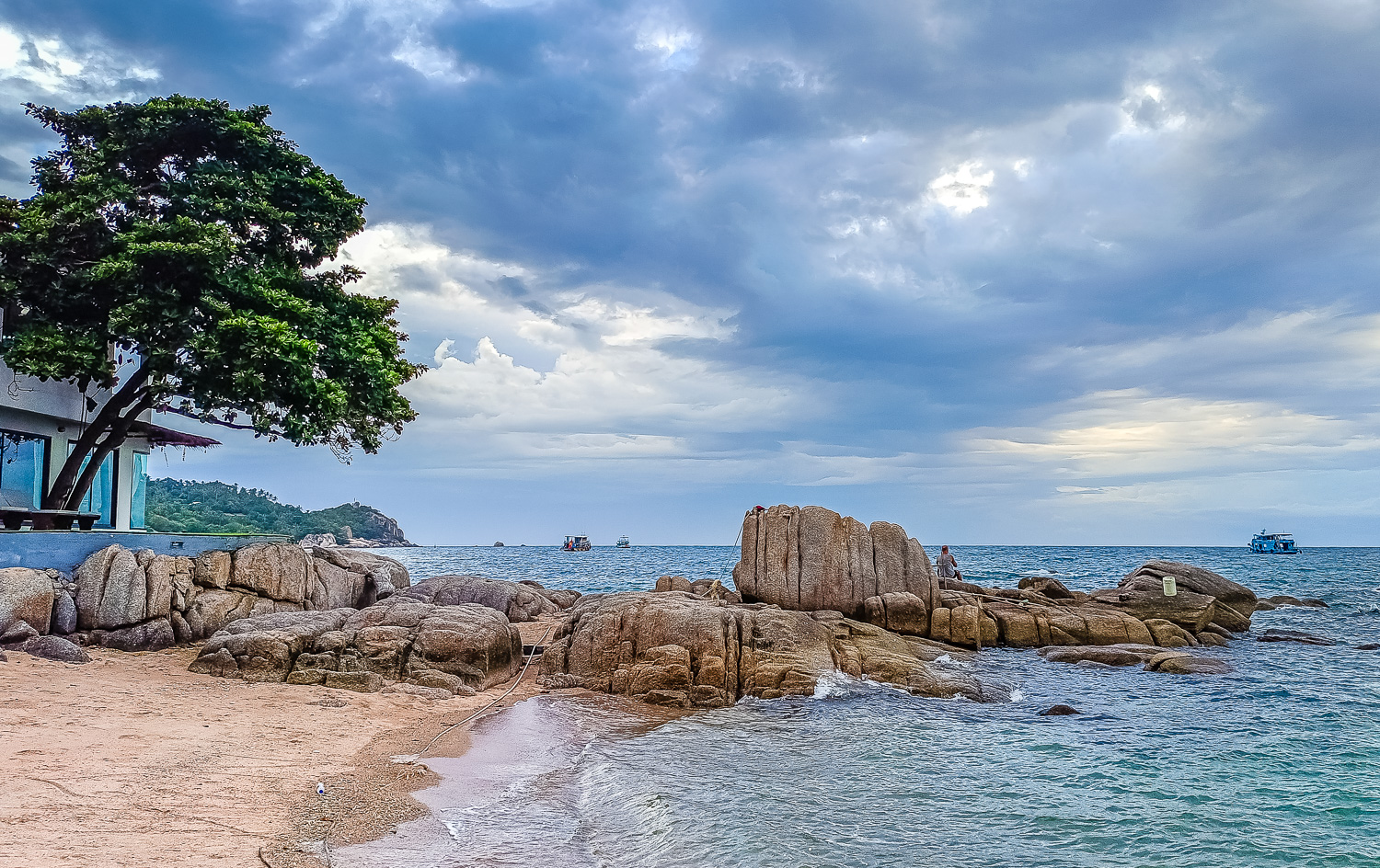
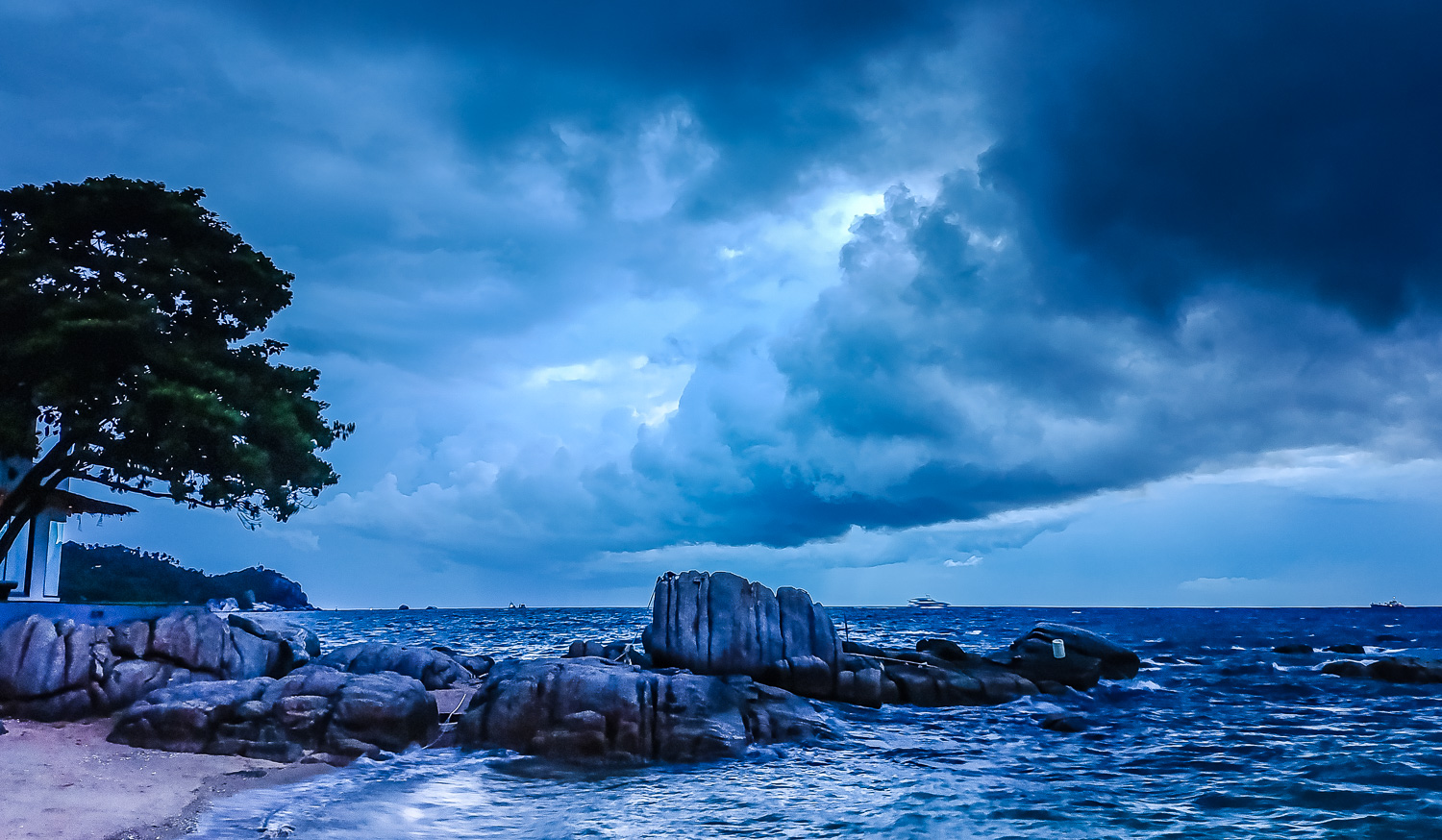
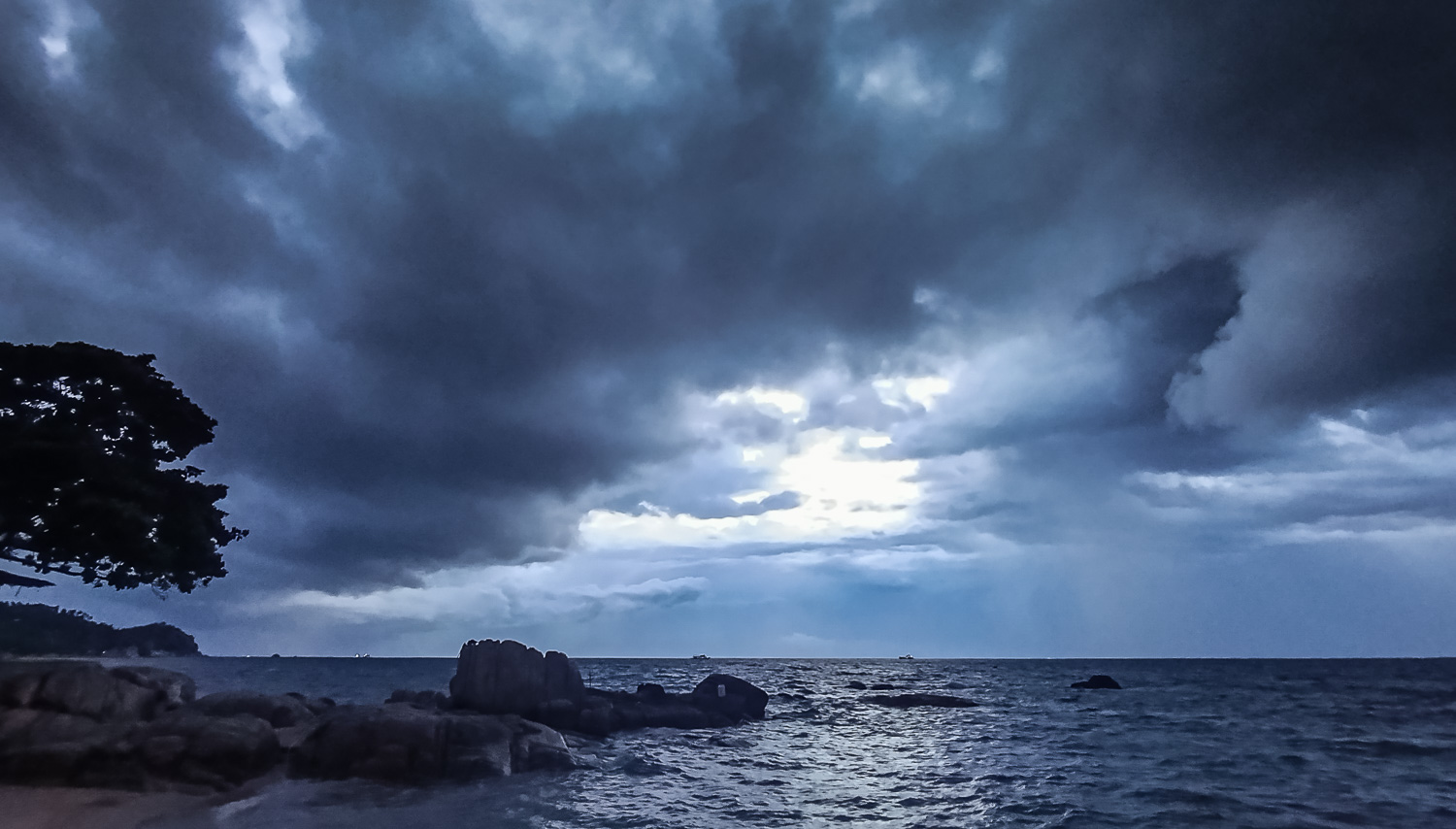
We enjoyed the moody weather on our little private beach in front of the resort in the late afternoon and evening for our last night on Koh Tao.
Koh Tao is not really a place for the over-50s or budget-conscious; it is a hedonistic party island for holidaying teens and twenty-somethings. The main attractions are underwater, and I’m glad to see that the marine life is still prolific and the dive sites still impressive all these years later. It has been a blast, but light-years away from our secret camping beach just 100km away on the mainland.